
The Finance Reading Queue Never Really Ends
Finance professionals rarely run out of material. The real shortage is uninterrupted reading time. A single week can bring new personal finance books, market commentary, research notes, earnings releases, annual reports, and long PDF briefings. The right audio tool cannot make that information simple, but it can make the queue easier to enter. That is why the search for the best audiobook apps looks different for an analyst, accountant, advisor, or finance student. Entertainment listeners may only need a large catalog. A finance reader often needs two things at once: professionally narrated titles and a reliable way to turn personal documents into audio. The best audiobook app is therefore the one that fits the material already waiting in your workflow.
What Finance Professionals Should Look For?
Start with file support. A useful finance listening app should handle common formats such as PDF, EPUB, DOCX, TXT, and web content. Voice clarity matters just as much. Dense explanations of valuation, accounting policy, or market structure become tiring when pronunciation is inconsistent or pauses fall in the wrong place. Playback speed, synchronized highlighting, bookmarks, and the ability to replay a difficult paragraph are practical requirements rather than decorative features. It also helps to separate catalog apps from document readers. Audible is built around a large library of professionally produced audiobooks. Document-focused products such as Speechify, NaturalReader, and ElevenReader can read uploaded or pasted material aloud. Readify belongs in the second group while also offering an audiobook-style reading experience for personal ebooks and documents.
Scenario 1: Listen to Personal Finance Books Without Losing the Argument
For many professionals, personal finance books are the easiest place to begin. They usually follow a clear argument, repeat key ideas, and work well during a commute or walk. A catalog service is convenient when a professionally narrated edition already exists. If you own an eligible ebook or document, a text-to-speech reader gives you more control over the voice, pace, and reading position. It helps to separate personal ebook readers from PDF-focused listening tools. ElevenReader accepts personal EPUB books, PDFs, article links, images, and pasted text for private listening. Paper2Audio supports research PDFs, PDF books, EPUB files, webpages, slides, and Word documents, with features intended to handle tables, figures, and other complex material. ReadLoudly provides a more direct PDF read-aloud workflow in which users upload a document, select a page, and start listening. Readify belongs in the broader document-listening category while combining personal ebooks and supported work files in an audiobook-style reading experience.
Scenario 2: Turn Finance News into a Deliberate Listening Brief
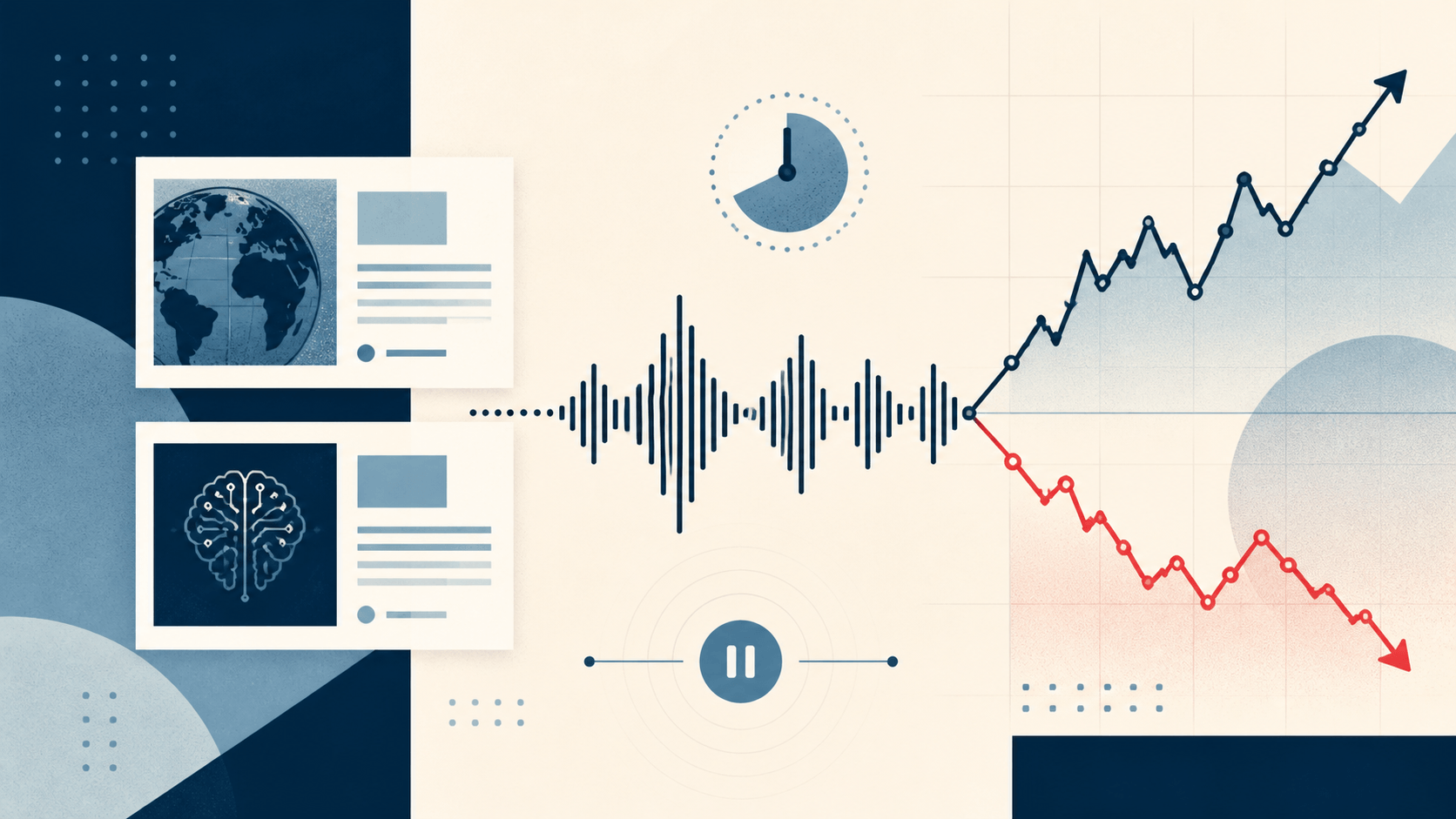
News is harder than a book because it arrives without a natural stopping point. Instead of listening to everything, build a short queue around the sectors you actually cover. Someone following AI in finance news may save two or three explainers and read them aloud together. A payments specialist might do the same with embedded finance news, while a credit team may prioritize leveraged finance news or structured finance news. This is where document and web readers can be more useful than a traditional audiobook catalog. Save the article or paste text from a source you are permitted to use, then listen in a fixed window: perhaps 20 minutes before the market opens or during the trip home. Keep headlines, promotional copy, and duplicated paragraphs out of the queue. A clean listening brief is easier to compare and less likely to become another stream of noise. Speed should follow familiarity. Routine updates may work at 1.25x or 1.5x, but new regulation, unfamiliar terminology, or a disputed forecast deserves a slower pass. Readify's guide to speed listening offers a useful reminder: saving minutes only helps when comprehension survives.
Scenario 3: Read Financial PDFs and Reports Aloud
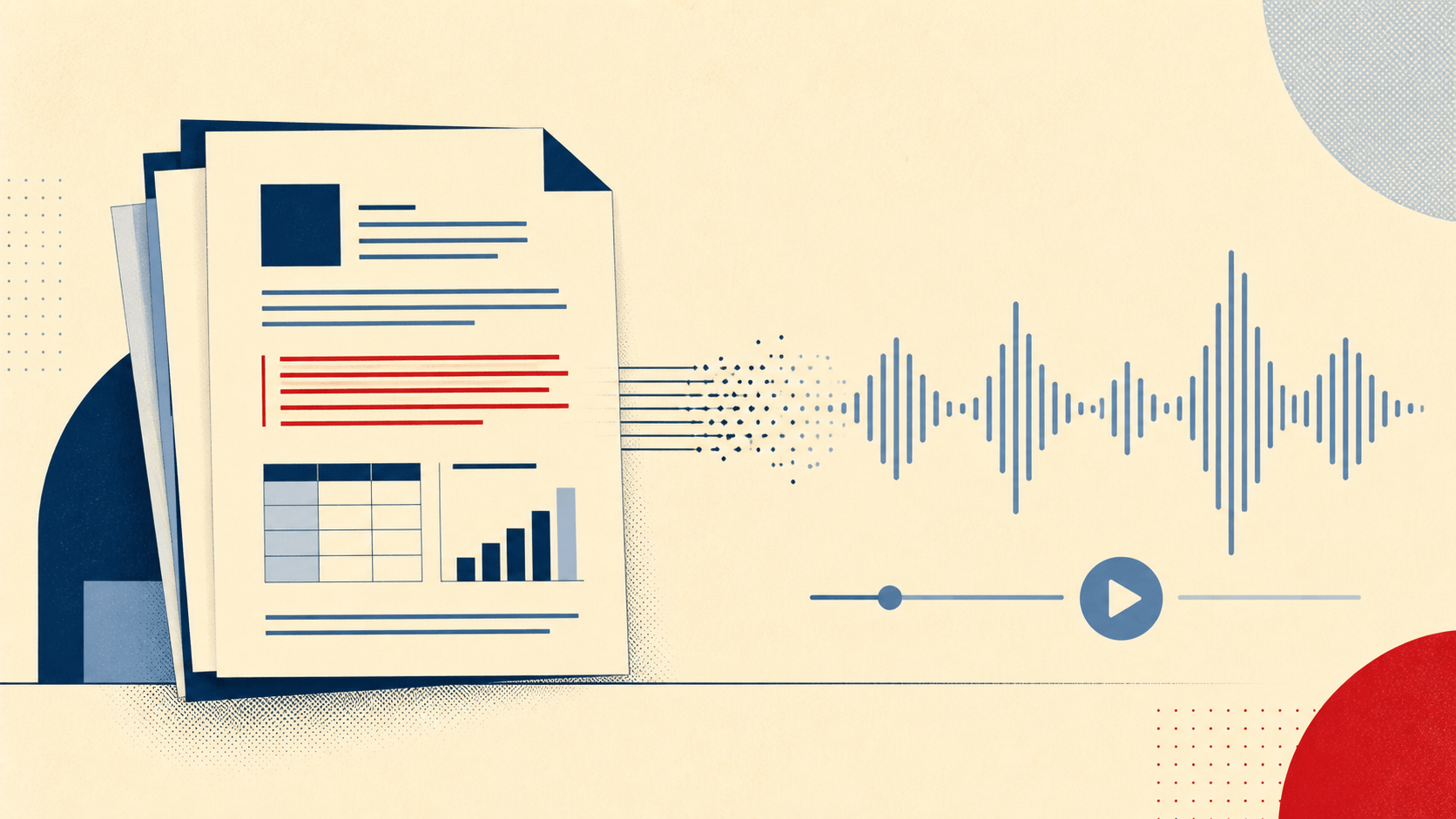
The strongest finance use case is often the least glamorous: getting through documents that were never produced as audiobooks. Annual reports, research PDFs, policy papers, and internal notes can fill an entire afternoon. Audio creates a first pass that helps you locate the sections worth close reading. It is especially useful for the narrative portions of a filing, such as business descriptions, risk factors, management commentary, and footnote explanations. Audio does not replace financial reporting and financial statement analysis. Numbers must still be checked on the page. Tables, charts, accounting reconciliations, and formulas rarely survive linear narration cleanly. A practical workflow is to listen to the surrounding explanation, bookmark any claim that changes your view, and then inspect the original table or statement. This keeps financial reporting and analysis active rather than passive. Readify can import PDF, EPUB, DOCX, TXT, and other supported files and turn them into natural speech. The main product page explains how to convert text and documents into a synchronized listening experience. For finance work, the synchronized text is important: when a number, date, or technical term sounds ambiguous, you can look back at the exact sentence instead of trusting audio alone.
A Simple Finance Listening Workflow
- Separate books, news, and documents
Use a catalog app for professionally recorded titles and a document reader for personal files, articles, and PDFs. One app does not have to do every job.
- Choose a purpose before pressing play
Decide whether the session is for orientation, review, or detailed analysis. Orientation can be faster. Detailed analysis needs pauses, notes, and access to the page.
- Capture the sections that change your view
Bookmark a risk disclosure, surprising assumption, or useful framework. After listening, return to only those passages and verify them against the original source.
- Protect confidential material
Before uploading internal research, client information, or non-public documents, check your employer's policy and the product's privacy terms. Use only files you are authorized to process.
Which Reading Workflow Fits Finance Work?
There is no universal winner. A personal ebook reader is useful for listening to finance books, while a PDF-focused tool may be more suitable for research papers and financial reports. ElevenReader supports personal ebooks and documents, whereas Paper2Audio and ReadLoudly address more specific document and PDF listening needs. Readify is particularly relevant when personal finance books, research PDFs, webpages, and work documents need to remain in one listen-and-follow workflow with adjustable voices and playback speed.
Conclusion
The best audiobook apps do more than fill quiet time. Used carefully, they create a second route into demanding material. Listen to books for broad frameworks, turn selected finance news into a short daily brief, and use audio as a first pass through reports and research. Then return to the page for numbers, evidence, and decisions. If your reading queue is already full of ebooks, PDFs, and reports, try Readify for free and build a listening workflow around the documents you actually need to understand.
Frequently Asked Questions
What is the best audiobook app for finance professionals?
It depends on the material. A catalog app suits professionally recorded finance books, while a text-to-speech reader is better for PDFs, reports, articles, and personal documents.
Can an audiobook app read financial reports?
Many document-reading apps can narrate supported PDFs. Use audio for prose and orientation, but return to the original file for tables, figures, formulas, and exact numbers.
Is faster playback suitable for finance content?
Moderate acceleration can work for familiar material. Slow down for new concepts, legal language, accounting details, or any passage that affects a decision.
Can I upload confidential finance documents?
Only if you are authorized to do so and the product's privacy terms meet your organization's requirements. Do not upload client data, internal research, or non-public information without approval.
