
Introduction
A child who avoids reading is not necessarily lazy, and misspelling does not automatically mean dyslexia. The signs of dyslexia in kids usually appear as a pattern: difficulty learning how letters represent sounds, effortful reading, persistent spelling problems, or a gap between listening comprehension and access to print. Recognizing that pattern early helps families and teachers respond, but it is not a diagnosis. Public health guidance notes that symptoms of dyslexia can affect reading, writing, spelling, memory, and organization without affecting intelligence. If several difficulties persist, speak with the child’s teacher or a qualified specialist rather than relying on an online checklist.
Common Signs of Dyslexia in Kids
Dyslexia signs in kids vary with age, language background, instruction, and the demands of schoolwork. One difficult week is not enough to draw a conclusion. Look for several related signs that continue even when the child receives clear teaching and regular practice.
Difficulty Learning Letter Names and Sounds
Many children need time to learn the alphabet. One of the possible early signs of dyslexia in kids is when letter names and their sounds remain unusually hard to remember. A child may forget a recently practiced letter or know the alphabet song but struggle to identify letters out of sequence. The important question is whether these skills remain effortful despite appropriate teaching, not whether the child occasionally makes a mistake.
Trouble Connecting Letters With Sounds
A child may struggle to blend /c/ /a/ /t/ into “cat,” separate a word into its sounds, or decode an unfamiliar word without guessing from a picture. The US National Institute of Child Health and Human Development lists problems sounding out words and recognizing letter-sound relationships among common symptoms of reading disorders. Notice whether a child understands a word in conversation but cannot work it out on the page.
Frequent Spelling Difficulties
Possible symptoms of dyslexia in children include leaving out sounds, changing letter order, spelling the same word several ways, or continuing to guess after a pattern has been taught. Letter reversals such as b and d occur in many beginning readers and are not proof of dyslexia. A persistent cluster of reading and spelling difficulties is more informative.
Avoiding Reading Activities
A child may delay homework, choose books far below their listening comprehension, or become angry or quiet when asked to read aloud. Avoidance can develop because reading repeatedly feels slow and frustrating. Respond with curiosity rather than punishment. If the child can explain a story heard aloud but struggles with a simpler printed passage, share that observation with their teacher.
Difficulty With Rhyming and Word Patterns
Some children at risk for dyslexia find it hard to recognize that light, night, and kite share sounds, produce a rhyme, clap syllables, or identify the first sound in a word. The International Dyslexia Association explains that early evaluation considers phonological awareness, memory, rapid naming, history, observation, and testing. A quick dyslexia test for kids cannot provide that full picture.
How Dyslexia Learning Apps for Kids Can Help
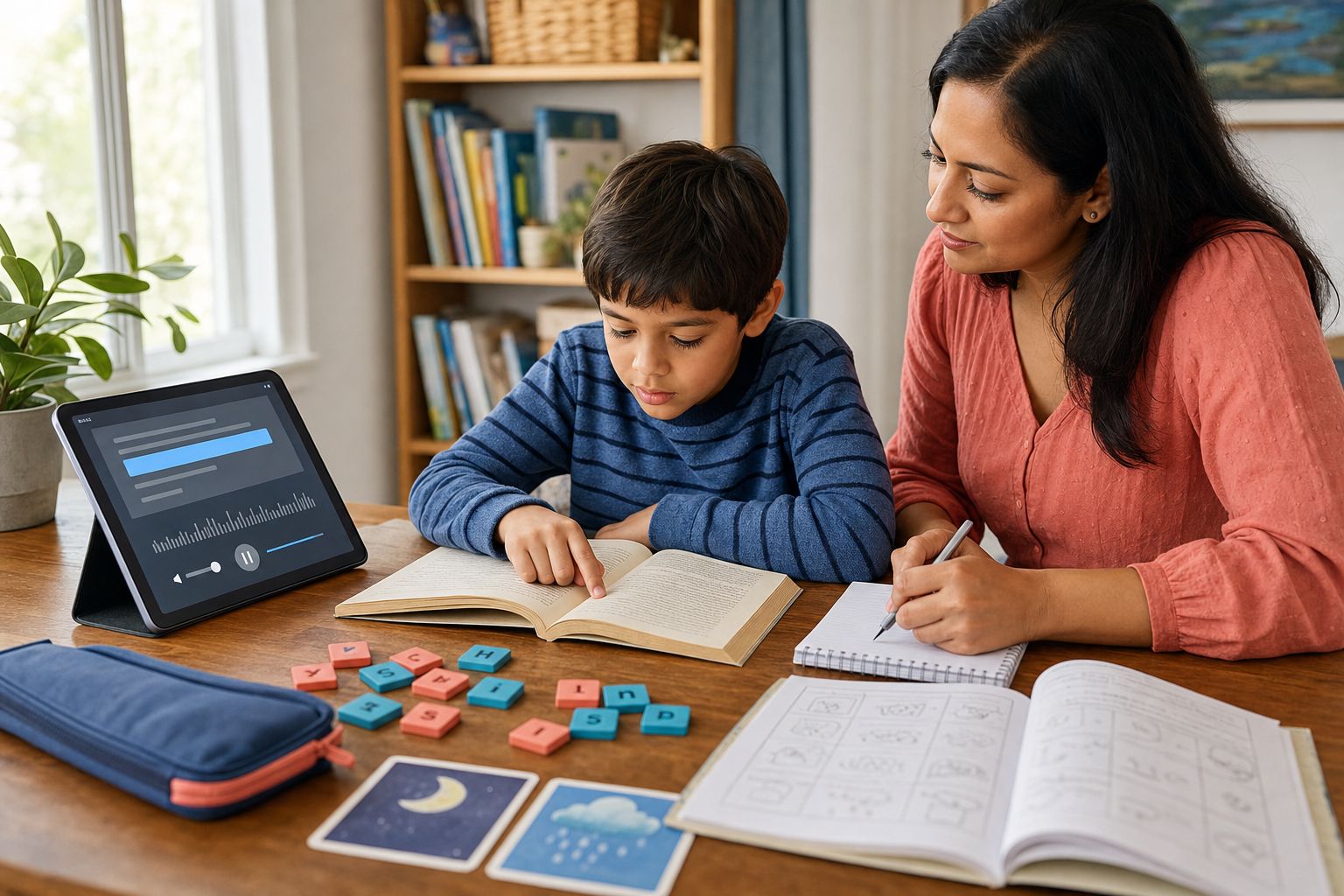
Dyslexia learning apps for kids support different reading tasks. Google Read Along focuses on children reading stories aloud and receiving assistance as they practice. For school assignments created in Word, Microsoft 365 Immersive Reader and Read Aloud can read a document aloud while providing voice, speed, spacing, line-focus, and other viewing controls. These tools can complement a document-listening routine, but the right choice depends on whether the child needs oral-reading practice, Word document support, or easier access to assigned text.
Reducing the Effort Required to Decode Text
A spoken version prevents one difficult word from blocking the whole sentence, especially when the goal is to learn a concept rather than test decoding.
Building Reading Confidence
Letting a child choose a voice, pause, and finish a short passage can make starting less intimidating.
Allowing Children to Learn at Their Own Pace
Useful dyslexia reading tools allow children to slow down, pause, and replay. The right pace is one at which the child can explain the passage.
Supporting Word Recognition
Listening while following highlighted text pairs spoken and written words. A published meta-analysis of text-to-speech and related read-aloud tools found a modest average comprehension benefit for students with reading disabilities, with results varying across students and tools. These dyslexia reading tools are therefore supports to test, not guaranteed solutions. For more context on different reading profiles, see Readify’s guide to the types of dyslexia and text-to-speech support.
How to Help a Child With Dyslexia at Home Using Readify
If you are exploring how to help a child with dyslexia at home, begin with one short assignment. Readify’s reading-and-listening tools turn supported documents and text into audio with highlighting, voice choices, speed controls, and replay.
Step 1: Upload or Paste the Child’s Reading Material
Choose a short homework PDF, Word document, webpage, or pasted passage. A five- or ten-minute task makes it easier to notice what helps.
Step 2: Choose a Clear, Child-Friendly Voice
Test one paragraph and let the child choose a clear, comfortable voice. For study, steady delivery is usually more useful than dramatic narration.
Step 3: Follow Along With Highlighted Text
For close reading, encourage the child to follow the highlighted words. If the screen feels overwhelming, work one paragraph at a time.
Step 4: Adjust the Playback Speed
Start near a comfortable speaking speed and ask the child to explain the main idea after one paragraph. Slow the audio down if words become difficult to follow, and increase it only when comprehension remains comfortable. AccelaReader uses Rapid Serial Visual Presentation and words-per-minute controls, so it is a visual speed-reading tool rather than a child-focused text-to-speech reader. It can illustrate how reading speed is adjusted, but for children showing signs of dyslexia, comprehension and confidence are more important than reaching a higher WPM.
Step 5: Replay Difficult Sections and Discuss Key Ideas
Replay the sentence that caused confusion instead of restarting the page. Then ask, “How would you explain this in your own words?”
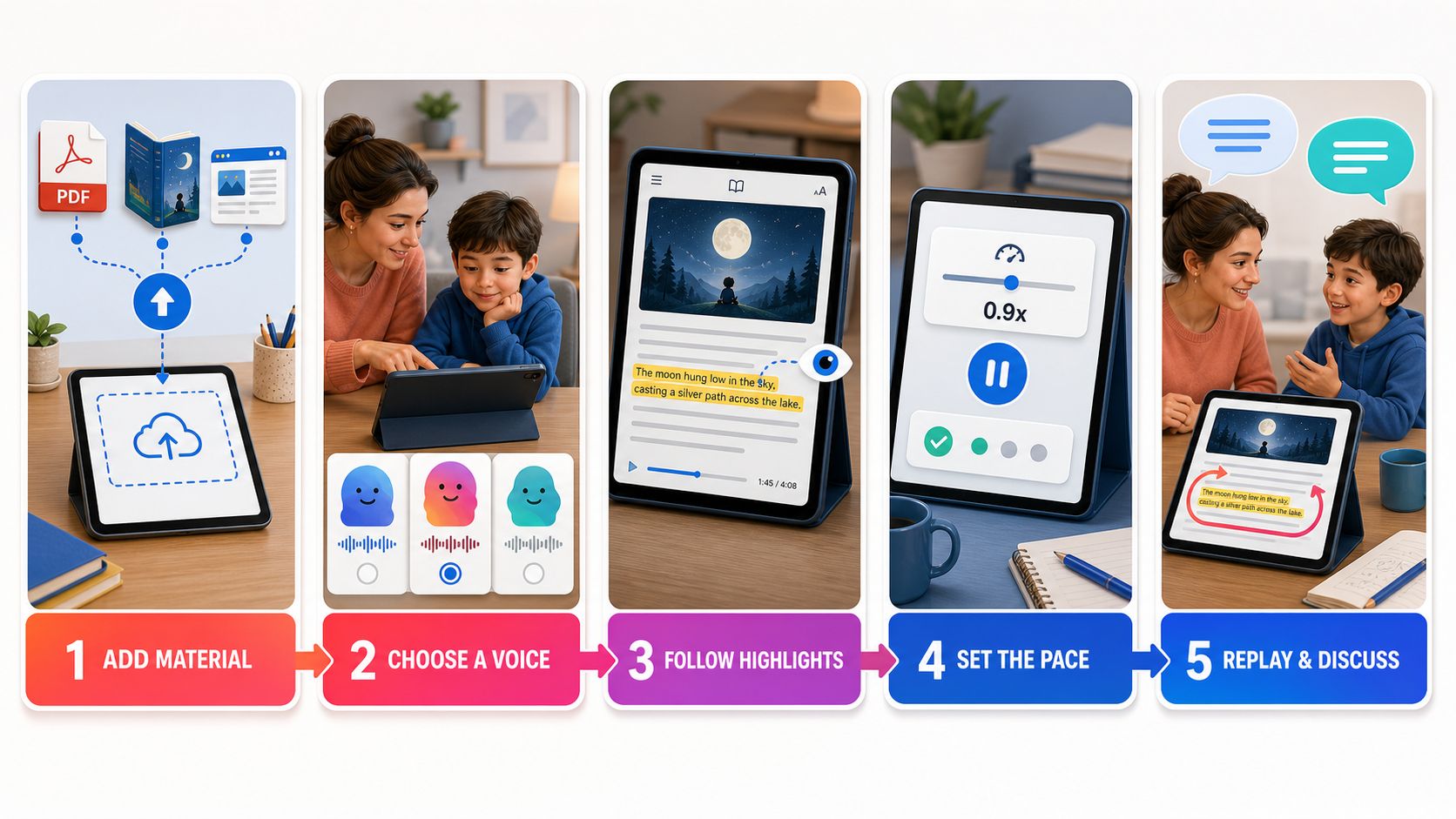
Image description: A five-step diagram shows a parent adding a short text to Readify, selecting a clear voice, following highlighted words, adjusting speed, and replaying one difficult sentence.
Tips for Parents Supporting Kids With Dyslexia
Focus on Progress, Not Reading Speed
Notice useful changes: less resistance, one new word pattern, a completed paragraph, or a clear summary. Speed is not the only sign of progress.
Protect Your Child’s Confidence
Describe the task, not the child. “This word is difficult” is more helpful than “You are not trying.” Make room for strengths beyond reading aloud.
Use Multiple Learning Methods
Combine listening, print, conversation, drawing, hands-on practice, and school-recommended instruction. If several symptoms of dyslexia persist, request an evaluation rather than waiting for the child to struggle more visibly.
Conclusion
The most useful response to possible signs of dyslexia in kids is neither panic nor delay. Observe patterns, speak with the school, seek an appropriate evaluation when needed, and protect the child’s access to ideas in the meantime. Dyslexia reading tools can reduce friction, but they do not diagnose dyslexia or replace skilled instruction. Help your child read with less frustration: try Readify for free with one short piece of reading material.
FAQs
What are the first signs of dyslexia in a child?
Early signs of dyslexia in kids may include difficulty learning letter names and sounds, trouble rhyming, problems blending sounds into words, persistent spelling difficulties, and avoidance of reading. No single sign confirms dyslexia.
At what age can dyslexia be identified?
Risk factors can be noticed before fluent reading develops, and screening can begin in the early school years. A qualified professional should interpret the child’s development, instruction, language background, strengths, and assessment results.
Is an online dyslexia test for kids accurate?
An online dyslexia test for kids may help parents organize observations, but it cannot diagnose dyslexia. A proper evaluation uses several sources of information and assesses the child’s reading, spelling, language, phonological processing, fluency, and relevant background.
Can reading apps treat dyslexia?
No. Dyslexia learning apps for kids do not cure or diagnose dyslexia. Some teach specific skills, while text-to-speech apps provide another way to access written material. Their role should be matched to the child’s needs and used alongside appropriate teaching and professional support.
How can parents help a child with dyslexia at home?
Keep practice short and predictable, read aloud together, use audio and visual supports, discuss meaning, praise specific progress, and coordinate with the child’s teacher. When reading difficulties persist, ask about screening or a comprehensive evaluation.
