Thimble prize
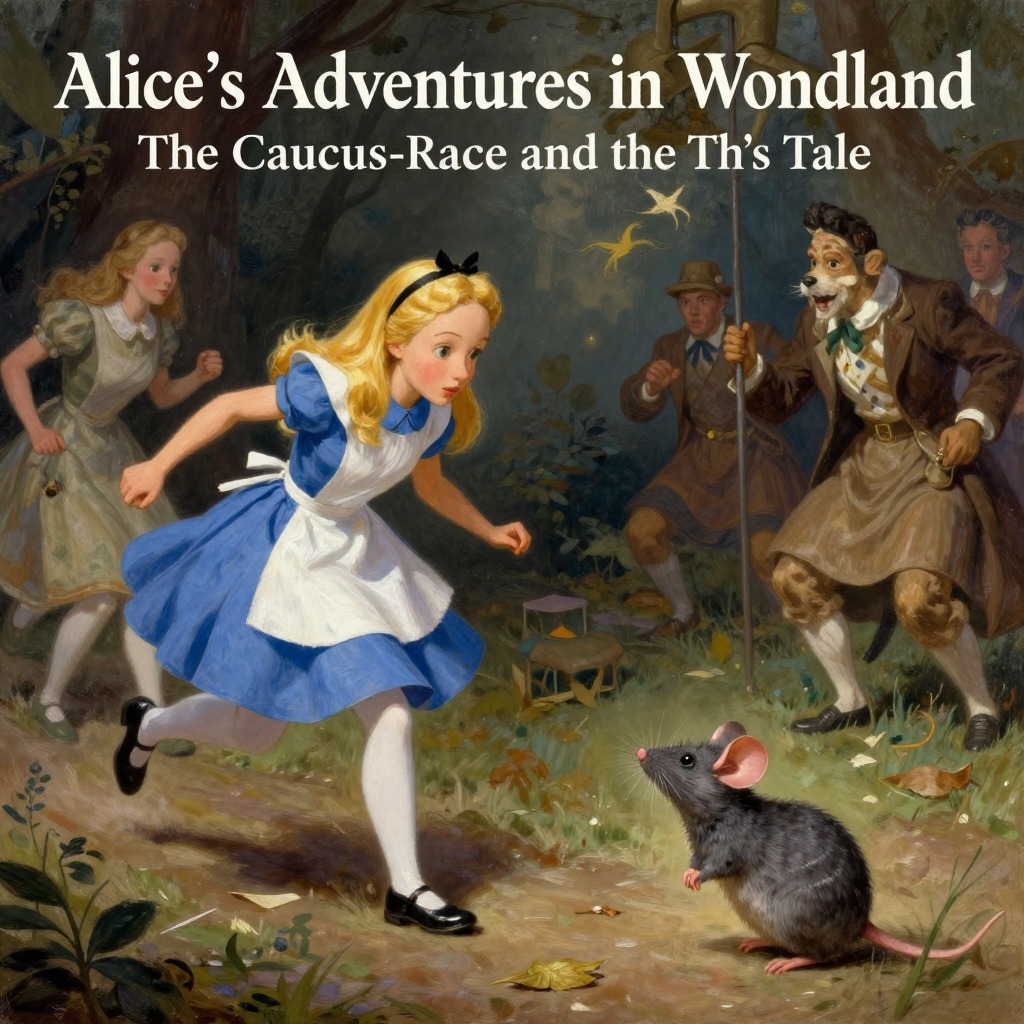
The thimble prize appears in the third chapter of Alice's Adventures in Wonderland, during the Caucus-race, a chaotic race devised by the Dodo to dry the dripping animals and birds who have fallen into the pool of tears. After the race, the Dodo declares that "Everybody has won, and all must have prizes," and the party turns to Alice for the prizes. She produces a box of comfits from her pocket, handing them out one apiece. The Mouse then insists that Alice herself must receive a prize, and the Dodo asks what else she has. Alice replies, "Only a thimble." The Dodo takes it and solemnly presents it back to her, saying, "We beg your acceptance of this elegant thimble," and the company cheers. Alice finds the whole ceremony "very absurd," but the grave faces of the creatures prevent her from laughing, so she bows and accepts the thimble with as solemn an expression as she can muster.
The Thimble as a Token of Communal Absurdity
The thimble prize is the culmination of the Caucus-race, an event that parodies the conventions of organized competition and reward. The race itself has no clear rules—participants begin and end running whenever they like—and the Dodo's declaration that everyone has won and must have prizes inverts the usual logic of victory. The thimble, a mundane household object used for sewing, is elevated to the status of a ceremonial prize through the Dodo's mock-heroic language. The contrast between the object's ordinary nature and the solemnity of the presentation underscores the arbitrary and performative nature of the entire ritual. Alice's own comfits, which she distributes as prizes, are consumed with difficulty—large birds cannot taste theirs, small ones choke—but the thimble, being inedible and useless, remains as a pure symbol of the event's absurdity.
The Thimble and Social Obligation
The thimble prize also functions as a mechanism of social obligation within Wonderland's upside-down society. Alice, who has no intention of participating in the race's reward system, is compelled to both give and receive a prize. The Dodo's insistence that she must have a prize, and the Mouse's prompting, force her into a reciprocal exchange that she did not seek. This mirrors the pattern of enforced social rituals that Alice encounters throughout her journey, such as the Mad Tea-Party's endless tea-drinking and the Queen of Hearts' croquet game, where participation is mandatory and the rules are arbitrary. The thimble, as a prize that Alice already owned and that is simply returned to her, highlights the circular and meaningless nature of such obligations. The ceremony's gravity, which Alice dares not disrupt, reveals the power of collective performance to invest even the most trivial object with significance.
The Thimble's Narrative and Thematic Significance
Though the thimble prize appears only once, it resonates thematically with the book's broader critique of Victorian social conventions and the arbitrary nature of authority. The Caucus-race itself is a satire of political and social rituals that produce no meaningful outcome, and the thimble prize embodies this satire: a reward that is both given and received by the same person, with no real value or purpose. The object also anticipates later episodes in which Alice is forced to navigate Wonderland's illogical systems of reward and punishment, such as the Queen of Hearts' constant orders of execution and the trial of the Knave of Hearts, where evidence is interpreted without reason. The thimble, as a prize that is "elegant" only in name, serves as a microcosm of Wonderland's logic, where form and ceremony are preserved while substance is emptied out. Alice's acceptance of the thimble, despite her recognition of its absurdity, marks her early accommodation to the strange rules of the world she has entered, a pattern that will be tested and ultimately rejected by the story's end.