Eyeglasses (judge's)
Lawrence John Wargrave, the retired judge who orchestrated the entire Indian Island massacre, used his own eyeglasses as the crucial component of a carefully rigged suicide device, ensuring that his death would appear to be the work of the unknown murderer he himself had been impersonating. The glasses, attached to an elastic cord looped around a door handle and connected to a revolver, were designed to fire a single shot through his forehead when he pressed the trigger with a handkerchief-protected hand, then recoil and detach, leaving no trace of the mechanism. This final act was the culmination of a lifelong obsession with crime and punishment, a desire to commit "a fantastical crime—something stupendous—out of the common" that would baffle the police and satisfy his artistic vanity.
Identity and Symbolic Significance
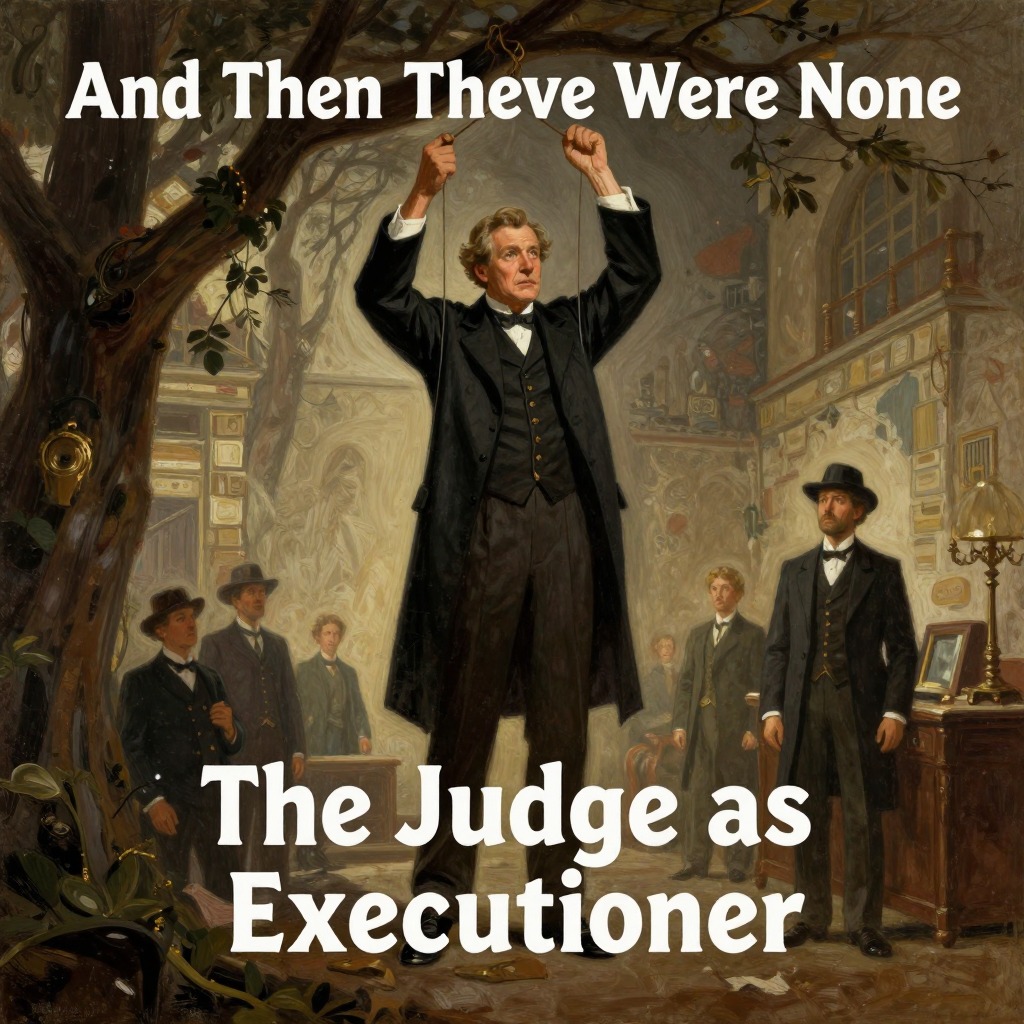
Wargrave's eyeglasses were not merely a practical aid for reading; they were a symbol of his judicial authority and his penetrating, judgmental gaze. Throughout his career on the bench, he had used his position to scrutinize defendants, summing up cases with a cold, legalistic precision that often swayed juries toward conviction. The glasses represented the power of the law to see and to condemn. In his confession, Wargrave reveals that he was born with "a definite sadistic delight in seeing or causing death" alongside "a strong sense of justice," a contradiction that found its perfect outlet in the legal profession. The eyeglasses, therefore, were the physical emblem of this dual nature: the instrument of detached observation and the tool of final judgment.
Role in the Suicide Mechanism
In the final stage of his plan, after Vera Claythorne had hanged herself and he had set the scene, Wargrave prepared his own death. He attached to his eyeglasses what appeared to be a length of fine black cord but was actually elastic cord. He then laid the weight of his body on the glasses, looped the cord around the door handle, and attached it, "not too solidly," to the revolver. His plan was that, with his hand protected by a handkerchief, he would press the trigger. The revolver, pulled by the elastic, would recoil to the door, jar against the handle, detach itself, and fall. The elastic, released, would hang down innocently from the eyeglasses on which his body was lying. A handkerchief on the floor would cause no comment. He would be found "laid neatly on my bed, shot through the forehead in accordance with the record kept by my fellow victims." This elaborate mechanism was designed to make his death appear to be the work of the unknown murderer, completing the illusion that he, too, was a victim.
Thematic Significance: The Brand of Cain
Wargrave himself provided the symbolic interpretation of his death. He wrote that the manner of his death, a bullet through the forehead, was "the brand of Cain"—the mark of the first murderer. This self-conscious symbolism reveals his deep-seated need for recognition. He wanted his crime to be understood as a work of art, a masterpiece of murder that would be studied and admired. The eyeglasses, as the trigger mechanism, were the final brushstroke in this macabre composition. They transformed his death from a simple suicide into a theatrical performance, a final judgment upon himself. The glasses, which had once been used to scrutinize the guilty, were now used to execute the ultimate judge, completing the cycle of justice and self-destruction that defined the entire Indian Island affair.