
The Theme of Equality and Its Corruption
Animal FarmExamines the journey from 'All animals are equal' to 'some are more equal than others,' tracing the corruption of the central ideal.
increasing Bearing strength in each event
 decreasing
Bearing strength in each eventdecreasingThe Declaration of Equality
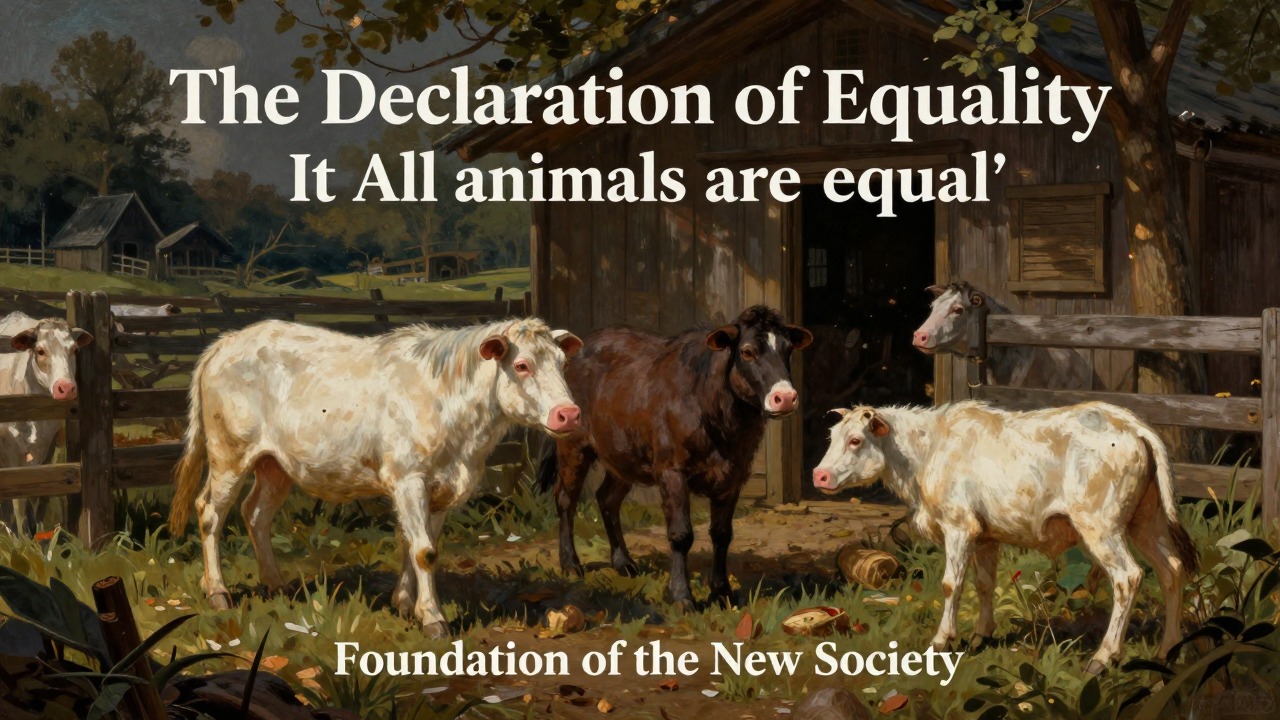
The Foundation of the New Society
The Seventh Commandment
'All animals are equal' is inscribed as the final law. It is the bedrock of Animalism, promising a fair society.
The Initial Practice
All animals work together, share the food, and have equal rights. The farm seems to be a true democracy.
The Ideal Stated
The principle is clear: no animal is superior to another. The rebellion is fought for this equality.
The Gradual Erosion
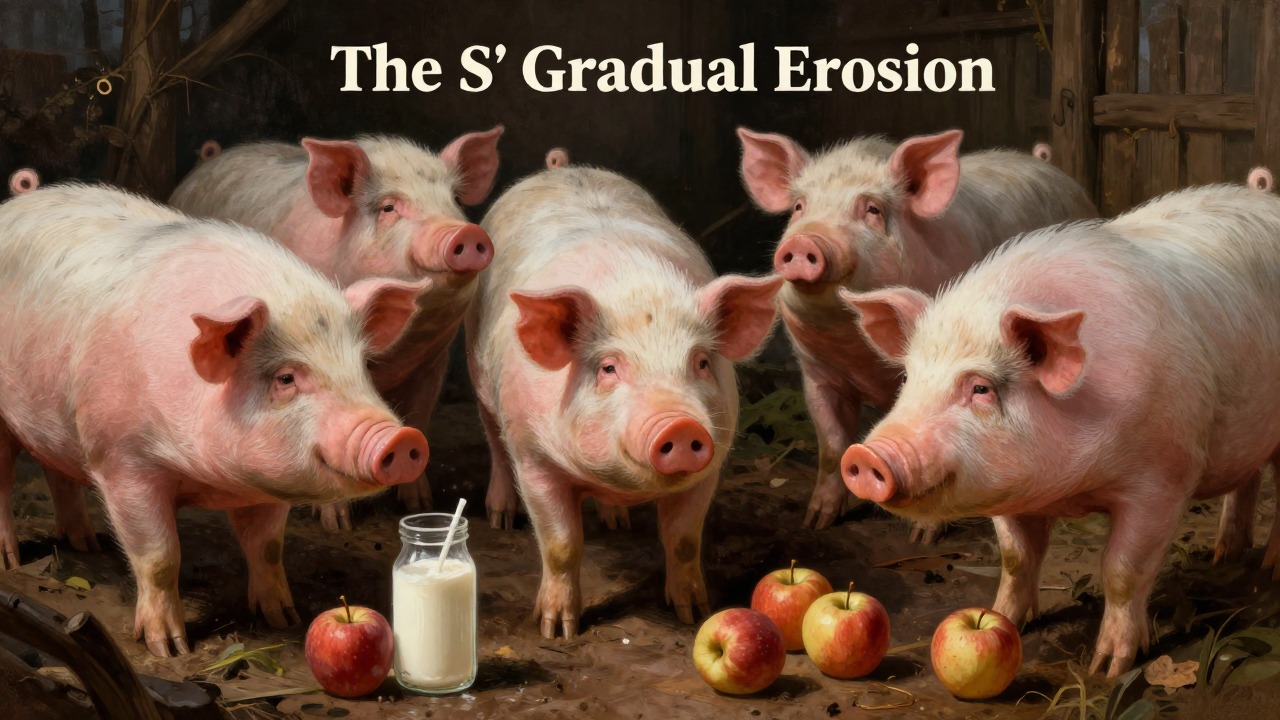
The First Exceptions
The Pigs' Special Rations
Milk and apples are reserved for pigs. This is justified by necessity, but it creates a privileged class.
The Pigs' Leadership Role
They take over decision-making, and the other animals have no say. The principle of equality is weakened.
The Alteration of Commandments
The Commandments are changed to allow pigs to sleep in beds, kill animals, and drink alcohol. Each change erodes equality further.
The Final Statement of Inequality
The Ultimate Corruption
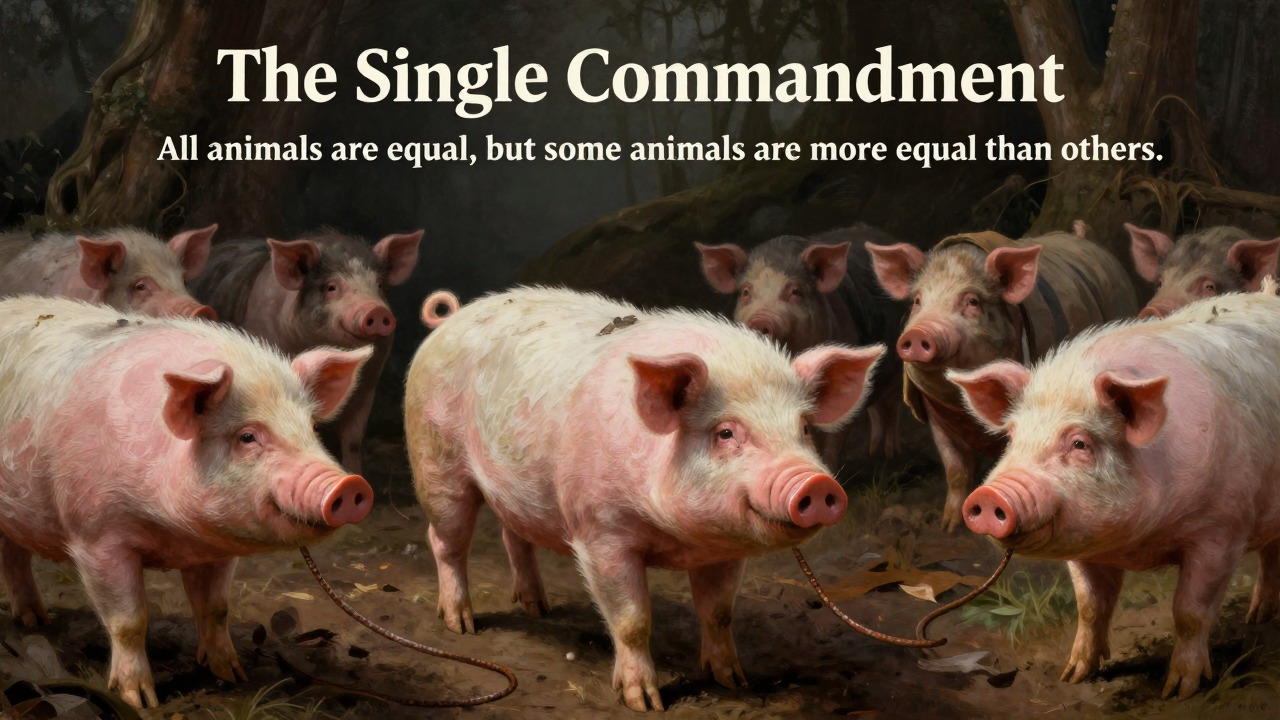
The Single Commandment
All the Commandments are replaced by one: 'All animals are equal, but some animals are more equal than others.'
The Open Tyranny
The pigs now walk on two legs, wear clothes, and carry whips. They are the 'more equal' ones, and the others are their subjects.
The Complete Betrayal
The ideal of equality is dead. The farm has become a rigid hierarchy, with the pigs at the top and the rest at the bottom.
the night of the Rebellion
throughout the story
the end of the story
