
The Hens' Rebellion Against Egg Surrender
Animal FarmRecounts the brief but brutal uprising of the hens when ordered to give up their eggs.
increasing Bearing strength in each event
 decreasing
Bearing strength in each eventdecreasingThe Call to Sacrifice
The Demand
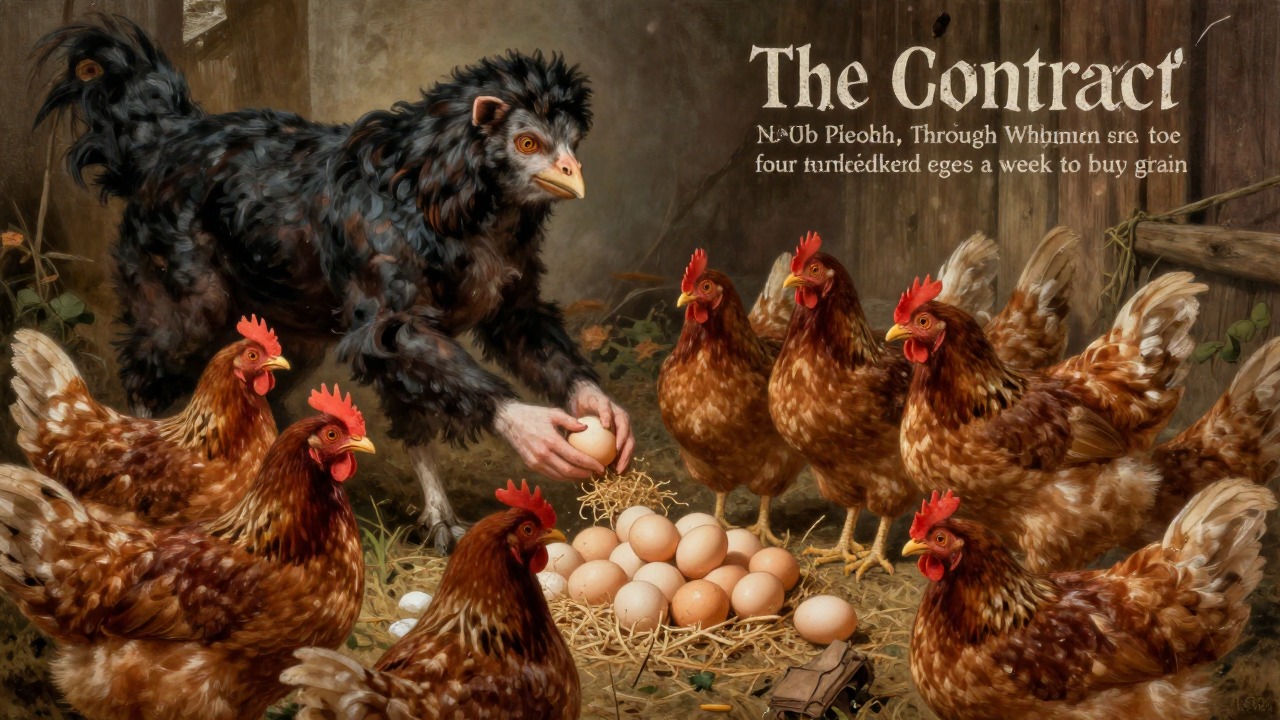
The Contract
Napoleon, through Whymper, agrees to sell four hundred eggs a week to buy grain. The hens are told to surrender their eggs.
The Outcry
The hens protest, as they were about to sit on the eggs for hatching. They call it murder. This is the first open rebellion since the expulsion of Jones.
The Method of Defiance
Led by three Black Minorca pullets, the hens fly up to the rafters and lay their eggs from there, smashing them on the floor.
Napoleon's Ruthless Suppression
The Crushing of Revolt
The Punishment
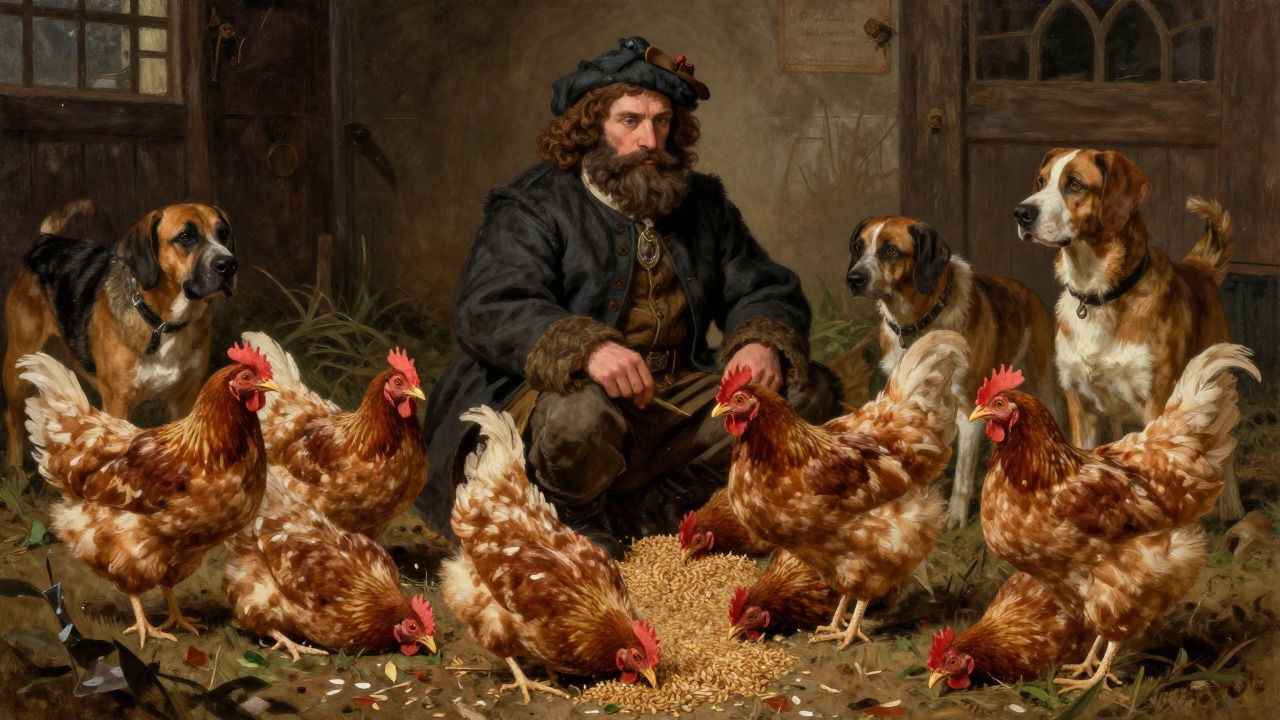
Napoleon stops the hens' rations and decrees that any animal giving grain to a hen will be punished by death. The dogs enforce the order.
The Five-Day Standoff
The hens hold out for five days, but hunger and fear force them to capitulate. Nine hens die, and their bodies are buried secretly, the cause given as coccidiosis.
The Lesson Learned
The hens return to their nesting boxes. The rebellion is crushed, and the animals learn that defiance is futile. The eggs are delivered, and the outside world knows nothing.
The Aftermath of the Hens' Rebellion
The Silence
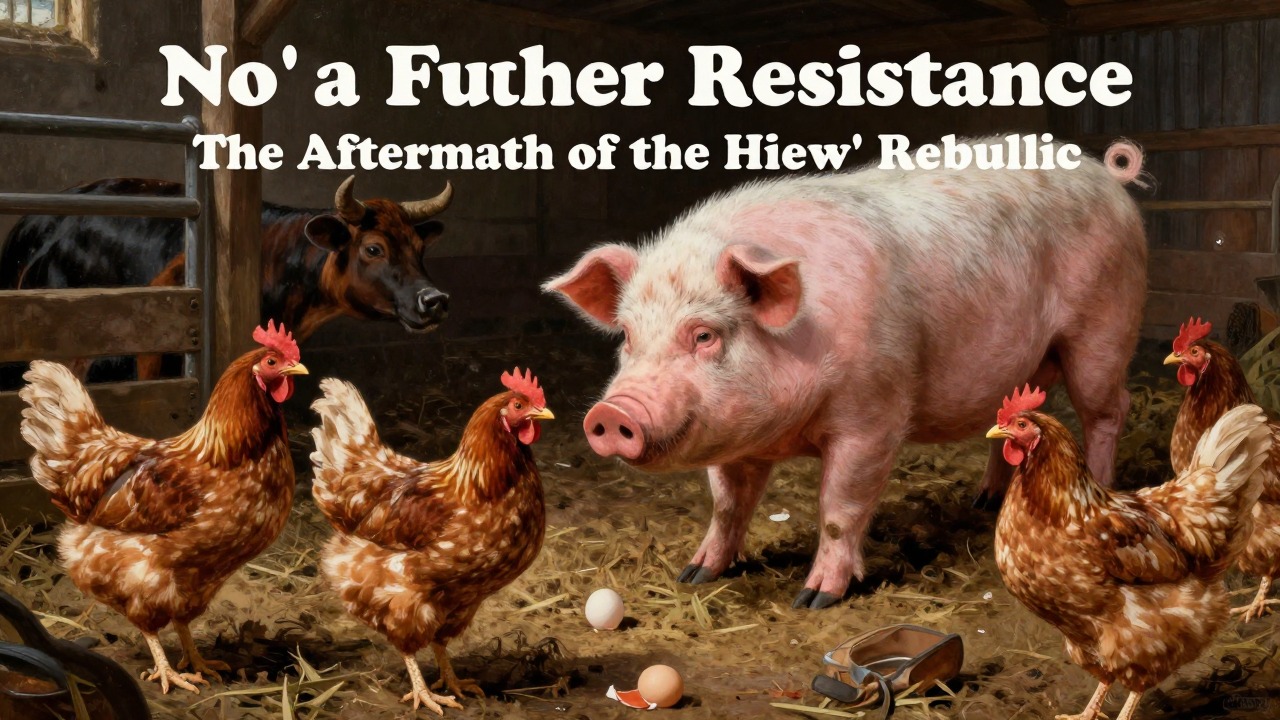
No Further Resistance
The hens' failed rebellion breaks any remaining spirit of resistance. The animals become more compliant.
The Normalization of Sacrifice
The egg contract becomes a routine part of farm life. The hens' sacrifice is forgotten, and the pigs continue to trade with humans.
The Symbol of Lost Freedom
The hens' rebellion is a turning point; it shows that the pigs will use violence against their own kind to maintain power.
the second winter
immediately after the hens' defiance
the following weeks
