Ender Becomes Commander of Dragon Army
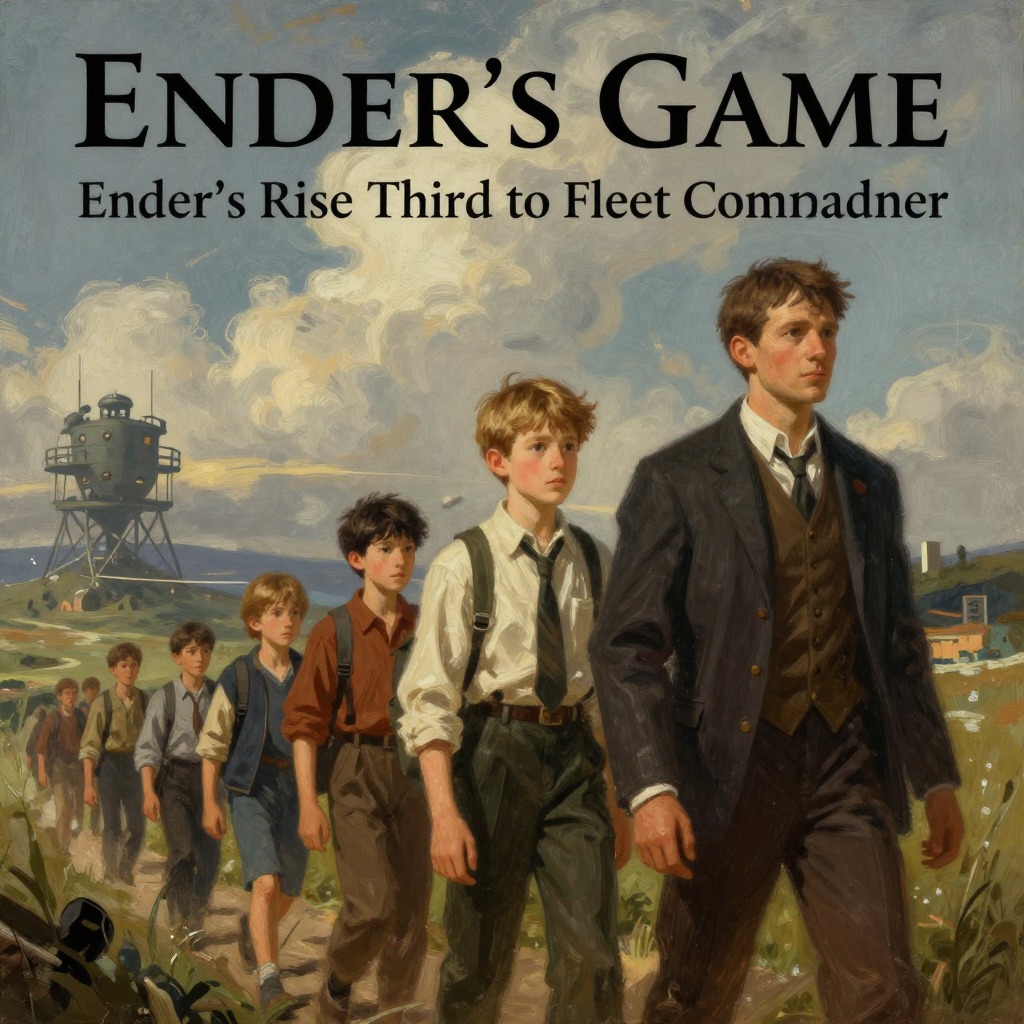
Ender Wiggin's promotion to commander of Dragon Army is the moment the Battle School's training program pivots from testing his individual brilliance to forging him into a leader capable of commanding in the real war against the buggers. After three years of topping the soldier standings almost continuously, Ender is summoned by Major Anderson and Colonel Graff, who revive the disbanded Dragon Army—a name so cursed that no army bearing it had ever won even a third of its games. The promotion is deliberately premature: Ender is not yet seven years old, and no one had ever been made commander before age eight. The teachers' choice of the ill-fated name and their refusal to allow trades signal that this is not an honor but a trial, one designed to push Ender beyond his limits and to sever the last bonds of friendship and support he had built among the other boys.
The Making of Dragon Army
Graff and Anderson assemble Dragon Army from an entire launch course advanced early and a group of advanced students whose graduation was delayed, ensuring that no soldier is older than Ender himself. The army is a mix of nearly thirty raw Launchies, many underage, and veterans who had never been toon leaders and had made little impression in their previous armies. Ender is forbidden to transfer any of them, a rule that strips him of the standard commander's tool for shoring up weak points. Graff's official welcome is bored and over-rehearsed, but his final words carry a warning: "We have no intention of letting you dominate unfairly." The implication is clear—Ender must succeed with exactly what he is given, and the teachers will stack the odds against him to see how he responds.
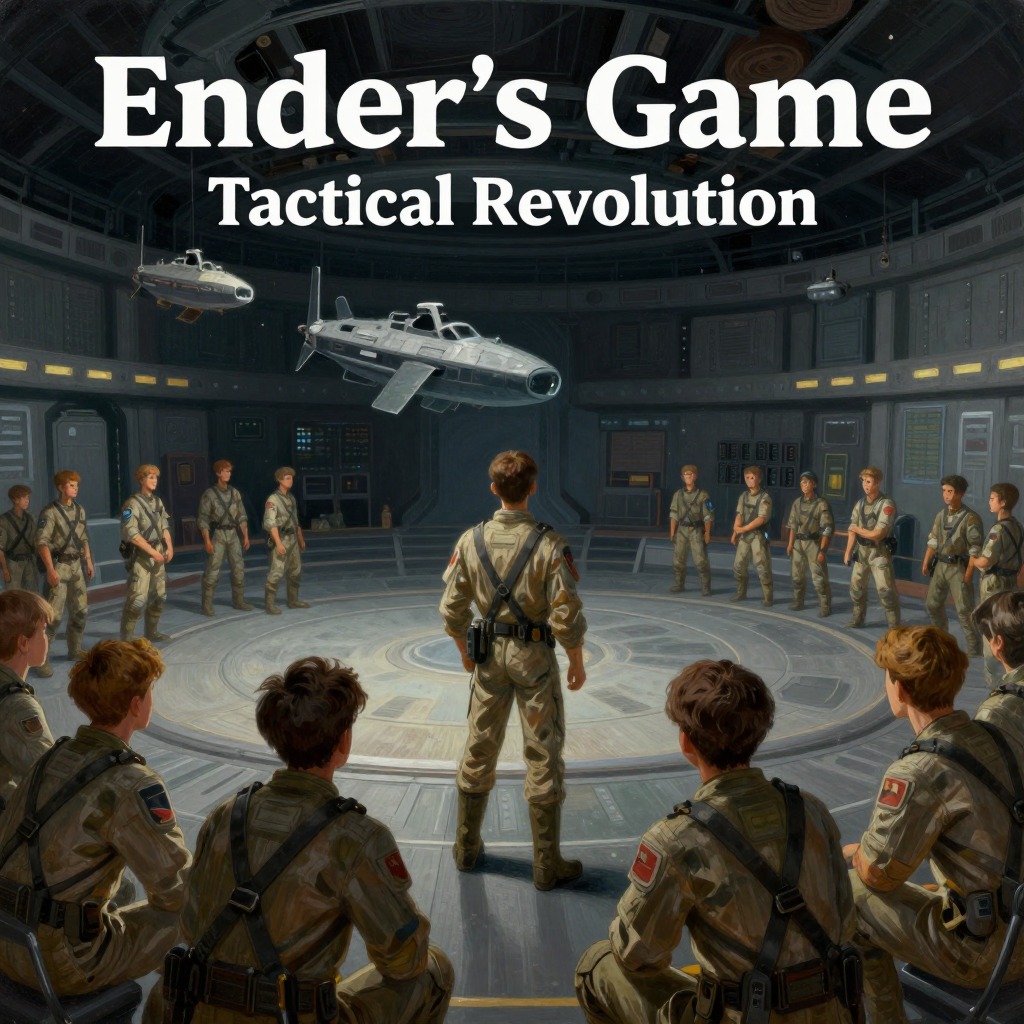
Ender immediately imposes his own discipline, ordering the soldiers to dress in three minutes and run to the battleroom, sending five boys naked through the corridors when they fail. In the battleroom, he reorients them to the fundamental principle he had learned in his own first battle: "The enemy's gate is down." He demonstrates the feet-first attack position, freezing his own legs to use them as a shield, and drills the army in the kneeling attack, spinning, and jackknifing off walls. He singles out the smallest soldier, Bean, for public praise and criticism, deliberately isolating him as the teachers had isolated Ender, a strategy he later recognizes as a cruel but effective way to sharpen a soldier's edge. By the end of the first practice, Ender has transformed the ragged group into a unit that can execute his unorthodox tactics, and he begins to see the potential for the best fighting group ever to play the game.
Isolation and the Loss of Friends
The promotion severs Ender's ties to his friends. Major Anderson announces a rule change: only members of the same army may practice together in the battleroom during free time, and battlerooms are now scheduled, with Ender's next turn in four days. This cuts off his evening practice sessions with Alai, Shen, and the other Launchies who had become his informal training group. When Ender protests that he needs Alai and Shen to help train his new army, Anderson replies, "It's about time you grew up and did some things on your own." The isolation is complete: Ender is now a commander, and the other commanders, fearing his influence, no longer send their soldiers to his practices. Alai, his closest friend, becomes a stranger, and their friendship, once sealed with a sacred kiss and the word "Salaam," is reduced to a wall between them. Ender feels the loss keenly, but he is determined to defeat the teachers by succeeding on his own terms.
The First Battle and the Birth of a Legend
Despite the army's inexperience, Ender's training pays off. In his first battle as commander, against Rabbit Army, Dragon Army wins decisively, with only six soldiers frozen or disabled. Ender's tactics—spreading to the near stars, sliding along walls, and using the feet-first attack—confound the enemy, and his toon leaders execute his orders with precision. The victory is so complete that Ender emerges at the top of the commander standings, with a perfect won-lost record and the highest scores in every category. The other commanders are stunned, and some, like Dink Meeker, warn him not to get cocky, while others, like Carn Carby, ask him to beat the next army as a favor. Ender's success is not a fluke; it is the result of his ability to understand the enemy's thinking and to improvise, a skill he had honed in the battleroom and would later apply to the real war.
The Teachers' Escalation
The teachers respond to Ender's success by escalating the challenges. They schedule battles every day, then twice in the same day, and they stack the odds with unfair star arrangements, late notifications, and unequal forces. In his battle against Salamander Army, commanded by his old enemy Bonzo Madrid, Ender is forced to use a desperate shield tactic—freezing a soldier to use as a shield and hiding a shooter behind him—to win against an army that had been given twenty minutes' notice while Ender's army had only five. The victory is hollow, and Ender is furious at the teachers for cheating. He confronts Major Anderson, demanding to know when he will face a fair fight, but Anderson only replies, "Congratulations on the victory, commander." The pattern is clear: the teachers are not interested in fairness; they are testing Ender's ability to win under any conditions, preparing him for the real war where the enemy will not play by rules.
The Significance of the Promotion
Ender's promotion to commander of Dragon Army is the pivotal event that transforms him from a soldier into a leader. It is the first step in a trajectory that will lead him to Command School, where he will command real fleets in the Third Invasion, and ultimately to the destruction of the bugger homeworld. The promotion also marks the beginning of Ender's isolation from his peers, a deliberate strategy by the teachers to make him rely only on himself. As Ender later reflects, the teachers had isolated him to make him struggle, to prove that he was far better than everyone else, and to make him lonely, afraid, and untrusting—traits that made him a better soldier. The promotion is thus both a reward and a curse, a test of his genius and a crucible that will forge him into the weapon humanity needs. It is the moment when Ender Wiggin, the boy, begins to become Ender the commander, the hero, and the killer.