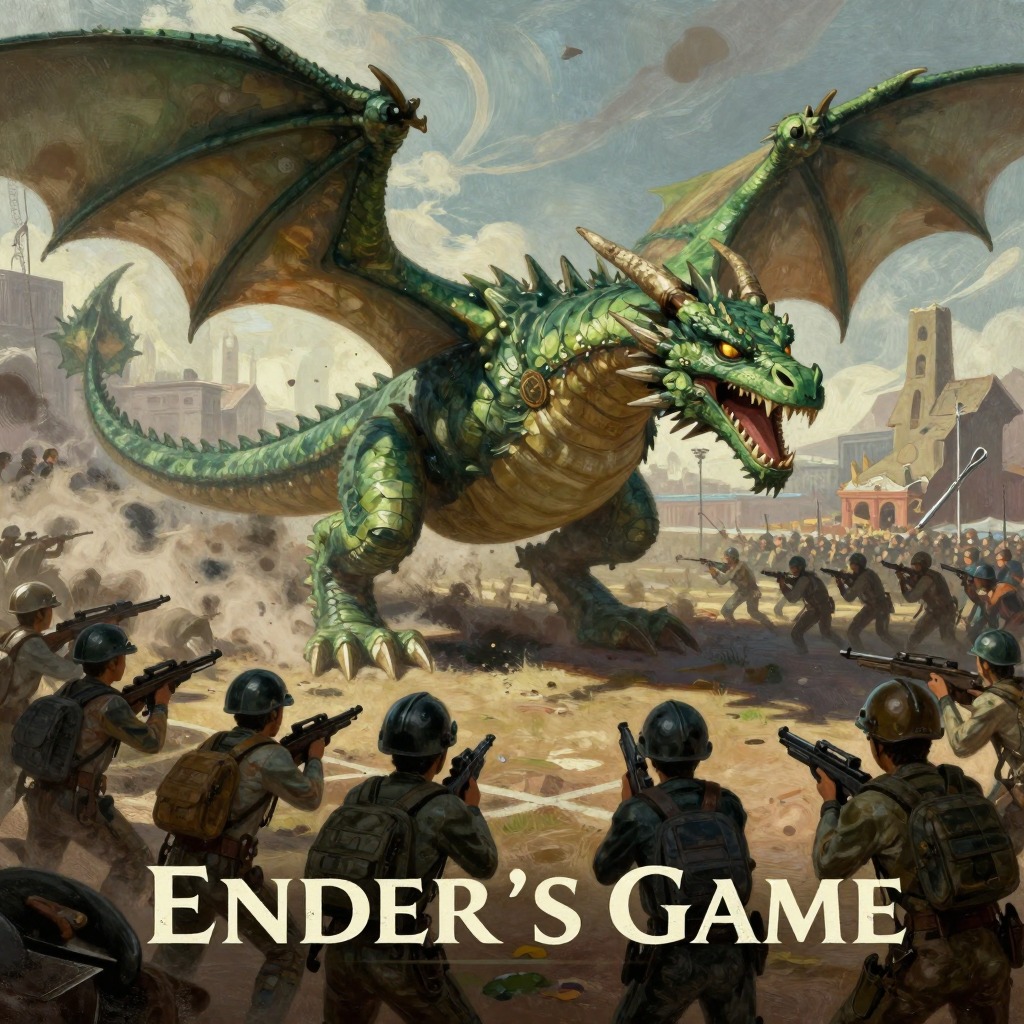
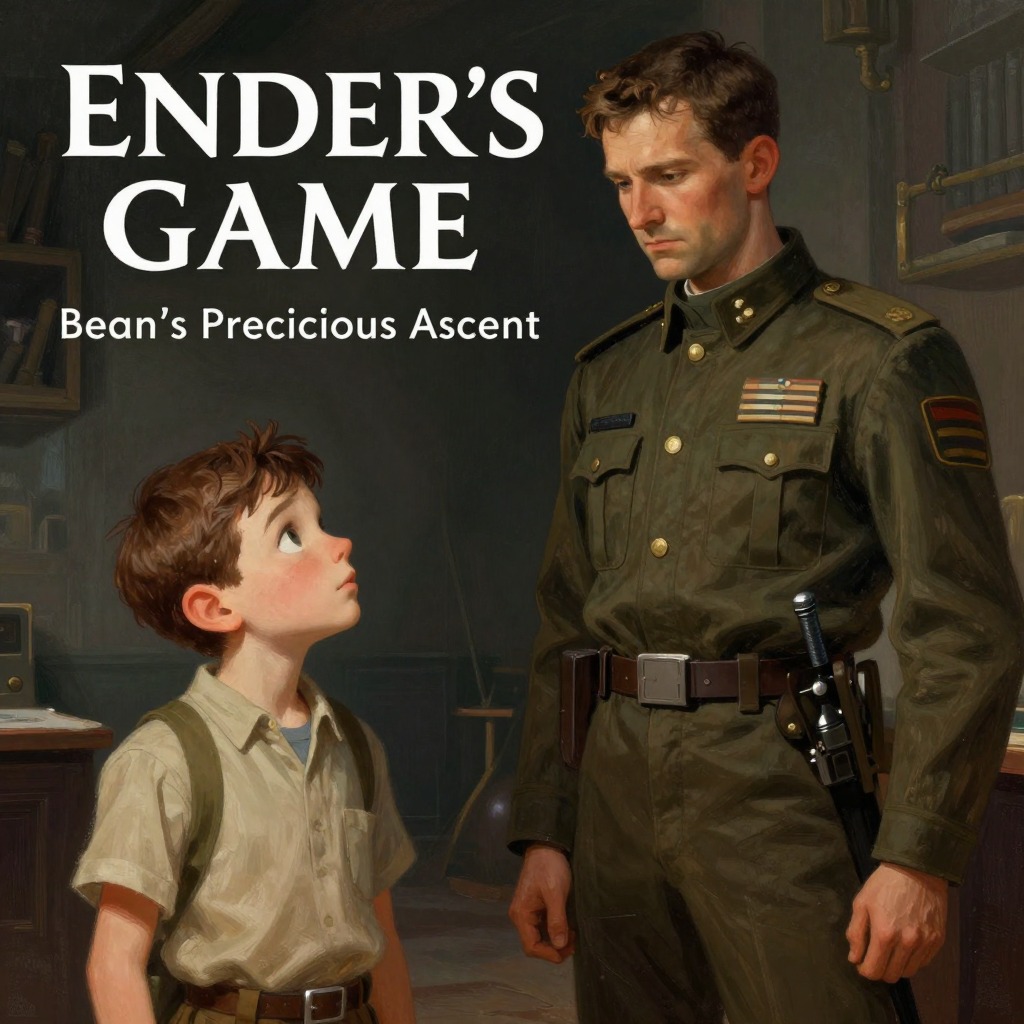
Ender defeats Salamander Army (Bonzo's army) with shield tactic
Ender Wiggin's defeat of Salamander Army, commanded by his old nemesis Bonzo Madrid, is a pivotal moment in his career as commander of Dragon Army. It is the first battle in which the teachers stack the odds against him, forcing him to improvise a brilliant tactical innovation that becomes a signature of his command style. The victory is not merely a military triumph but a psychological blow to Bonzo, deepening the hatred that will culminate in their violent confrontation in the shower. It also marks a turning point in Ender's relationship with the game itself, as he begins to see the teachers as the true enemy.
Background and Setup
Ender's Dragon Army had been winning battles at an unprecedented pace, defeating seven armies in seven days. The teachers, led by Colonel Hyrum Graff and Major Anderson, had deliberately given him an untrained army and then scheduled battles with increasing frequency and unfair conditions. After his seventh victory, Graff summoned Ender to his office, where he was handed a slip of paper announcing a battle against Salamander Army at 1200—just ten minutes away. This was a deliberate provocation: Bonzo had been given twenty minutes' notice, meaning his army would already be inside the battleroom, fully prepared, while Ender's soldiers were in the middle of showering after practice. The teachers had also chosen Salamander Army because Bonzo, now one of the oldest commanders, harbored a deep personal hatred for Ender, making the battle as much a test of Ender's psychological resilience as his tactical skill.
The Battle and the Shield Tactic
When Ender arrived at the battleroom, he found his army exhausted and unprepared. The room itself was empty—no stars, no obstacles—and dazzlingly bright, leaving nowhere to hide. The enemy's door was already open, and Ender realized that Salamander Army was deployed against the wall all around the door, ready to flash anyone who emerged. In this desperate situation, Ender devised an ingenious tactic. He selected the taller boys, including Crazy Tom, and made them kneel, forming an L-shape with their bodies. He then flashed them, freezing them in place, and used them as shields. He chose the smallest boy, Bean, handed him Tom's gun, and made Bean kneel on Tom's frozen legs, pulling Bean's hands, each holding a gun, through Tom's armpits. This created a mobile armored unit: Tom was a shield, and Bean was the shooter hidden inside. Ender assigned two more boys to throw each shield-pair through the door, and when they were all ready, he shouted "Move!" The shield-pairs went through the door backwards, so the frozen boy in front absorbed the enemy's fire while Bean, with two guns, had an easy time shooting the Salamanders who were lined up flat along the wall. The throwers also jumped through, adding fire from a different angle. The battle was over in less than a minute, with Dragon Army losing twenty frozen or disabled soldiers but winning decisively.
Aftermath and Significance
Ender was furious at the unfairness of the battle, telling Major Anderson, "I thought you were going to put us against an army that could match us in a fair fight." He even asked Bean, in front of Anderson, what he would have done if he had commanded Salamander Army, and Bean's answer—"Keep a shifting pattern of movement going in front of the door"—was a direct criticism of Bonzo's static defense. Ender dismissed his army immediately, refusing to perform the elaborate victory ritual, because he felt there was no glory in winning a rigged game. He realized that Bonzo, with his Spanish honor, would not understand that Ender's anger was directed at the teachers, not at him. Bonzo would only see that he had been defeated even when the odds were stacked in his favor, and that Ender had publicly humiliated him. This battle, more than any previous one, cemented Bonzo's murderous rage, leading directly to their confrontation in the shower. For Ender, it was also a lesson in the teachers' methods: they would do anything to break him, and he could not count on fairness. The shield tactic itself became a model for his later innovations, demonstrating his ability to think creatively under extreme pressure and to use his soldiers' bodies as tools, a theme that would recur in his final battle against the buggers.