Ender orders attack on the bugger planet
Ender Wiggin's order to attack the bugger planet is the pivotal act of the Third Invasion, the moment when the child commander, believing he is engaged in a final simulated exercise, unleashes the Dr. Device on the enemy's homeworld and unknowingly exterminates an entire sentient species. The action is the culmination of years of manipulation by Colonel Graff and Mazer Rackham, who deliberately concealed the reality of the war to mold Ender into a weapon capable of such a devastating blow. It is also the moment of Ender's greatest moral crisis, as he discovers that his 'game' was real, that he has killed billions, and that his capacity for empathy—the very trait that made him a brilliant commander—was exploited to make him a genocidal tool.
The Context of Despair and Deception
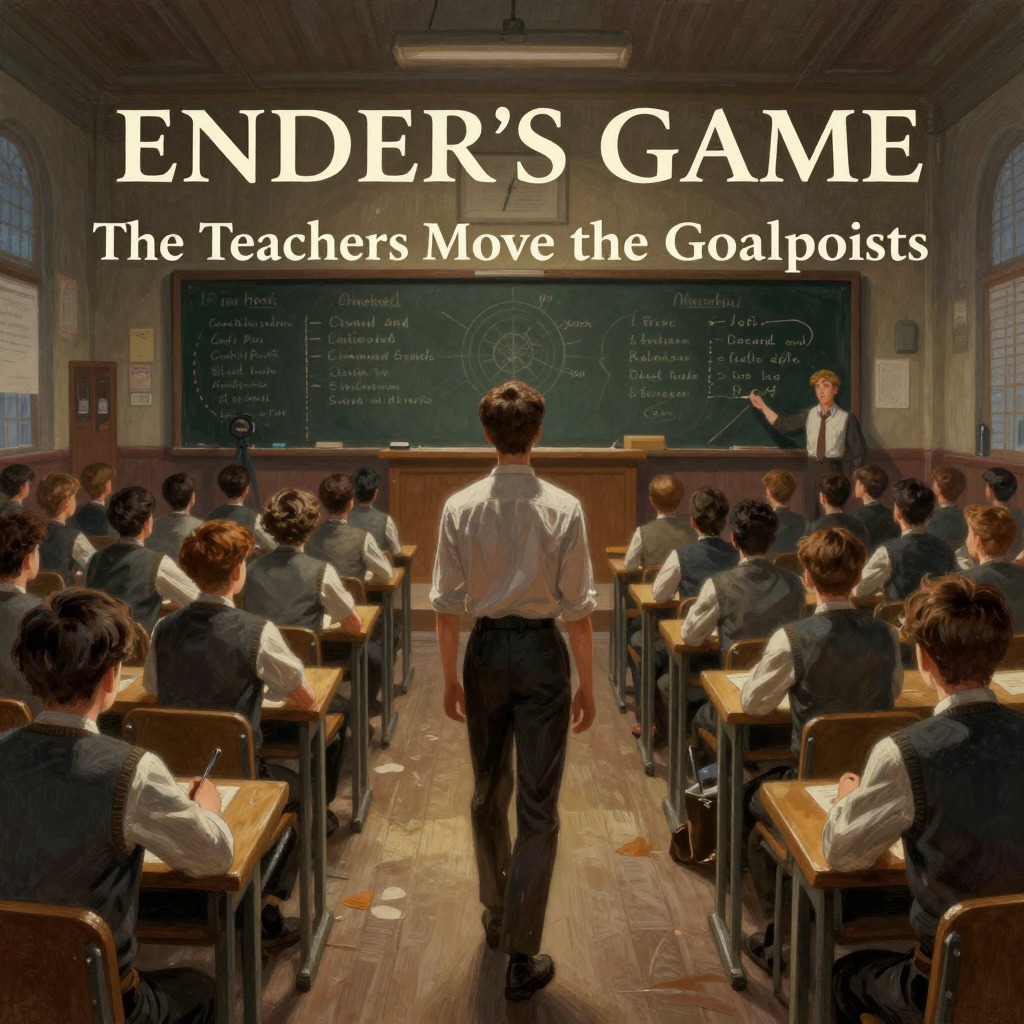
By the time of the final battle, Ender is physically and psychologically exhausted. He has been pushed to the brink by Mazer Rackham's relentless training, which included sleep deprivation, constant battles, and the deliberate breaking of his squadron leaders, such as Petra Arkanian. Ender's dreams are haunted by the faces of those he has hurt—Stilson, Bonzo, and even Valentine—and he has begun to gnaw his own fist in his sleep. When he enters the simulator room for what he believes is his final examination, he is told that the battle introduces a new element: a planet. Mazer warns him, "I will not be kind to you today," and leaves him to face an enemy that outnumbers him a thousand to one. Ender's first reaction is despair; he sees no path to victory and even contemplates losing deliberately to be sent home. But then Bean's voice crackles over the headset, reminding him of a lesson from his Battle School days: "Remember, the enemy's gate is down." This triggers a memory of his last battle in Battle School, where he won by ignoring the enemy and moving against the gate itself. In that moment, Ender decides to cheat, to break the rules of the game, and to strike at the planet—the enemy's 'gate'—even if it means his own destruction.
The Decision to Strike the Planet
Ender's order is not a calculated military strategy but a desperate act of defiance. He whispers commands to his squadron leaders, grouping his fleet into a thick projectile aimed at the nearest enemy formation. The enemy, expecting a conventional attack, welcomes him in, allowing him to be entrapped. But Ender's fleet suddenly bursts into chaos, with fighters firing at random and working their way into hopeless individual paths. This apparent disorder is a feint; a dozen fighters reform on the far side of an enemy formation, having passed through with terrible losses, and now cover more than half the distance to the planet. Ender's ships dart and feint, drawing the enemy in, concentrating them for the kill. Then, with the enemy most concentrated beyond him, he whispers a final command: the ships drop like rocks toward the planet's surface, focusing their Little Doctors on the planet itself. Ender knows the ships are unequipped for atmospheric entry, but he never intends them to reach it. He is gambling that they can get in range before being destroyed.
The Destruction of the Homeworld
As Ender's fighters plummet, the enemy blows seven of them away, but it is too late. The surface of the planet begins to bubble, and a gout of explosion hurls debris toward the fighters. Within three seconds, the entire planet bursts apart, becoming a sphere of bright dust hurtling outward. The Little Doctor's field, now amplified by the planet's mass, spreads faster than the enemy ships can flee, erupting each one into a dot of light. Only at the very periphery does the field weaken, leaving a few enemy ships drifting away. Ender's own starships survive, but the vast enemy fleet and the planet they protected are reduced to a glowing lump of dirt. Ender takes off his headphones, filled with the cheers of his squadron leaders, and only then realizes that the room is filled with noise—men in uniform are hugging, laughing, weeping, and kneeling in prayer. He does not understand. He expected anger, not celebration.
The Revelation and Its Aftermath
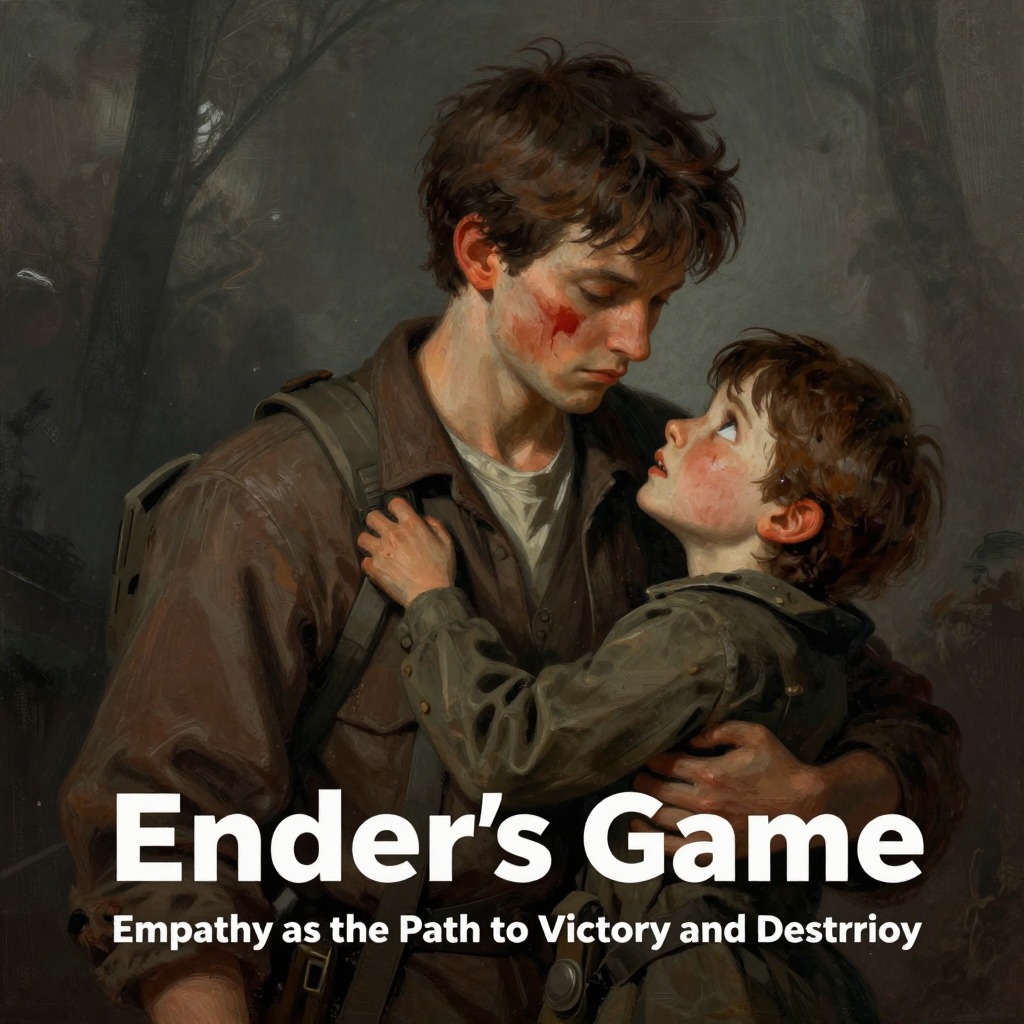
Mazer Rackham walks through the crowd and holds out his hand. "You made the hard choice, boy. All or nothing. End them or end us. But heaven knows there was no other way you could have done it. Congratulations. You beat them, and it's all over." Ender is confused. "I beat you," he says. Mazer laughs. "Ender, you never played me. You never played a game since I became your enemy." He then reveals the truth: for the past few months, Ender has been the battle commander of the real fleets. This was the Third Invasion. The battles were real, and the only enemy he fought was the buggers. He won every battle, and today he fought them at their homeworld, where the queen and all the queens from all their colonies were gathered. He destroyed them completely. Ender's mind is too tired to cope. He walks through the crowd, dodging their congratulations, and when he reaches his room, he strips off his clothes and sleeps. When he wakes, Graff and Rackham tell him he is a hero, that every government on Earth has voted him their highest medal. But Ender is devastated. "I killed them all, didn't I?" he asks. "All their queens. So I killed all their children, all of everything." He grabs Mazer's uniform and cries, "I didn't want to kill them all! I didn't want to kill anybody! I'm not a killer! You didn't want me, you bastards, you wanted Peter, but you made me do it, you tricked me into it!" Graff admits the deception: "It had to be a trick or you couldn't have done it. It's the bind we were in. We had to have a commander with so much empathy that he would think like the buggers, understand them and anticipate them. So much compassion that he could win the love of his underlings and work with them like a perfect machine, as perfect as the buggers. But somebody with that much compassion could never be the killer we needed."
The Ethical and Psychological Consequences
The order to attack the planet is not merely a military decision; it is the culmination of Ender's entire life, a life in which he was systematically isolated, manipulated, and trained to be a perfect weapon. The action reveals the profound ethical cost of the war: Ender, a child, is made to commit genocide without his knowledge or consent. His subsequent breakdown, his dreams of the exploding planet and the queen surrounded by infants, and his eventual role as Speaker for the Dead all stem from this moment. The order also exposes the hypocrisy of the adult world, which celebrates Ender as a hero while hiding the truth of what he has done. In the end, Ender's decision to strike the planet, born of despair and a desire to end the game, becomes the defining act of his life, one that he will spend the rest of his days trying to atone for. As he later reflects, "In the moment when I truly understand my enemy, understand him well enough to defeat him, then in that very moment I also love him. And then, in that very moment when I love them—I destroy them." This paradox—that understanding and love lead to destruction—is the tragic heart of Ender's story, and the attack on the bugger planet is its most devastating expression.