Frankenstein's imprisonment in Ireland
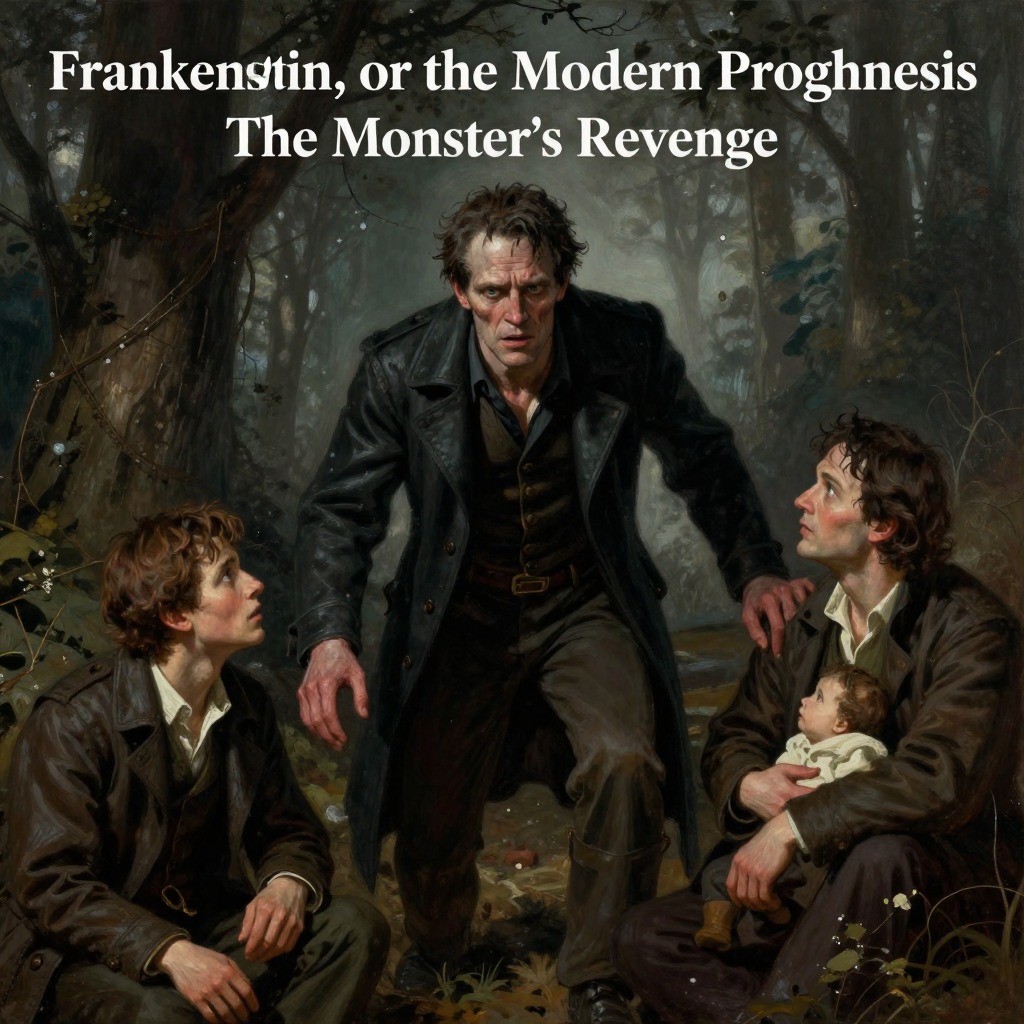
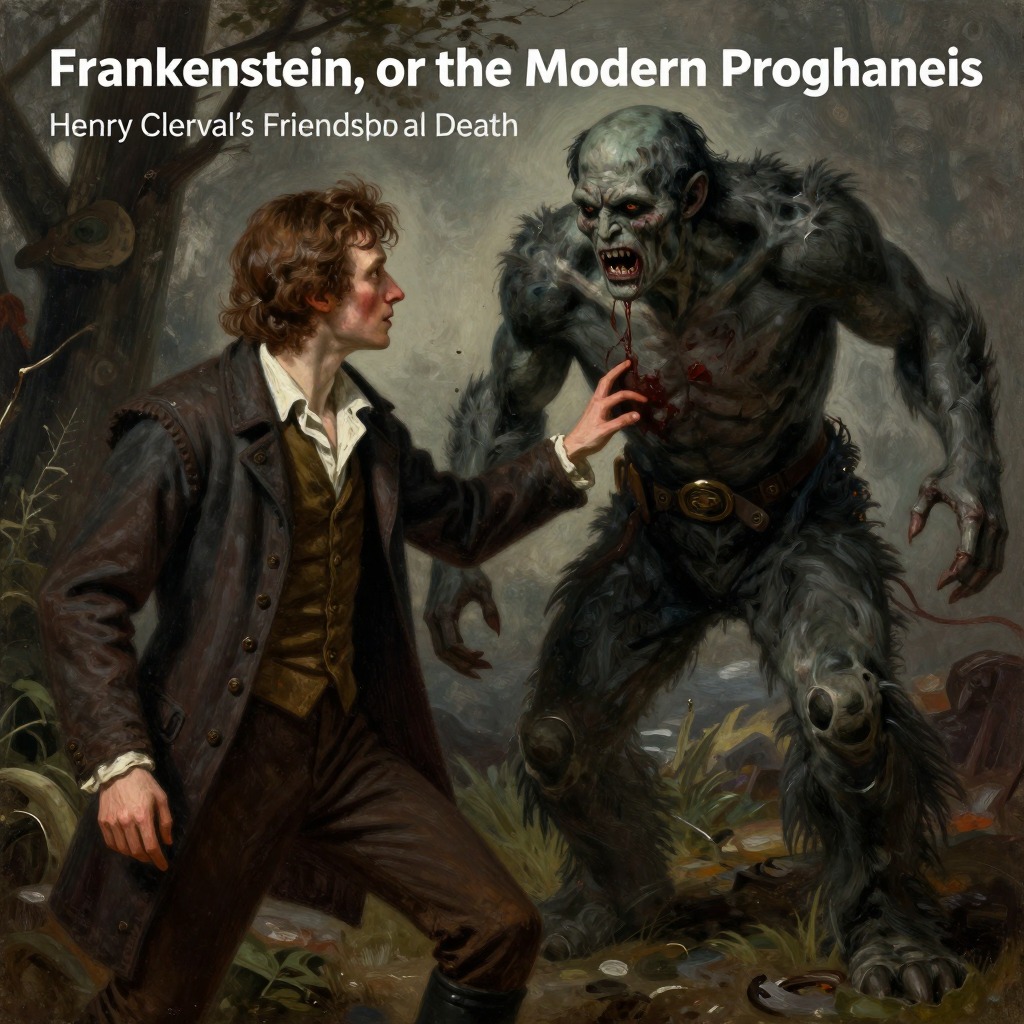
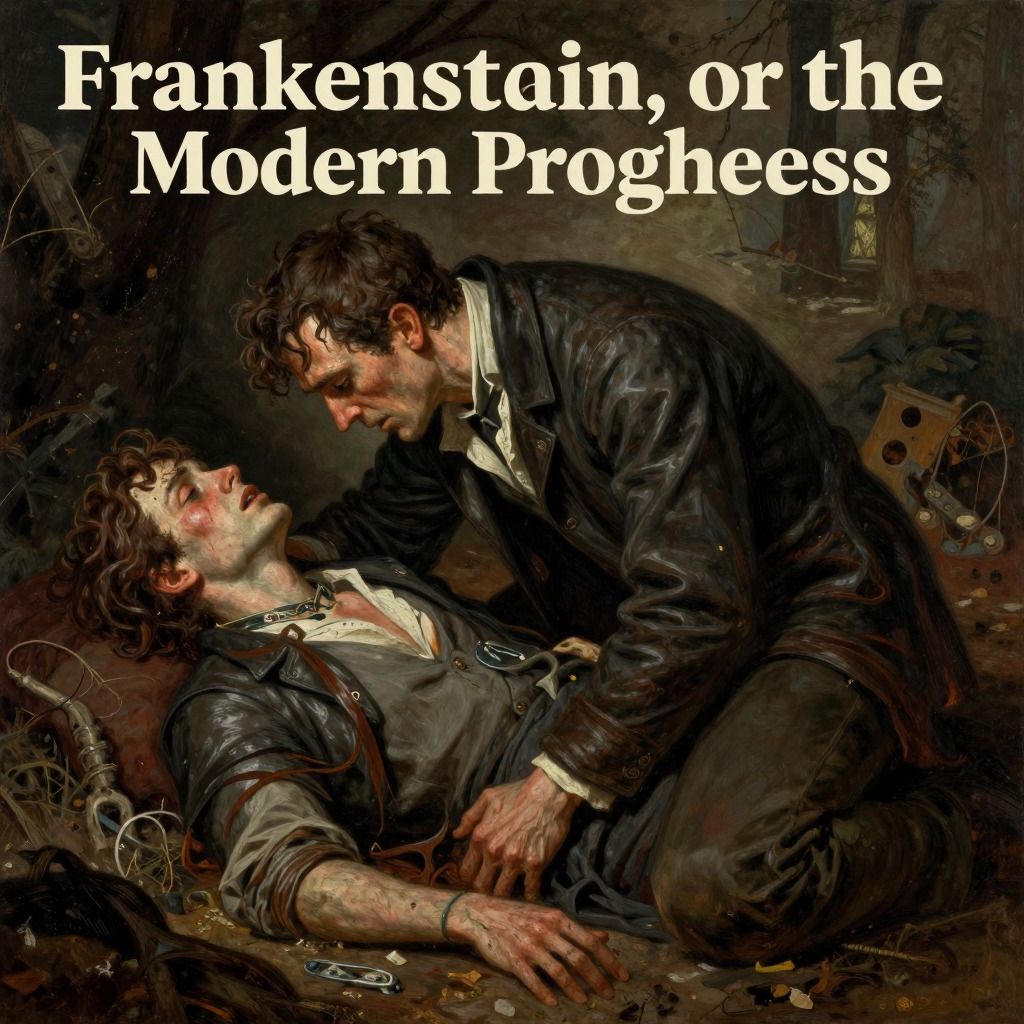
Victor Frankenstein's imprisonment in Ireland is the direct consequence of the destruction of the female creature and the monster's retaliatory murder of Henry Clerval. After Victor tears apart the half-finished female on his remote Orkney island, the monster appears at the window, utters a howl of despair, and withdraws. Victor then packs his chemical instruments, places the remains of the unfinished creature into a basket weighted with stones, and sails out at night to sink them in the sea. Exhausted, he falls asleep in his skiff and drifts for hours, eventually landing at a small Irish town. There he is met not by hospitality but by a hostile crowd that accuses him of murder. The body of a handsome young man, about five and twenty years of age, has been found on the shore, strangled with the black mark of fingers on his neck. Victor is led before the magistrate, Mr. Kirwin, and taken to view the corpse. When he sees the lifeless form of Henry Clerval, he throws himself upon the body, gasps for breath, and cries out, "Have my murderous machinations deprived you also, my dearest Henry, of life?" He is carried out in strong convulsions.
The Fever and the Dungeon
A violent fever seizes Victor, and for two months he lies on the point of death. During his ravings, which are spoken in his native French and understood only by Mr. Kirwin, he calls himself the murderer of William, of Justine, and of Clerval. He sometimes begs his attendants to help him destroy the fiend, and at other moments screams in terror, feeling the monster's fingers already grasping his neck. When he finally awakens, he finds himself in a prison cell, stretched on a wretched bed, surrounded by jailers, turnkeys, and bolts. An old woman, the wife of one of the turnkeys, nurses him with utter indifference, telling him bluntly that it would be better for him if he were dead. Victor reflects that no one could be interested in the fate of a murderer except the hangman who would gain his fee. Yet Mr. Kirwin has shown him extreme kindness, preparing the best room in the prison for him and providing a physician and a nurse. The magistrate visits only rarely, not wishing to witness the agonies of a murderer, but he ensures that Victor is not neglected.
The Arrival of Alphonse Frankenstein
Mr. Kirwin has examined the papers found on Victor's person and discovered among them a letter from Alphonse Frankenstein. He writes to Geneva, and nearly two months later, Victor's father arrives. When Victor first hears that a visitor has come, he imagines it is the monster come to mock him, and cries out in agony, "Oh! Take him away! I cannot see him; for God's sake, do not let him enter!" Mr. Kirwin, troubled, tells him it is his father, and Victor's anguish instantly turns to pleasure. Alphonse enters, and Victor stretches out his hand, asking whether Elizabeth and Ernest are safe. His father calms him with assurances of their welfare, but the name of Clerval is too great an agitation for Victor's weak state, and he sheds tears. Alphonse stays by his son's side, and Victor gradually recovers his health, though a gloomy and black melancholy settles over him. The image of Clerval, ghastly and murdered, is forever before his eyes.
The Trial and Acquittal
The season of the assizes approaches. Victor has already been three months in prison. Though still weak and in continual danger of a relapse, he is obliged to travel nearly a hundred miles to the country town where the court is held. Mr. Kirwin charges himself with every care of collecting witnesses and arranging the defence. Victor is spared the disgrace of appearing publicly as a criminal, for the case is not brought before the court that decides on life and death. The grand jury rejects the bill after it is proved that Victor was on the Orkney Islands at the hour the body of his friend was found. A fortnight after his removal, he is liberated from prison. His father is enraptured, but Victor does not share the feeling. To him, the walls of a dungeon or a palace are alike hateful. The cup of life is poisoned forever, and he sees around him nothing but a dense and frightful darkness, penetrated only by the glimmer of two eyes — sometimes the expressive eyes of Henry languishing in death, sometimes the watery, clouded eyes of the monster as he first saw them in his chamber at Ingolstadt.
Aftermath and Return to Geneva
Victor's father tries to awaken in him feelings of affection, speaking of Geneva, Elizabeth, and Ernest, but these words only draw deep groans from him. Sometimes he feels a wish for happiness and thinks with melancholy delight of his beloved cousin, but his general state is a torpor in which a prison is as welcome as the divinest scene in nature. He often attempts to put an end to his own existence and requires unceasing attendance to restrain him. Yet one duty remains: he must return to Geneva to watch over the lives of those he loves and to lie in wait for the murderer. He urges his father to depart, and they take passage on a vessel bound for Havre-de-Grace, sailing from the Irish shores at midnight. Victor lies on the deck, looking at the stars and listening to the dashing of the waves, hailing the darkness that shuts Ireland from his sight. He repasses his whole life in memory — his quiet happiness in Geneva, the death of his mother, his departure for Ingolstadt, the mad enthusiasm that hurried him on to the creation of his hideous enemy, and the night in which the monster first lived. Oppressed by these recollections, he swallows double his usual quantity of laudanum and sleeps profoundly, but his dreams present a thousand objects that scare him. Towards morning he feels the fiend's grasp on his neck and cannot free himself, until his father, watching over him, awakens him. The dashing waves are around, the cloudy sky above, and the fiend is not there. A sense of security, a feeling that a truce is established between the present hour and the disastrous future, imparts to him a kind of calm forgetfulness.