Abandonment of the Monster
The Abandonment of the Monster is the decisive, catastrophic act that shapes the entire tragedy of Frankenstein. It occurs on the very night of the creature's animation, when Victor Frankenstein, instead of accepting responsibility for the being he has brought to life, is seized by a visceral horror and flees, leaving the newborn creature utterly alone and without guidance. This single act of rejection transforms a potentially benevolent being into a vengeful monster and establishes the novel's central dynamic of creator and creature locked in a cycle of mutual destruction.
The Moment of Creation and Immediate Flight
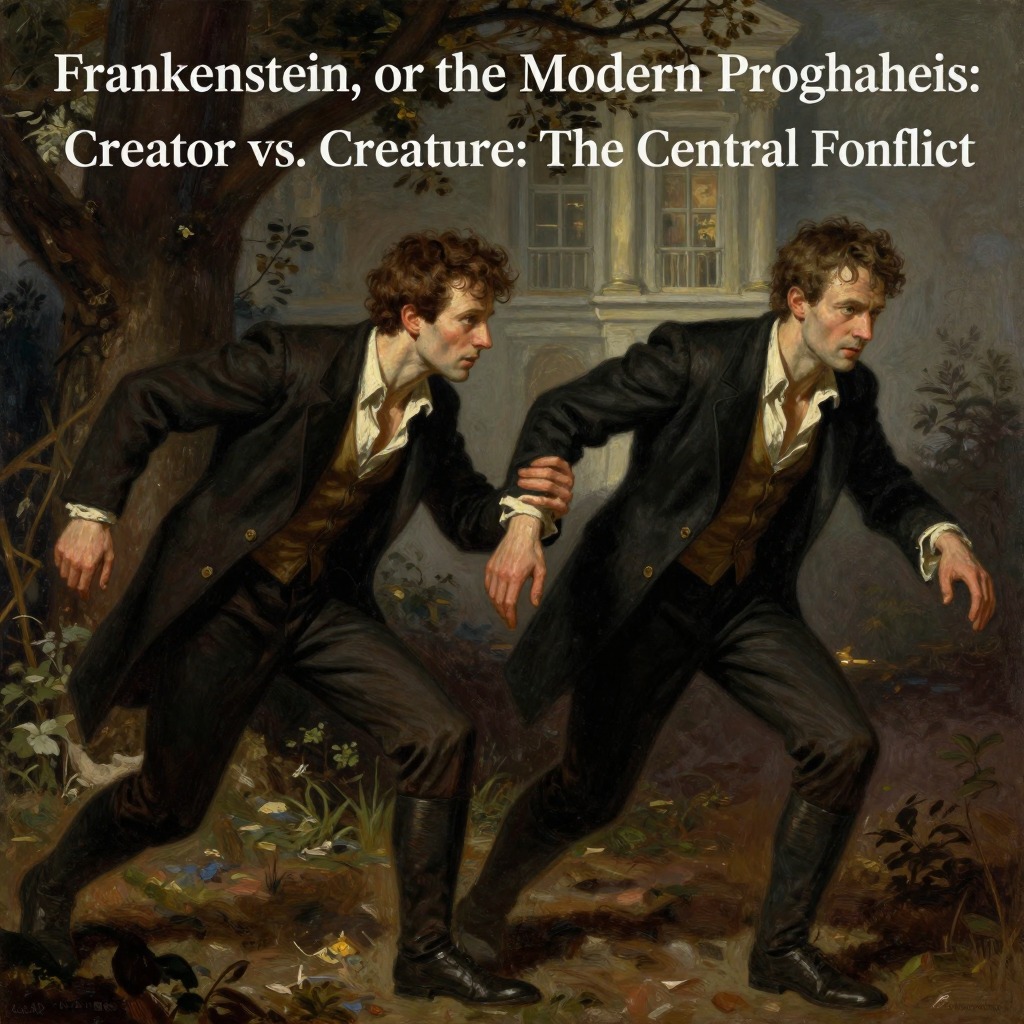
The abandonment begins in the very instant of creation. On a dreary November night, Victor Frankenstein succeeds in animating the lifeless matter at his feet. As the creature's dull yellow eye opens, its limbs convulse, and it breathes, Victor is not filled with triumph but with "breathless horror and disgust." The beauty of his dream vanishes, replaced by a nightmare. He rushes out of the room and spends the night in a state of extreme agitation, pacing the courtyard of his house. When he finally falls asleep, he is tormented by a nightmare in which he kisses Elizabeth, only to see her features transform into the corpse of his dead mother, with grave-worms crawling in her shroud. He wakes to find the creature standing over his bed, its jaws opening and muttering inarticulate sounds, one hand stretched out as if to detain him. Victor escapes again, fleeing downstairs and spending the rest of the night in the courtyard, listening in terror for any sound that might announce the approach of the "demoniacal corpse" he has given life to. The next morning, he rushes into the streets, not daring to return to his apartment, and when he finally does, he is overjoyed to find the creature gone. This initial flight is not a considered decision but an instinctive, overwhelming revulsion that Victor never fully overcomes.
The Creature's Experience of Abandonment
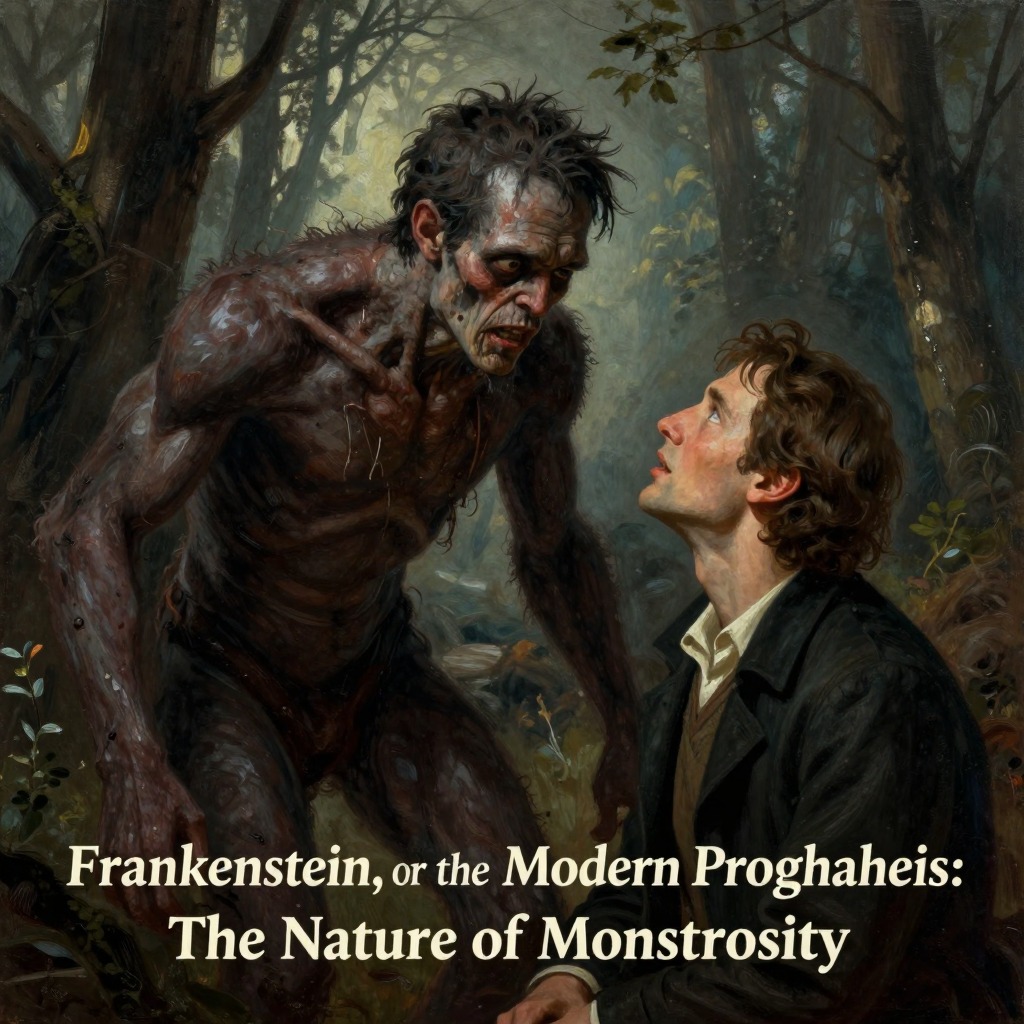
The creature's own account of his first hours reveals the profound consequences of Victor's flight. He remembers a "strange multiplicity of sensations" and a confused, painful entry into the world. He wandered, cold and hungry, into the forest near Ingolstadt, where he ate berries and slept. He was a "poor, helpless, miserable wretch" who knew and could distinguish nothing, feeling pain invade him on all sides. He sat down and wept. This initial helplessness, the complete absence of any guiding presence, is the direct result of Victor's abandonment. The creature's later plea to Victor on the glacier—"I ought to be thy Adam, but I am rather the fallen angel, whom thou drivest from joy for no misdeed"—directly links his fall from potential goodness to his creator's rejection. He was, he insists, "benevolent and good; misery made me a fiend." The abandonment is thus not merely a physical desertion but a failure of the fundamental duty of a creator toward his creature, a duty Victor himself later acknowledges when he reflects that he was bound to assure the creature's happiness and well-being.
The Psychological and Moral Consequences for Victor
The abandonment does not end with the creature's departure; it becomes a permanent, corrosive force in Victor's own psyche. The horror of the creation scene triggers a severe nervous fever that confines him for several months, during which he raves incessantly about the monster. The form of the creature is "forever before my eyes." This trauma never leaves him. Years later, as he recalls the night of the creation, he still shudders, and the memory is linked to the "mad enthusiasm" that hurried him on. The abandonment also generates an overwhelming and enduring guilt. Victor comes to see himself as the "true murderer" of William and Justine, and later of Clerval and Elizabeth, because his initial act of desertion unleashed the monster upon the world. He describes himself as bearing "a hell within me which nothing could extinguish." This guilt drives him to the brink of madness and suicide, and it is only the desire for revenge that keeps him alive. The abandonment thus creates a double tragedy: it condemns the creature to a life of isolation and misery, and it condemns Victor to a life of unending remorse and terror.
The Creature's Rejection of Human Society and Turn to Vengeance
The creature's experience of universal rejection, beginning with Victor's abandonment, hardens into a conscious embrace of evil. After being driven away by the De Laceys, the only humans who had shown him kindness, he declares "everlasting war against the species, and more than all, against him who had formed me." He burns down the De Laceys' cottage, murders William, and frames Justine. His later threat to Victor—"I will be with you on your wedding-night"—is a direct consequence of the initial abandonment, a promise of revenge for the loneliness and misery he was forced to endure. Even in his final appearance, after Victor's death, the creature acknowledges that his crimes were the result of his creator's failure. He tells Walton that Victor "suffered not in the consummation of the deed" compared to the anguish the creature himself felt, and that his heart was "fashioned to be susceptible of love and sympathy" but was "wrenched by misery to vice and hatred." The abandonment is thus the original sin of the novel, the single act that corrupts both creator and creature and makes the ensuing tragedy inevitable.
Thematic Significance: The Failure of the Creator
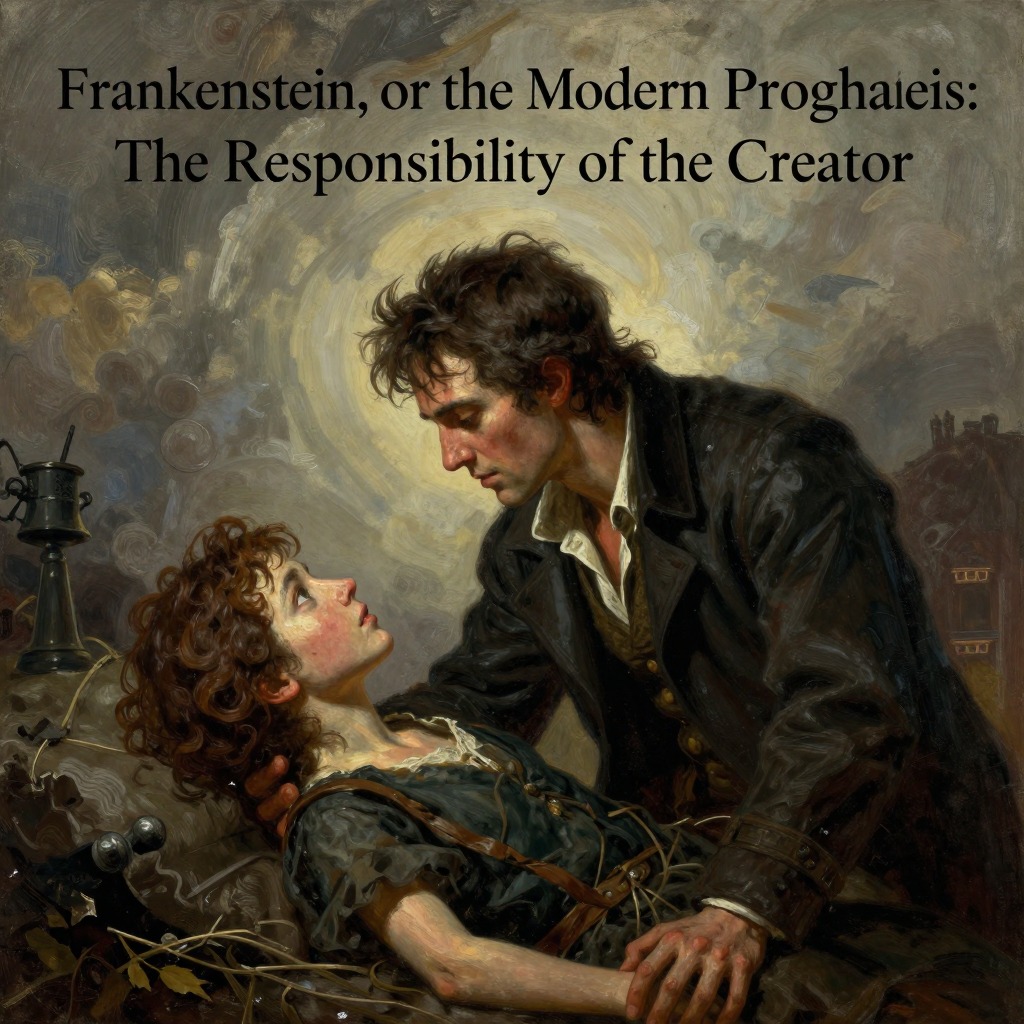
The Abandonment of the Monster is the novel's most powerful illustration of the theme of creator's responsibility. Victor's failure to guide, teach, or even acknowledge his creation is a direct violation of the duty he owes to the being he has brought into existence. The creature's eloquent plea for a female companion—"I demand a creature of another sex, but as hideous as myself"—is an attempt to find a solution to the isolation imposed by the abandonment. Victor's eventual refusal, driven by fear of a race of devils, is a second abandonment, a confirmation of his initial rejection. The novel ultimately suggests that the pursuit of knowledge without a corresponding sense of moral responsibility leads to catastrophe. Victor's final advice to Walton—"Seek happiness in tranquillity and avoid ambition"—is a direct lesson drawn from the ruin caused by his own abandonment of his creature. The act of abandonment is not a single moment but a recurring pattern of rejection that defines the relationship between Victor and the monster and drives the novel to its devastating conclusion.