Creation and destruction of the female creature
The creation and destruction of the female creature marks the decisive turning point in Victor Frankenstein's struggle with his creation, the moment when his reluctant compliance with the monster's demand collapses into a catastrophic refusal that seals the fate of everyone he loves. After months of delay and a journey to England, Victor isolates himself on one of the remotest Orkney Islands, a barren rock beaten by waves, where he hires a miserable hut and sets up a makeshift laboratory. There he resumes the loathsome work of assembling a second being, a female companion for the monster, but the task, undertaken in cold blood rather than the enthusiastic frenzy of his first experiment, fills him with daily horror and irksome dread.
The Setting and the Work
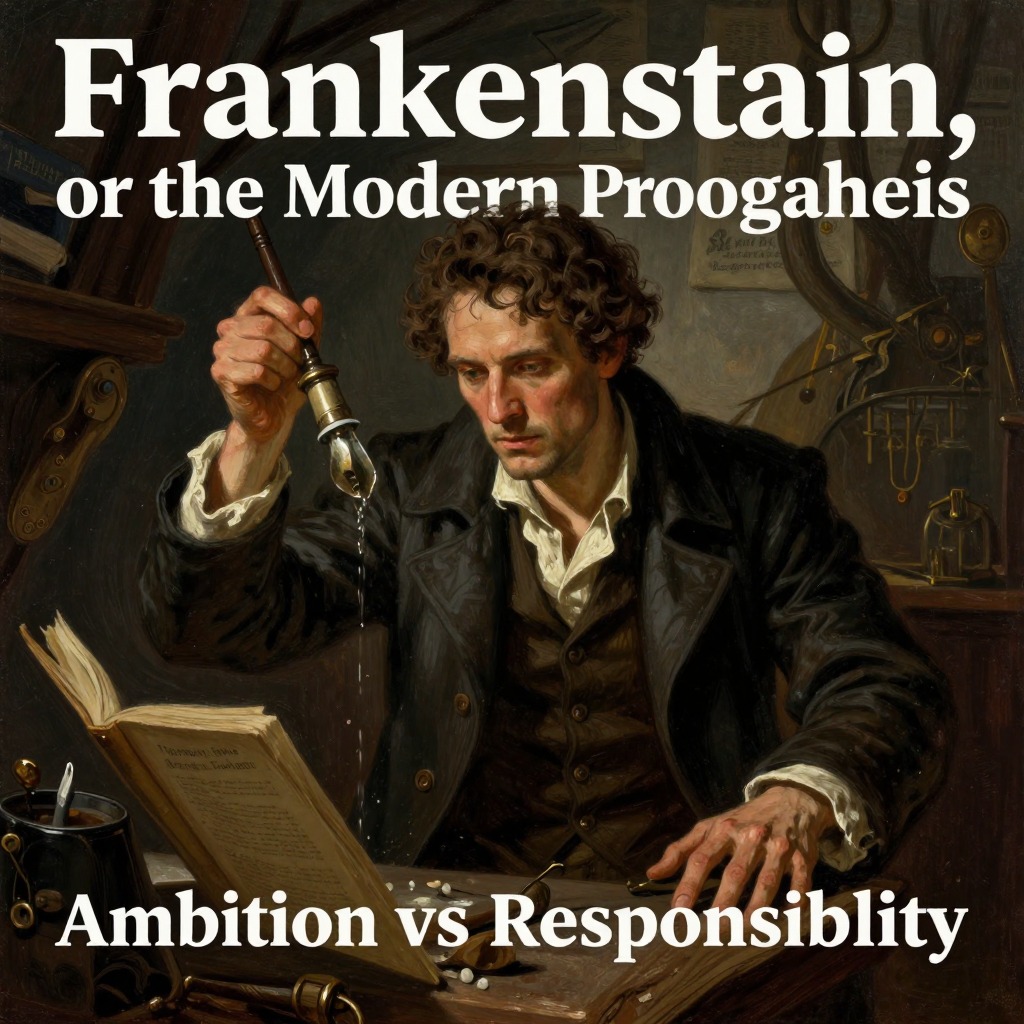
The island offers nothing but squalid poverty: three huts, one vacant, with a thatch fallen in, unplastered walls, and a door off its hinges. Victor orders repairs, buys a few furnishings, and takes possession, living ungazed at and unmolested by the five gaunt inhabitants. He devotes his mornings to labour in the laboratory; in the evenings he walks the stony beach, listening to the waves, contrasting this desolate landscape with the vine-covered hills and fair lakes of Switzerland. As the work progresses, his spirits become unequal, restless, and nervous; he fears every moment that his persecutor will appear to claim his companion. Sometimes he cannot enter the laboratory for days; at other times he toils day and night, his heart sickening at the filthy process.
The Moral Reckoning
One evening, as Victor sits idle in his laboratory with the sun set and the moon rising from the sea, a train of reflection leads him to consider the effects of what he is doing. Three years earlier he had created a fiend whose unparalleled barbarity desolated his heart; now he is about to form another being whose dispositions he cannot know. She might become ten thousand times more malignant than her mate, delighting in murder for its own sake. She might refuse to comply with a compact made before her creation; the two might hate each other, or she might turn with disgust from the monster's deformity to the superior beauty of man. Even if they leave Europe for the deserts of the new world, their sympathies would produce children, and a race of devils might be propagated upon the earth, making the very existence of the human species precarious. For the first time the wickedness of his promise bursts upon him; he shudders to think that future ages might curse him as their pest, whose selfishness bought its own peace at the price of the whole human race.
The Destruction and the Monster's Response
As Victor looks up, he sees by the moonlight the monster at the casement, a ghastly grin wrinkling his lips as he gazes on the progress of the work. The creature's countenance expresses the utmost malice and treachery. Seized by a sensation of madness, Victor tears to pieces the thing on which he is engaged. The monster, seeing the destruction of the creature on whose future existence he depended for happiness, withdraws with a howl of devilish despair and revenge. Victor locks the door, makes a solemn vow never to resume his labours, and seeks his own apartment, alone with the sickening oppression of terrible reveries.
The Confrontation and the Wedding-Night Threat
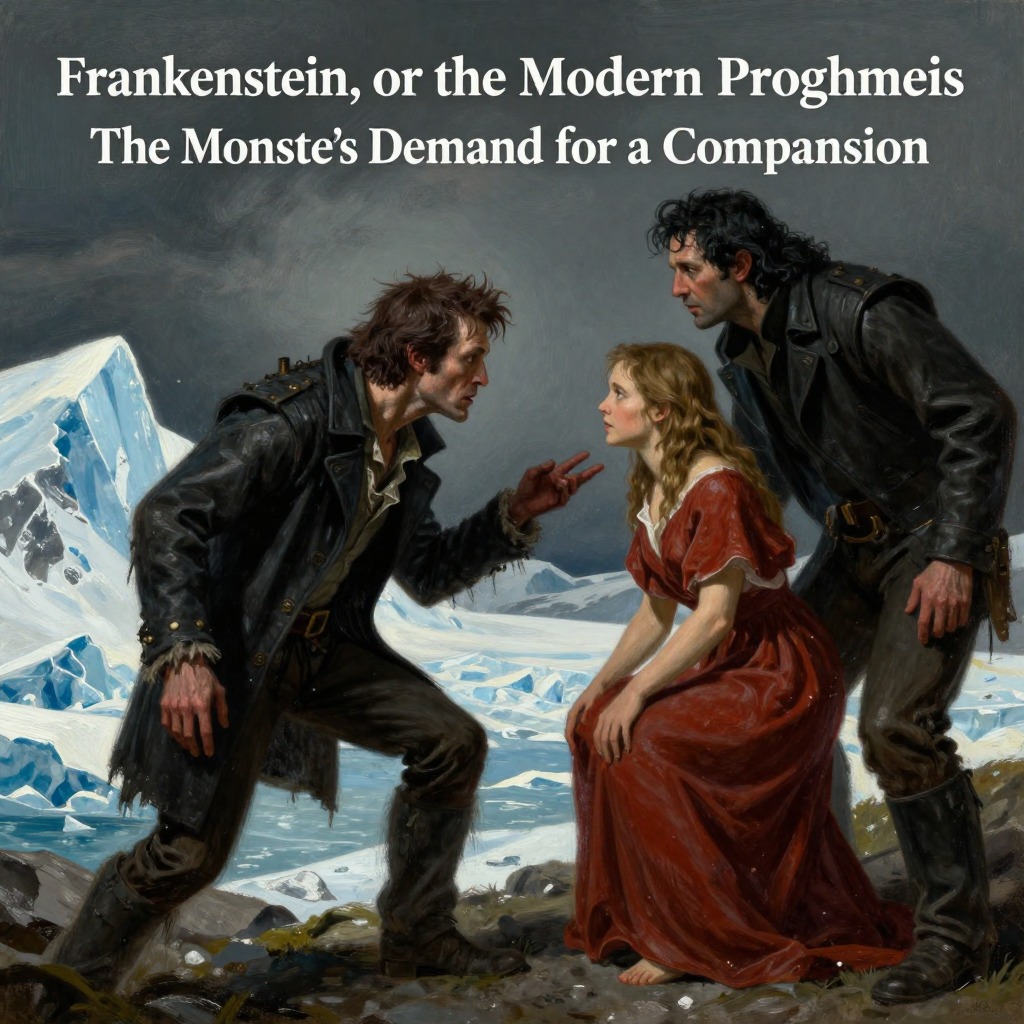
Later that night, the monster enters Victor's room and, in a smothered voice, demands why he has destroyed the work. Victor declares he will never create another like him, equal in deformity and wickedness. The monster, enraged, proclaims himself Victor's master: "Slave, I before reasoned with you, but you have proved yourself unworthy of my condescension. Remember that I have power; you believe yourself miserable, but I can make you so wretched that the light of day will be hateful to you." Victor remains firm, and the monster, gnashing his teeth in impotent anger, declares that revenge shall henceforth be dearer than light or food. He pronounces the fatal sentence: "I shall be with you on your wedding-night." Then he departs, crossing the waters with arrowy swiftness. Victor, left alone, burns with rage and despair, realizing that the period fixed for the fulfilment of his destiny has been announced. He resolves not to fall without a bitter struggle, but the words ring in his ears like a death-knell, and he knows that the destruction of the female creature has set in motion the final, inescapable catastrophe.