Creature's loneliness
The creature's loneliness is the defining condition of his existence, the source of his initial benevolence and the engine of his eventual, catastrophic turn to vengeance. From the moment he opens his eyes, he is a solitary being in a world that offers him no kinship, no recognition, and no love. This absolute isolation, more than any inherent malice, shapes his trajectory from a gentle, curious creature into a self-proclaimed fiend who declares, "I am malicious because I am miserable."
Origins of Isolation
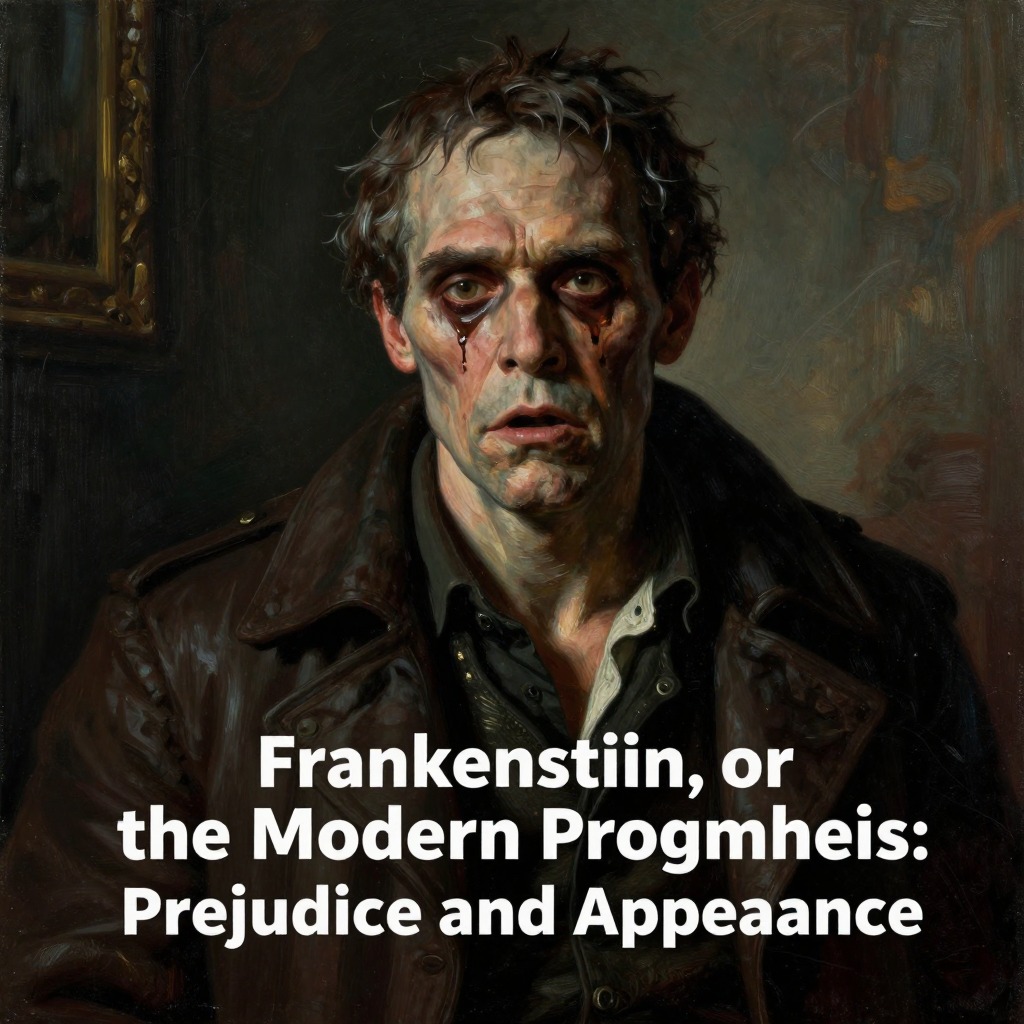
The creature's loneliness begins with his very creation. Victor Frankenstein, horrified by the being he has animated, abandons him immediately, fleeing the room and leaving the newborn creature to navigate existence alone. The creature's first memories are a chaos of sensations—light, darkness, hunger, cold—with no guiding hand to interpret them. He wanders the forest near Ingolstadt, a "poor, helpless, miserable wretch" who knows and can distinguish nothing, sitting down to weep as pain invades him on all sides. His creator's journal, which he later discovers, reveals the full horror of his origin: the "minutest description of my odious and loathsome person" is set down in language that paints Victor's own disgust and renders the creature's sense of deformity indelible. Reading it, he sickens and cries out, "Accursed creator! Why did you form a monster so hideous that even YOU turned from me in disgust?"
The De Lacey Episode: A Glimmer of Hope
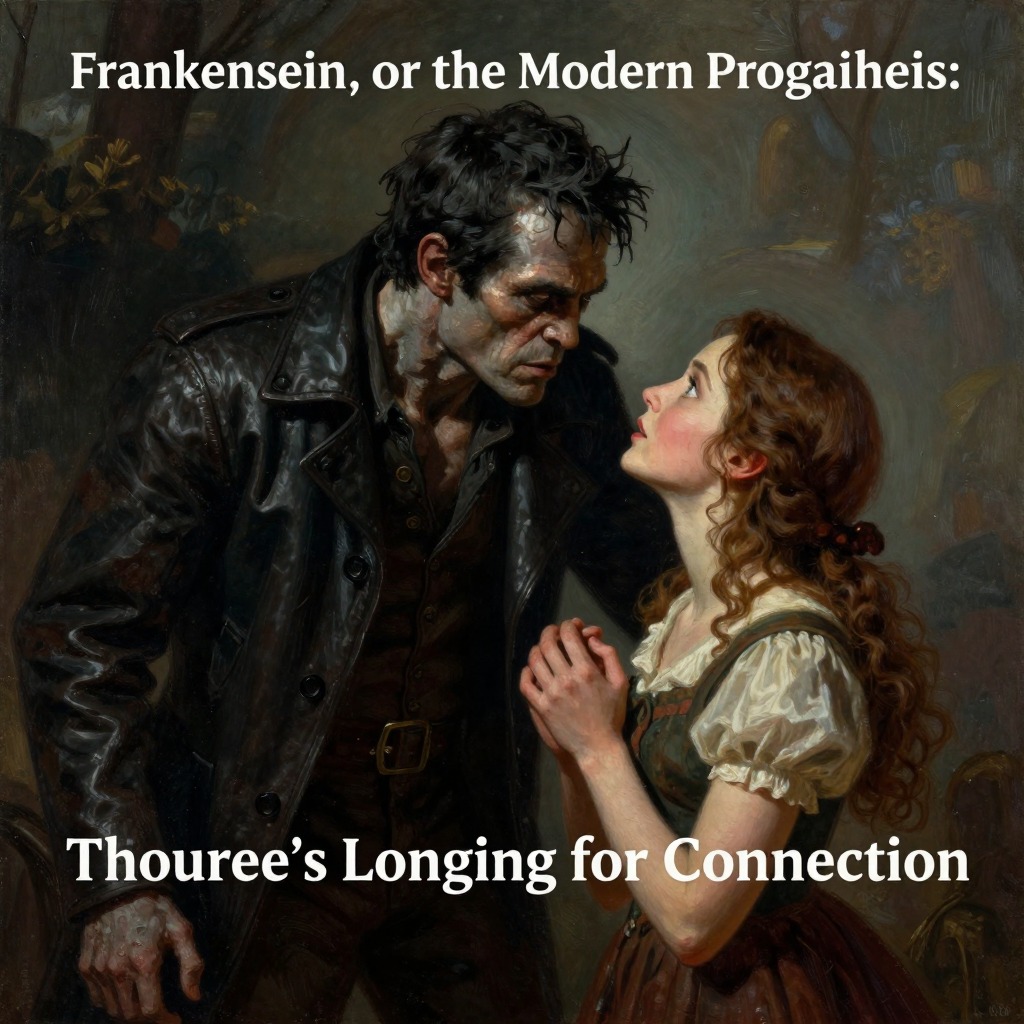
For many months, the creature finds a fragile solace in observing the De Lacey family from a hovel attached to their cottage. He watches their gentle interactions, learns their language, and secretly performs kind acts—gathering wood, clearing snow—that astonish them. He comes to love them, imagining them as "superior beings who would be the arbiters of my future destiny." His heart yearns to be known and loved by these amiable creatures; to see their sweet looks directed towards him with affection is the utmost limit of his ambition. He believes that if he can first win the favor of the blind old De Lacey, the others might overlook his deformity. But when he finally reveals himself, the result is catastrophic: Agatha faints, Safie rushes out, and Felix tears him from his father's knees and strikes him violently. The creature, who could have torn Felix "limb from limb, as the lion rends the antelope," refrains, his heart sinking with bitter sickness. He quits the cottage, and the family flees, breaking "the only link that held me to the world."
The Turn to Vengeance
With the loss of the De Laceys, the creature's loneliness curdles into rage. He declares "everlasting war against the species, and more than all, against him who had formed me and sent me forth to this insupportable misery." He burns the cottage to the ground and sets out to find his creator. Along the way, a single act of benevolence—rescuing a young girl from a rushing river—is met with a gunshot that shatters his shoulder. "This was then the reward of my benevolence!" he cries, and vows "eternal hatred and vengeance to all mankind." His loneliness is now a weapon: he murders William Frankenstein, frames Justine Moritz, and later kills Henry Clerval and Elizabeth Lavenza, each act a blow aimed at Victor's heart. Yet even in his vengeance, he remains tormented by his own solitude. After the murder of Clerval, he returns to Switzerland "heart-broken and overcome," pitying Frankenstein and abhorring himself. He confesses that his heart "was fashioned to be susceptible of love and sympathy, and when wrenched by misery to vice and hatred, it did not endure the violence of the change without torture."
The Demand for a Companion
The creature's loneliness is the explicit basis for his central demand: a female companion of his own kind. On the glacier at Montanvert, he argues that he is "alone and miserable" and that "man will not associate with me; but one as deformed and horrible as myself would not deny herself to me." He swears that if Victor grants him this one companion, he will quit Europe forever and live harmlessly in the wilds of South America. "My vices are the children of a forced solitude that I abhor," he pleads, "and my virtues will necessarily arise when I live in communion with an equal." Victor, moved by the justice of this argument, reluctantly agrees—only to later destroy the half-finished female creature, terrified of the consequences. The monster's response is a renewed vow of revenge: "Shall each man find a wife for his bosom, and each beast have his mate, and I be alone?"
Final Solitude and Self-Destruction
After Victor's death, the creature appears in Walton's cabin, mourning over his creator's body. He declares that his crimes are consummated and that he will now end his own existence. In his final speech, he contrasts his current state with the dreams of virtue and fellowship he once cherished: "Once my fancy was soothed with dreams of virtue, of fame, and of enjoyment. Once I falsely hoped to meet with beings who, pardoning my outward form, would love me for the excellent qualities which I was capable of unfolding." But now, he says, crime has degraded him beneath the meanest animal. He insists that no guilt, no mischief, no malignity, no misery can be found comparable to his. Even the fallen angel Satan had friends and associates in his desolation, but the creature is alone. He vows to build a funeral pyre at the most northern extremity of the globe and consume himself to ashes, so that no trace of his miserable existence remains. He springs from the cabin window onto an ice raft and is borne away by the waves, lost in darkness and distance—a final, fitting image of a being whose entire existence has been defined by an unbridgeable solitude.