Elizabeth Lavenza
Elizabeth Lavenza enters the Frankenstein household as a foundling of extraordinary beauty and grace, and she becomes the moral and emotional anchor of the family. Her presence is defined by a luminous gentleness that contrasts with Victor's obsessive ambition, and her fate is tragically sealed by the monster's vow to destroy everything Victor loves. She is the purest embodiment of domestic affection in the novel, and her murder represents the culmination of the monster's campaign of vengeance.
Identity and Introduction
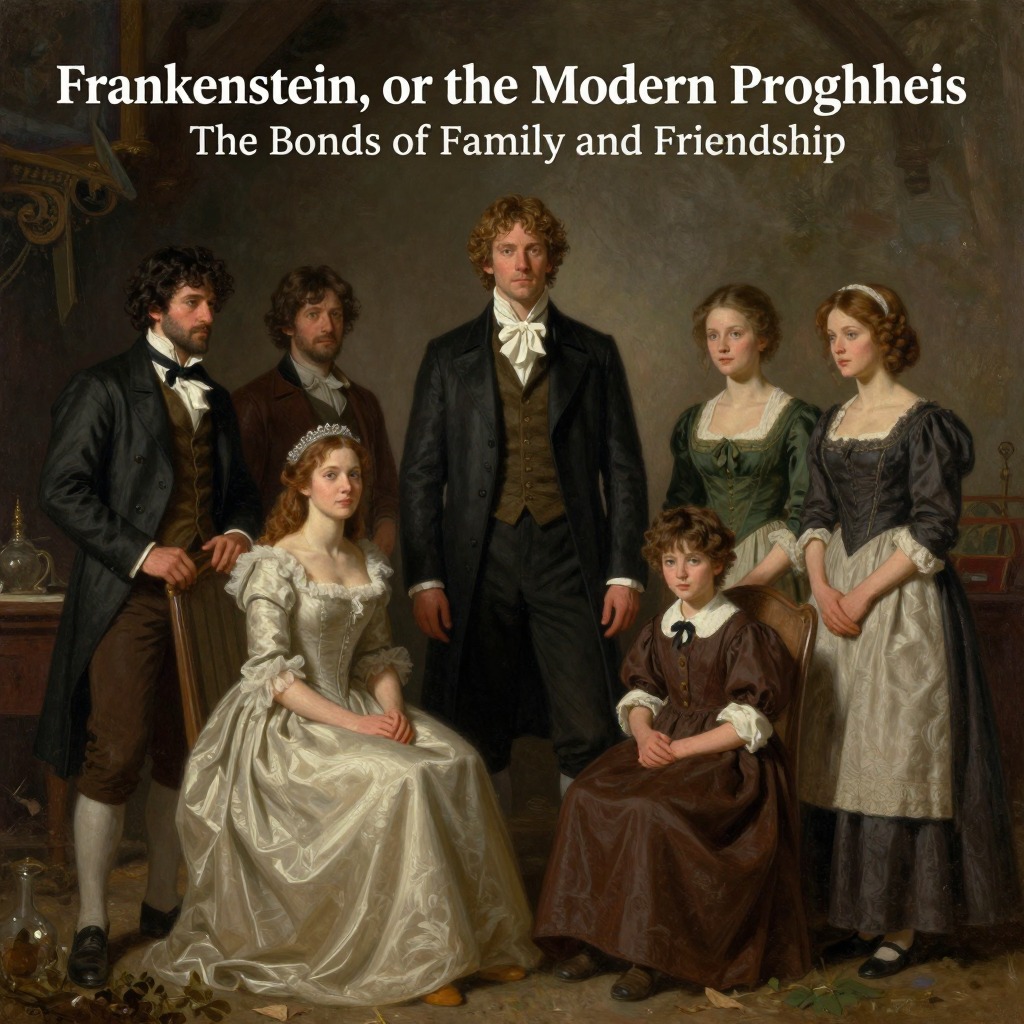
Elizabeth Lavenza was the daughter of a Milanese nobleman and a German mother who died giving birth to her. After her father, an Italian patriot, was imprisoned or killed by the Austrians and his property confiscated, she was placed with a poor peasant family near Lake Como. When Victor's mother, Caroline Beaufort, saw the child—thin, fair-haired, with blue eyes and a "celestial stamp" on her features—she was captivated and, with her husband's permission, brought Elizabeth to Geneva. Victor's mother presented Elizabeth to him as a "pretty present," and Victor, with childish seriousness, interpreted her words literally, looking upon Elizabeth as "mine—mine to protect, love, and cherish." She became his "more than sister," a companion in all his occupations and pleasures. Everyone loved Elizabeth; her passionate and reverential attachment to her was shared by Victor, who took all praises bestowed on her as made to a possession of his own.
Life and Plot Trajectory
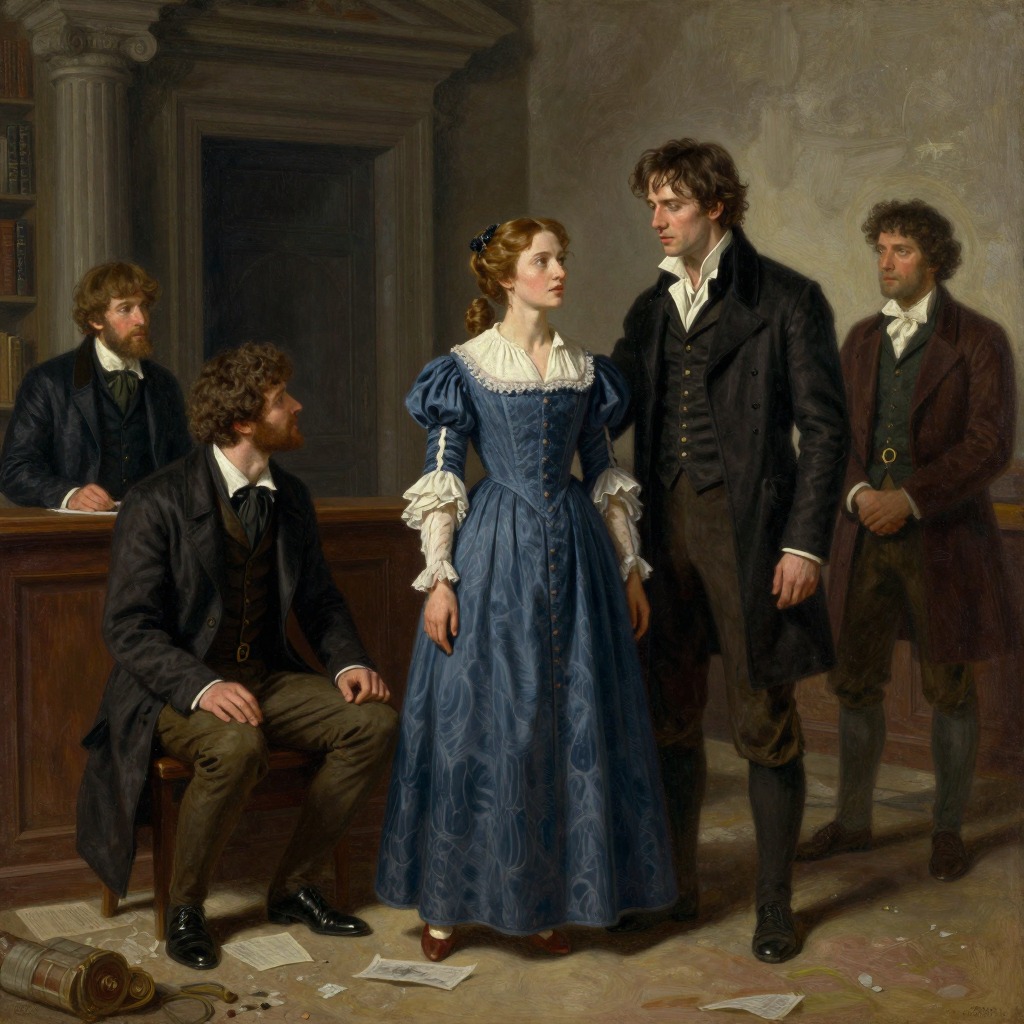
Elizabeth's life is marked by a series of losses that she meets with quiet fortitude. When she caught scarlet fever, Caroline Beaufort insisted on nursing her, and the illness proved fatal to Caroline. On her deathbed, Caroline joined Elizabeth's and Victor's hands, expressing her hope for their future union. Elizabeth then devoted herself to comforting the family, "veiling her grief" and acting as comforter to all. She wrote to Victor at Ingolstadt, describing the household's tranquility and the growth of his younger brother William, and she related the history of Justine Moritz, a servant girl she had come to love. After William's murder, Elizabeth was devastated, and when she saw the corpse, she exclaimed, "O God! I have murdered my darling child!"—because she had allowed William to wear a miniature portrait of Caroline, which she believed had tempted the murderer. At Justine's trial, Elizabeth spoke in her defense, declaring her belief in Justine's perfect innocence, but Justine was condemned and executed. Elizabeth's faith in human goodness was shattered; she told Victor that "men appear to me as monsters thirsting for each other's blood." She later wrote to Victor in Paris, expressing her fear that he might regret their planned marriage and urging him to be honest about his feelings. Victor assured her of his love, and they were married. On their wedding night at Evian, Elizabeth was murdered by the monster. Victor found her "lifeless and inanimate, thrown across the bed, her head hanging down and her pale and distorted features half covered by her hair."
Relationships and Conflict
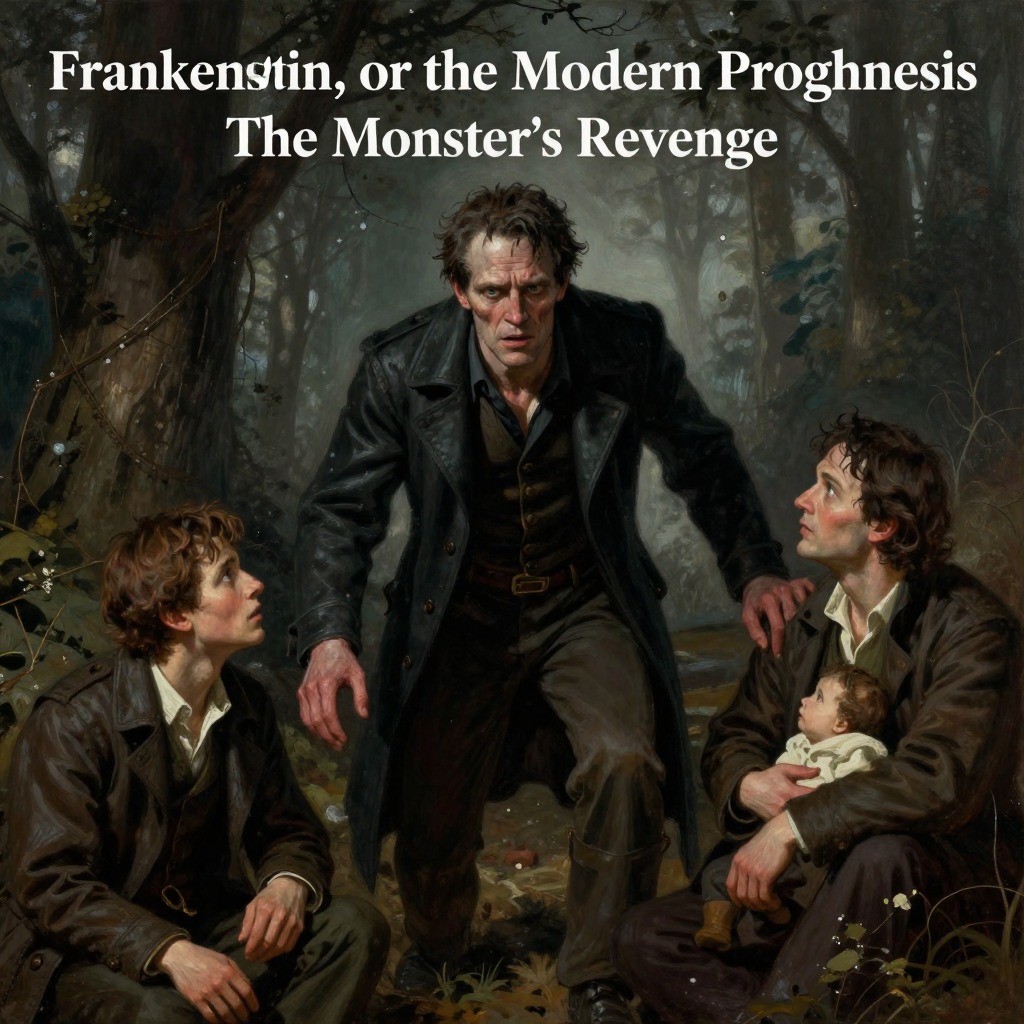
Elizabeth's relationship with Victor is the central emotional bond of her life. She is his confidante, his comforter, and the object of his deepest affection. She writes to him with tenderness and concern, and she alone has the power to draw him from his fits of despair after the deaths of William and Justine. Her love for Victor is selfless; she offers to release him from their engagement if he loves another, declaring that "it is your happiness I desire as well as my own." Victor, in turn, sees her as his only hope for future happiness, though he keeps the secret of the monster from her. Elizabeth's relationship with the rest of the Frankenstein family is equally devoted. She is a loving cousin to Ernest and a dutiful niece to Alphonse, who looks forward to her marriage to Victor as "the tie of our domestic comfort and the stay of my declining years." Her bond with Justine is particularly deep; she defends Justine at trial and is heartbroken by her execution. The monster, in his narrative, describes Elizabeth as the embodiment of the joy from which he is forever excluded. When he sees her portrait on William's body, he is momentarily softened, but his rage returns, and he places the portrait on the sleeping Justine to frame her for the murder. He later murders Elizabeth on her wedding night, fulfilling his threat to Victor: "I will be with you on your wedding-night."
Change and Ending
Elizabeth undergoes a profound transformation over the course of the novel. She begins as a joyful, vivacious girl who "recalled the sunshine of her smiles" even in grief. After William's death and Justine's execution, she becomes sad and despondent, no longer taking delight in ordinary occupations. She tells Victor that "misery has come home" and that she feels as if she is "walking on the edge of a precipice." Yet she retains her capacity for love and compassion, writing to Victor with concern for his health and urging him to be honest about his feelings. On her wedding day, she is melancholy, and a "presentiment of evil" pervades her. She tries to divert both her own and Victor's thoughts from melancholy subjects during their boat journey, pointing out the beauty of the scenery. Her murder is the final, devastating blow to Victor, and her death, along with those of William, Justine, Clerval, and Alphonse, drives him to pursue the monster to the ends of the earth.
Thematic Significance
Elizabeth represents the domestic happiness and human connection that Victor sacrifices in his pursuit of scientific glory. She is the embodiment of the "simple pleasures" and "tranquillity of domestic affections" that Victor's obsessive ambition destroys. Her death is the direct consequence of Victor's refusal to create a female companion for the monster, and it fulfills the monster's threat to make Victor "curse the hour of your birth." Elizabeth's fate illustrates the novel's central theme of the creator's responsibility to his creation: Victor's failure to love and care for the monster leads to the destruction of everyone he loves, with Elizabeth as the final, most precious victim. Her purity and innocence make her murder the most heinous of the monster's crimes, and her loss is the ultimate punishment for Victor's transgressive ambition.