Monster's Suicide
The monster's suicide is the final, self-willed act of the creature Victor Frankenstein brought to life, a deliberate extinguishing of his own existence that completes the novel's tragic arc. After Frankenstein's death aboard Robert Walton's ship, the monster appears in the cabin, delivers a long, anguished self-condemnation, and vows to immolate himself on a funeral pyre at the northernmost extremity of the globe, thereby ending the chain of destruction that began with his creation.
The Final Appearance and Self-Condemnation
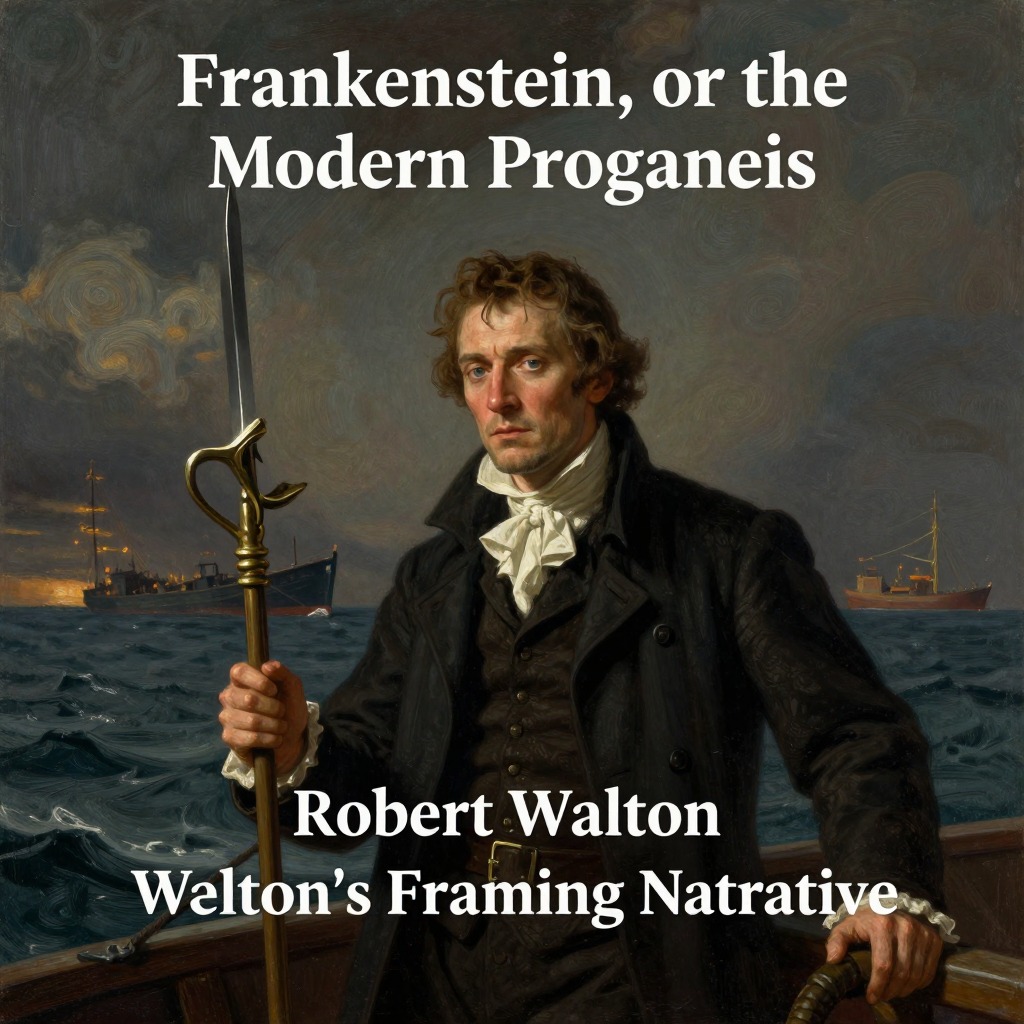
When Walton enters the cabin where Frankenstein's body lies, he finds the monster hanging over the coffin, his face concealed by long locks of ragged hair, one vast hand extended, its color and texture like that of a mummy. The monster, upon hearing Walton's approach, ceases his exclamations of grief and horror and springs toward the window. Walton, shutting his eyes involuntarily at the sight of the monster's loathsome and appalling hideousness, calls on him to stay. The monster pauses, looks at Walton with wonder, then turns again toward the lifeless form of his creator, every feature and gesture seeming instigated by the wildest rage of some uncontrollable passion. He exclaims that in Frankenstein's murder his crimes are consummated and the miserable series of his being is wound to its close. He addresses the dead Frankenstein as a generous and self-devoted being, asking what it avails that he now asks pardon, since he irretrievably destroyed his creator by destroying all he loved. His voice becomes suffocated, and Walton, whose first impulse had been to obey Frankenstein's dying request to destroy his enemy, finds his resolve suspended by a mixture of curiosity and compassion.
The Monster's Account of His Suffering
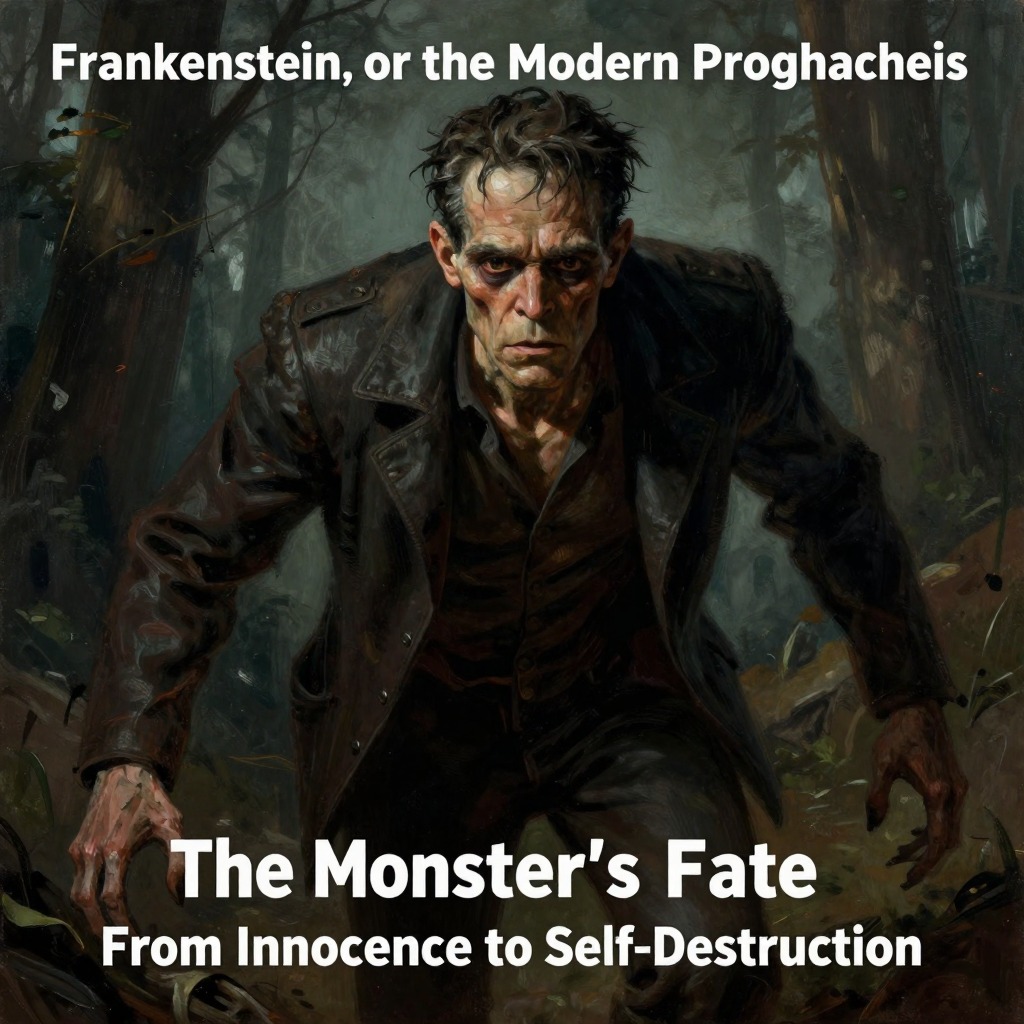
The monster insists that he suffered far more than Frankenstein did. He declares that his heart was fashioned to be susceptible of love and sympathy, and when wrenched by misery to vice and hatred, it did not endure the violence of the change without torture that Walton cannot even imagine. After the murder of Henry Clerval, he returned to Switzerland heart-broken and overcome; he pitied Frankenstein, and his pity amounted to horror; he abhorred himself. But when he discovered that Frankenstein, the author at once of his existence and of its unspeakable torments, dared to hope for happiness while accumulating wretchedness and despair upon him, impotent envy and bitter indignation filled him with an insatiable thirst for vengeance. He recollected his threat and resolved that it should be accomplished, knowing he was preparing for himself a deadly torture but being the slave, not the master, of an impulse he detested yet could not disobey. When Elizabeth died, he says, he had cast off all feeling and subdued all anguish to riot in the excess of his despair; evil thenceforth became his good. The completion of his demoniacal design became an insatiable passion, and now it is ended.
The Rejection of Sympathy and the Embrace of Death
Walton, recalling Frankenstein's warning about the monster's eloquence and persuasion, and looking again at the lifeless form of his friend, rekindles his indignation. He calls the monster a hypocritical fiend who throws a torch into a pile of buildings and then sits among the ruins lamenting the fall. The monster interrupts, insisting that such is not the case, yet he seeks no fellow feeling in his misery. He declares that when he first sought sympathy, it was the love of virtue and the feelings of happiness and affection with which his whole being overflowed that he wished to be participated, but now that virtue has become a shadow and happiness and affection are turned into bitter and loathing despair, he is content to suffer alone. He says that once his fancy was soothed with dreams of virtue, fame, and enjoyment, and he falsely hoped to meet beings who, pardoning his outward form, would love him for the excellent qualities he was capable of unfolding, but now crime has degraded him beneath the meanest animal. He runs over the frightful catalogue of his sins and cannot believe he is the same creature whose thoughts were once filled with sublime and transcendent visions of the beauty and majesty of goodness. He compares himself to the fallen angel who becomes a malignant devil, yet even that enemy of God and man had friends and associates in his desolation, while he is alone.
The Vow to Die and the Final Departure
The monster declares that his work is nearly complete and that neither Walton's nor any man's death is needed to consummate the series of his being; it requires his own. He says he will quit the vessel on the ice raft that brought him thither and seek the most northern extremity of the globe, where he will collect his funeral pile and consume to ashes his miserable frame, so that its remains may afford no light to any curious and unhallowed wretch who would create such another as he has been. He will die and no longer feel the agonies that consume him or be the prey of feelings unsatisfied yet unquenched. He says that some years ago, when the images of the world first opened upon him and he felt the cheering warmth of summer and heard the rustling of leaves and the warbling of birds, he would have wept to die, but now death is his only consolation, polluted by crimes and torn by the bitterest remorse. He bids farewell to Walton as the last of humankind his eyes will ever behold, and addresses the dead Frankenstein, saying that if he were yet alive and cherished a desire for revenge, it would be better satiated in his life than in his destruction, but that his agony was still superior to Frankenstein's, for the bitter sting of remorse will not cease to rankle in his wounds until death closes them forever. With sad and solemn enthusiasm, he cries that he shall soon die and what he now feels be no longer felt; he will ascend his funeral pile triumphantly and exult in the agony of the torturing flames, and his spirit will sleep in peace. He springs from the cabin window onto the ice raft, which lies close to the vessel, and is soon borne away by the waves and lost in darkness and distance.