Murder of William Frankenstein
The murder of William Frankenstein is the first direct act of violence committed by the creature Victor brought to life, and it marks the point at which Victor's secret transgression against nature begins to exact a visible, human price. The victim is Victor's youngest brother, a sweet, laughing child of about five years old, whose innocent death shatters the peace of the Frankenstein household and sets in motion a cascade of further tragedies that will ultimately consume the entire family.
Discovery and Immediate Aftermath
The murder occurs on the evening of May 7th, during a family walk in Plainpalais, a plain near Geneva. William and his older brother Ernest had run ahead to play, but when the rest of the family—Alphonse Frankenstein, Elizabeth Lavenza, and the two boys—prepared to return at dusk, William was missing. Ernest reported that William had hidden himself in play and that he had searched for him in vain. The family searched until nightfall, and Elizabeth, growing alarmed, suggested the boy might have returned home. He had not. They resumed the search with torches, and at about five in the morning, Alphonse Frankenstein discovered his son's body: the boy, whom he had seen blooming and active in health the night before, lay stretched on the grass, livid and motionless, with the print of a murderer's finger on his neck.
Elizabeth's Grief and the Missing Miniature
The body was brought home, and the anguish visible on Alphonse's face betrayed the secret to Elizabeth. She insisted on seeing the corpse and, upon entering the room, hastily examined the neck of the victim. Clasping her hands, she exclaimed, "O God! I have murdered my darling child!" She then revealed that earlier that evening, William had teased her into letting him wear a valuable miniature portrait of his deceased mother, Caroline Beaufort. The picture was now gone, and Elizabeth immediately understood that it had been the temptation that urged the murderer to the deed. She fainted and was restored with extreme difficulty, thereafter weeping and sighing continually, accusing herself unjustly as the cause of William's death.
The Monster's Account of the Murder
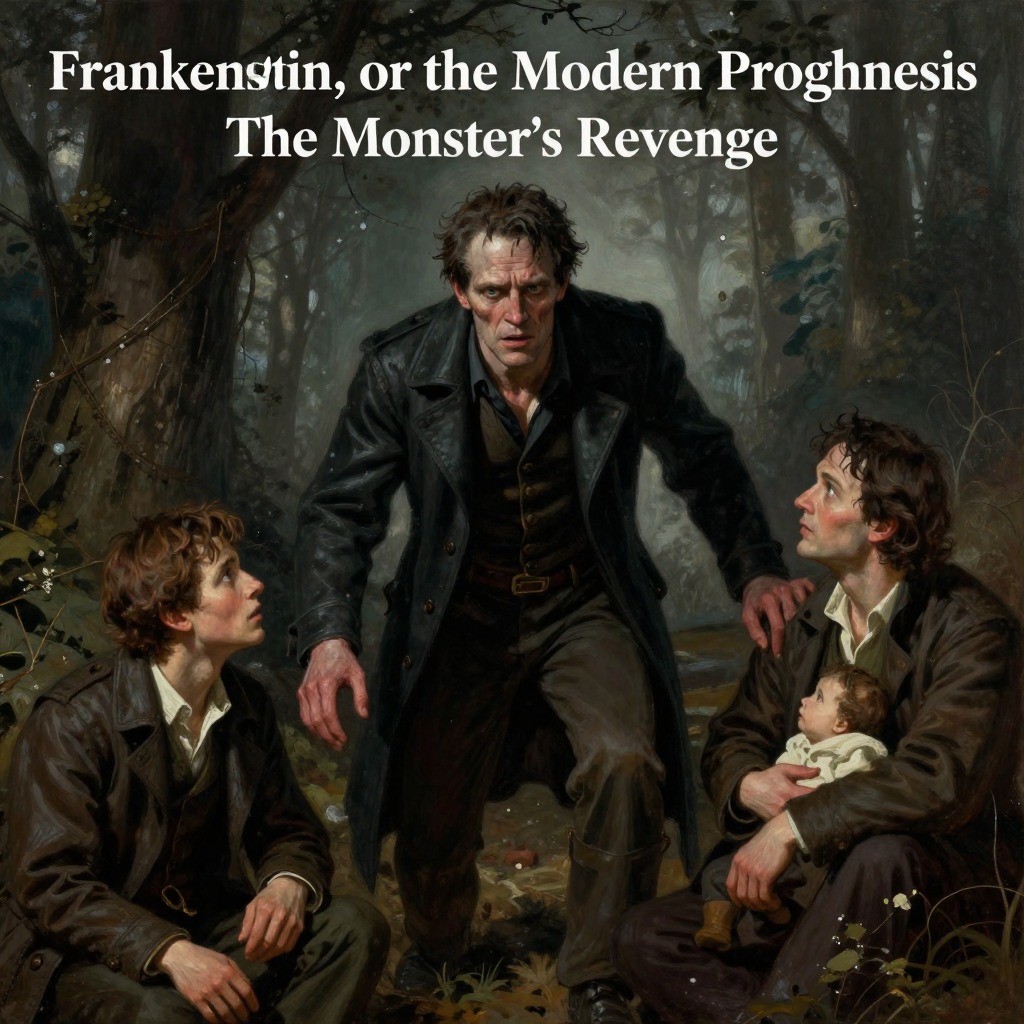
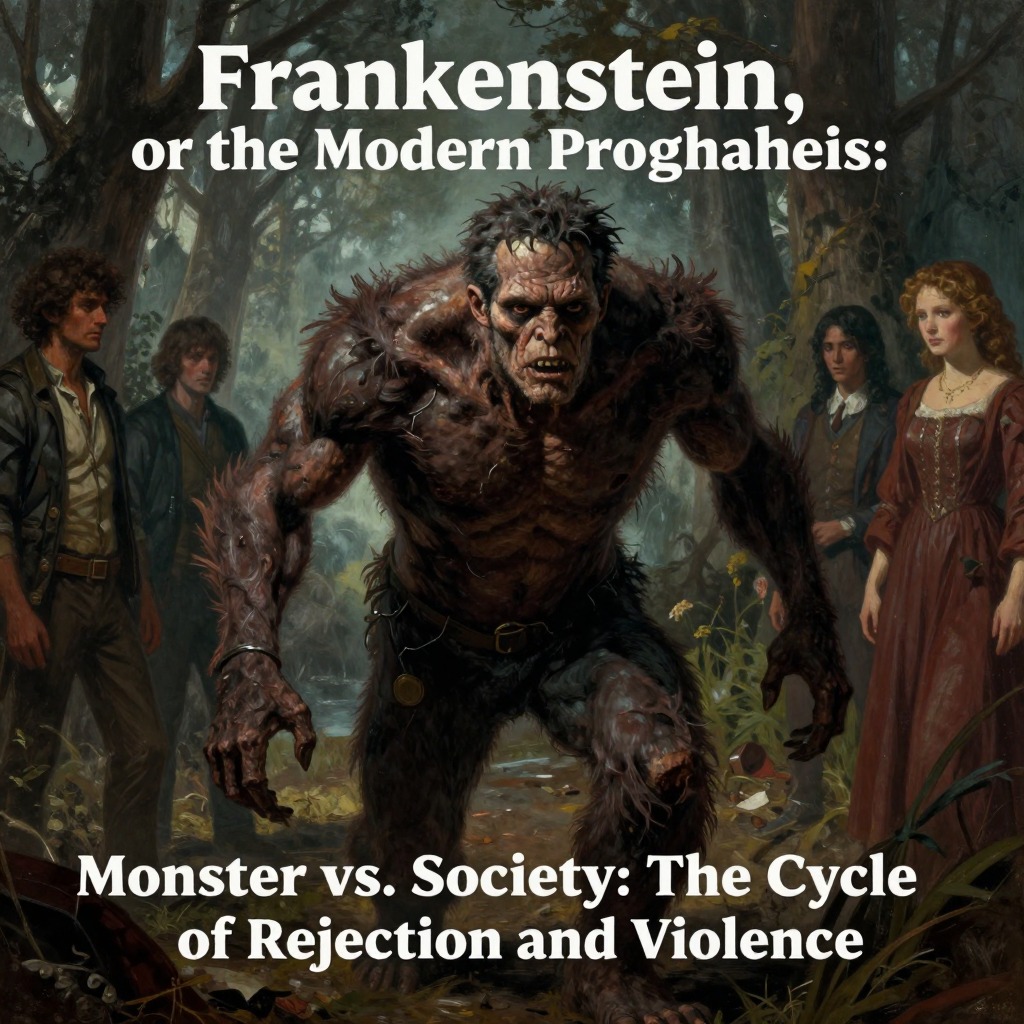
The monster later provides his own account of the killing, which reveals the event as a deliberate act of vengeance against his creator. Having reached the environs of Geneva after a long and miserable journey, the monster was resting, oppressed by fatigue and hunger, when a beautiful child—William—came running into his hiding place. The monster initially seized the boy with the idea of educating him as a companion and friend, believing that so young a creature would not yet have learned to fear deformity. But William, upon seeing the monster's form, placed his hands before his eyes and screamed, calling him a "monster," an "ugly wretch," and an "ogre." When the monster told the boy he would never see his father again, William defiantly declared, "My papa is a syndic—he is M. Frankenstein—he will punish you." Hearing the name of his enemy, the monster's impulse shifted from desperate hope to cold revenge. "Frankenstein! you belong then to my enemy—to him towards whom I have sworn eternal revenge; you shall be my first victim," he said. The child struggled and loaded him with epithets, and the monster, grasping his throat to silence him, killed him in a moment. He then saw the miniature portrait of Caroline Beaufort glittering on the boy's breast and, after a moment of softened attraction, placed it in the folds of a sleeping woman's dress—the woman who would later be identified as Justine Moritz—thereby framing her for the crime.
Consequences and Thematic Significance
The murder of William is the first of the monster's "first fruits" of his vengeance, and it immediately fulfills his declared intention to make Victor suffer. Victor, who had been traveling home from Ingolstadt, arrives in Geneva on the night of the murder and, during a violent thunderstorm, sees the monster on the slopes of Mont Saleve, instantly recognizing him as the murderer. The event also leads directly to the trial and execution of Justine Moritz, an innocent servant girl whom the monster framed by planting the miniature in her pocket. Victor, knowing the truth but unable to reveal it without being thought mad, is consumed by guilt and despair. The murder thus serves as the catalyst for the novel's central moral crisis: Victor's secret sin of creation now has an irreparable public consequence, and the monster's campaign of destruction against everything Victor loves has begun in earnest.