Victor Frankenstein
Victor Frankenstein, the protagonist of Mary Shelley's 1818 novel, is a brilliant and ambitious young scientist from Geneva whose relentless pursuit of the hidden laws of nature leads him to create a sentient being, an act that unleashes a cycle of tragedy and revenge. His story, framed within the letters of Arctic explorer Robert Walton, serves as a cautionary tale about the perils of unchecked ambition and the abandonment of moral responsibility. Victor's narrative traces his path from a privileged, loving childhood to a state of utter desolation, driven by a thirst for knowledge that transforms into a hell of guilt, remorse, and a consuming desire for vengeance.
Identity and Background
Victor Frankenstein is born into one of the most distinguished families of Geneva, the eldest child of Alphonse Frankenstein and Caroline Beaufort. His parents' marriage itself was born of tragedy: Alphonse rescued Caroline after her father, Beaufort, died in poverty, and their union was marked by a deep, reverential affection. Victor's early life is idyllic, filled with the tender caresses of his mother and the benevolent smile of his father. He is raised alongside Elizabeth Lavenza, an orphan adopted by his parents, who becomes his "more than sister" and the companion of all his occupations and pleasures. His closest friend is Henry Clerval, a boy of singular talent and fancy who loves enterprise and chivalric romance. From a young age, Victor is distinguished by a fervent longing to penetrate the secrets of nature, a passion that sets him apart from his more serene companions. At thirteen, he discovers a volume of Cornelius Agrippa, which ignites his enthusiasm for alchemy and the occult sciences, despite his father's dismissive remark that it is "sad trash." A violent thunderstorm at age fifteen, which shatters an old oak tree, turns his attention to the modern science of electricity and galvanism, temporarily displacing his alchemical heroes.
Life and Plot Trajectory
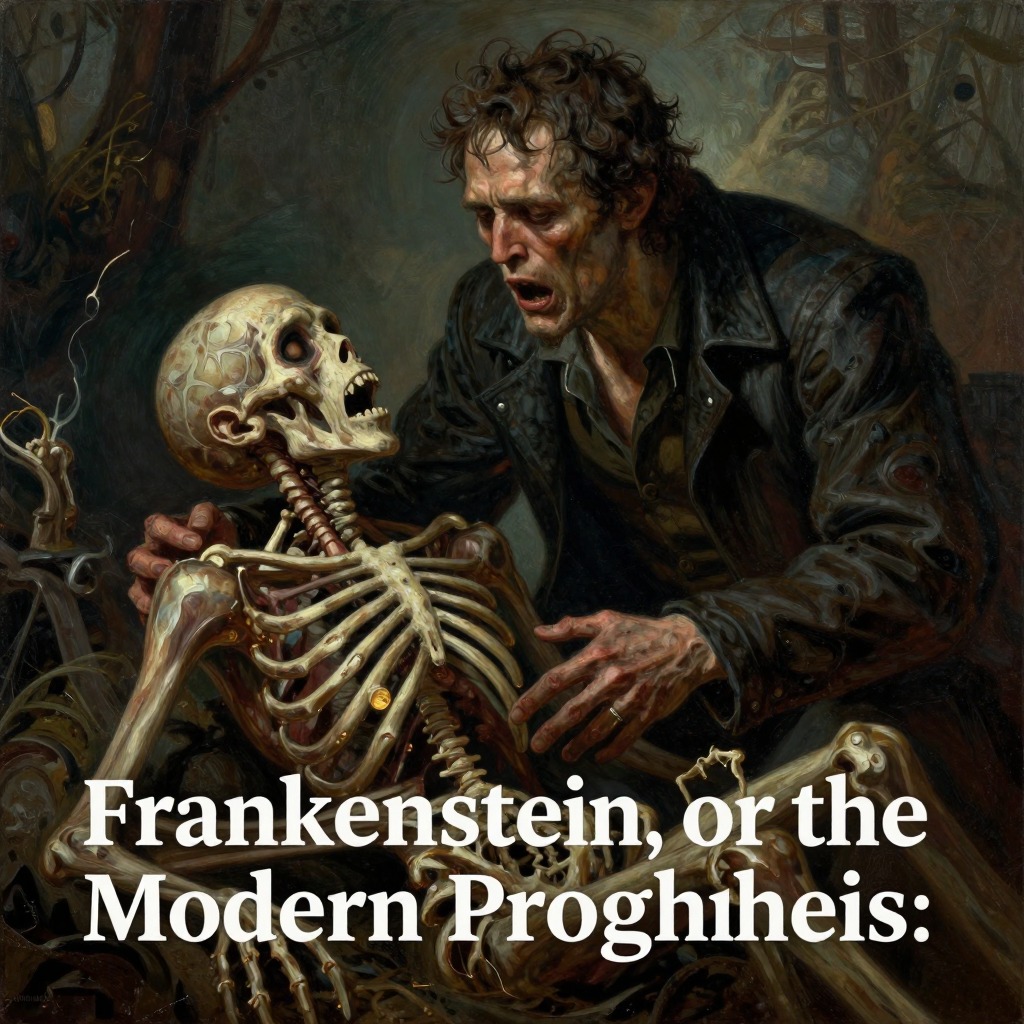
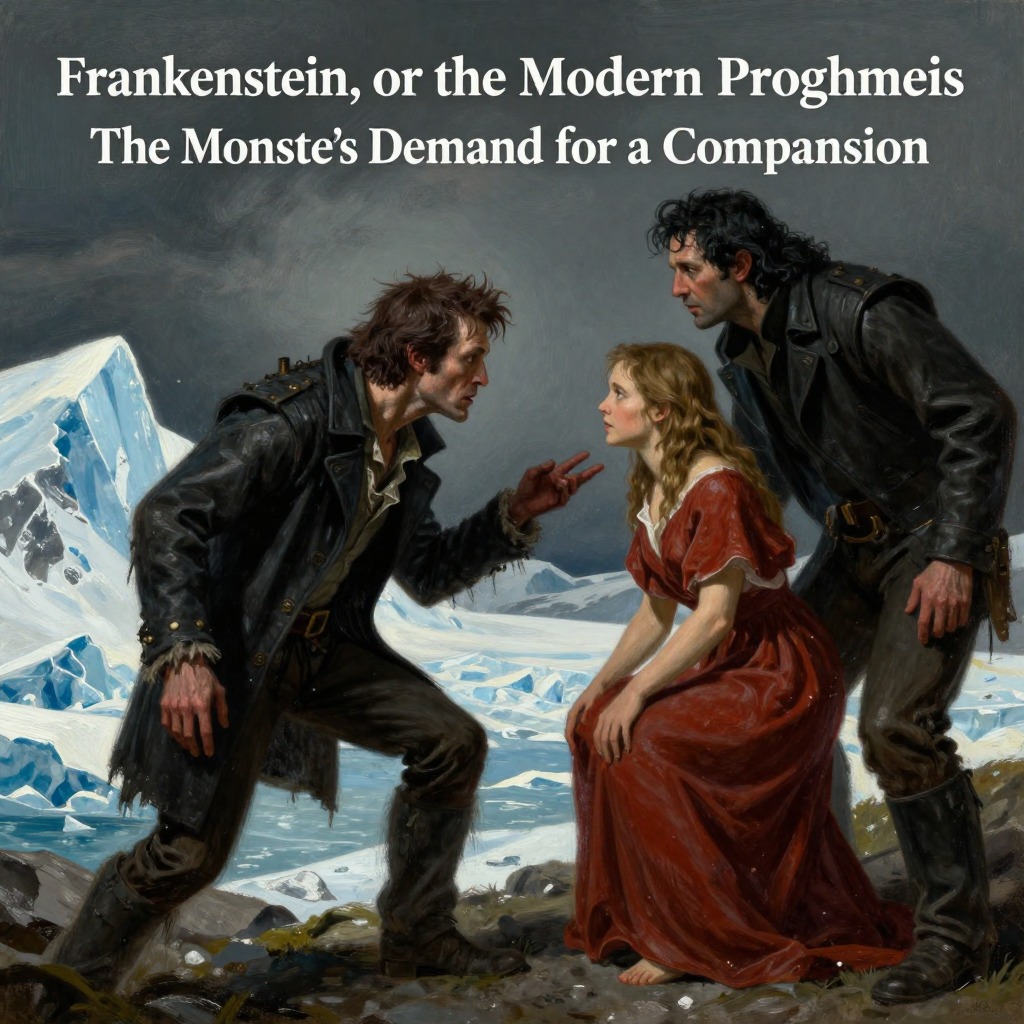
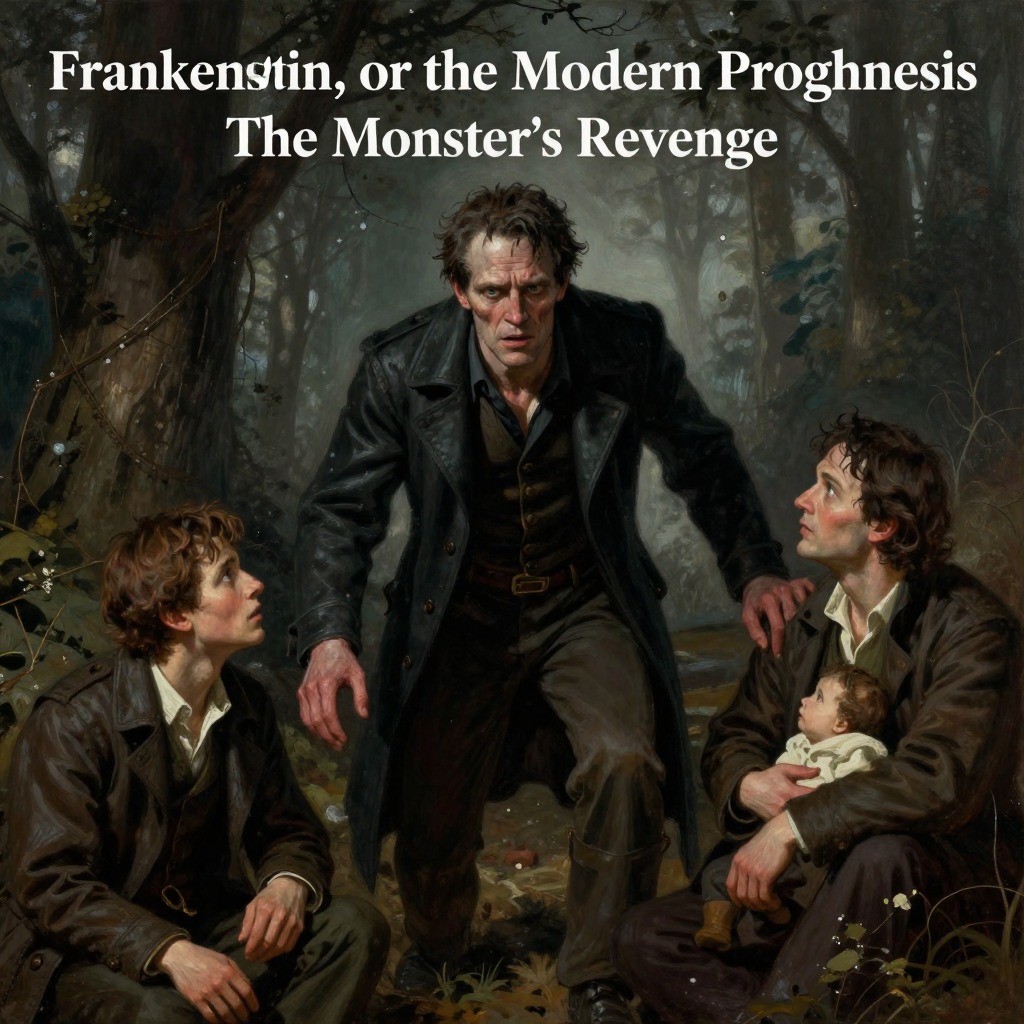
At seventeen, Victor departs for the University of Ingolstadt, a journey that marks the beginning of his ruin. Shortly before his departure, his mother dies of scarlet fever, a loss that deepens his melancholy. At Ingolstadt, he is initially repelled by the gruff professor M. Krempe but is captivated by the eloquent lectures of M. Waldman, who praises modern chemistry as capable of performing miracles. Inspired, Victor dedicates himself wholly to natural philosophy and chemistry. After two years of intense study, he discovers the secret of bestowing animation upon lifeless matter. Driven by a "resistless and almost frantic impulse," he spends months laboring in a solitary chamber, collecting bones from charnel-houses and disturbing the secrets of the human frame. On a dreary night in November, he brings his creation to life, but is immediately horrified by its grotesque appearance. He abandons the creature and falls into a nervous fever, nursed back to health by Henry Clerval. The creature, having fled, later murders Victor's younger brother, William, and frames the family servant, Justine Moritz, who is executed for the crime. Consumed by guilt, Victor retreats into the Alps, where he encounters the creature on the glacier of Montanvert. The creature eloquently recounts his own story of suffering and demands that Victor create a female companion for him. Victor reluctantly agrees, but after journeying to the Orkney Islands to fulfill his promise, he is overcome by the fear of creating a race of devils and destroys the unfinished female creature. In retaliation, the monster murders Victor's best friend, Henry Clerval, and later, on Victor's wedding night, murders his beloved wife, Elizabeth. Victor's father dies of grief soon after. Driven by a burning desire for revenge, Victor vows to pursue and destroy his creation, chasing him across Europe and into the Arctic wastelands.
Key Actions and Objectives
Victor's primary objective is the pursuit of forbidden knowledge, which he believes will allow him to "banish disease from the human frame and render man invulnerable to any but a violent death." This ambition leads him to the single most consequential action of his life: the creation of the monster. His subsequent actions are largely reactive, driven by guilt, fear, and a desperate desire to undo the consequences of his original transgression. He remains silent about the true murderer of William and Justine, a decision born from the fear of being thought mad, which directly leads to Justine's execution. He agrees to create a female companion for the monster, a promise he later breaks by destroying his work. This act of destruction is a pivotal moment of moral choice, as Victor decides that the potential for a race of devils outweighs his duty to his creature. His final, all-consuming objective is revenge. He swears a solemn oath over the graves of his family to pursue the monster "until he or I shall perish in mortal conflict," dedicating the remainder of his life to this single, destructive purpose.
Relationships and Conflict
Victor's relationships are defined by the central conflict with his creation. The monster is his double, his shadow, and the embodiment of his guilt. The creature himself articulates this bond, calling Victor his "creator" and "natural lord and king," while also declaring, "I am your master; obey!" Victor's relationship with Elizabeth is one of deep, familial love, but it is poisoned by his secret. He sees their marriage as a potential source of happiness, yet it is the very event the monster targets for his ultimate revenge. His friendship with Henry Clerval is a source of solace and a reminder of his former, happier self. Clerval's gentle and humane nature contrasts sharply with Victor's obsessive and tormented state. Victor's relationship with his father, Alphonse, is one of respect and affection, but he cannot confide in him, leaving his father bewildered by his son's inexplicable misery. The conflict with the monster is not merely physical but deeply ethical. The creature appeals to Victor's sense of justice and duty as a creator, arguing that he owes him happiness. Victor, in turn, sees the monster as a "fiend" and a "vile insect," justifying his hatred by the creature's crimes.
Change and Ending
Victor undergoes a profound transformation from a hopeful, ambitious youth into a haggard, guilt-ridden, and vengeful man. He describes himself as a "blasted tree" and a "miserable spectacle of wrecked humanity." His health deteriorates, and he is plagued by nightmares and fits of madness. His initial benevolent intentions are replaced by a single-minded obsession with revenge, which he admits is the "devouring and only passion of my soul." In his final moments, aboard Walton's ship, he experiences a moment of clarity. He renounces his earlier thirst for vengeance, telling Walton, "I feel myself justified in desiring the death of my adversary," but he also acknowledges his duty to his own species. He warns Walton against the dangers of ambition, advising him to "seek happiness in tranquillity and avoid ambition." Victor dies peacefully, a gentle smile passing across his lips as he envisions joining his departed loved ones. His death is the final act of a life consumed by the consequences of his own creation.
Narrative Role and Evaluation
Victor Frankenstein is the central consciousness and narrator of the novel's main story. His tale is a frame narrative within Walton's letters, and his voice dominates the text. He is a complex and tragic figure, a "modern Prometheus" who steals the power of creation but is punished for his transgression. His character serves as a vehicle for exploring the novel's central themes: the dangers of unchecked ambition, the responsibility of the creator for his creation, the destructive power of isolation, and the nature of good and evil. Victor is not a simple villain; he is a man of fine sensibilities who is destroyed by his own hubris. His story is a warning against the pursuit of knowledge without wisdom and the abandonment of human connection in the service of a grand, solitary goal. His ultimate failure is not in his scientific achievement, but in his inability to accept responsibility for the being he brought into the world.