Victor Frankenstein's journal
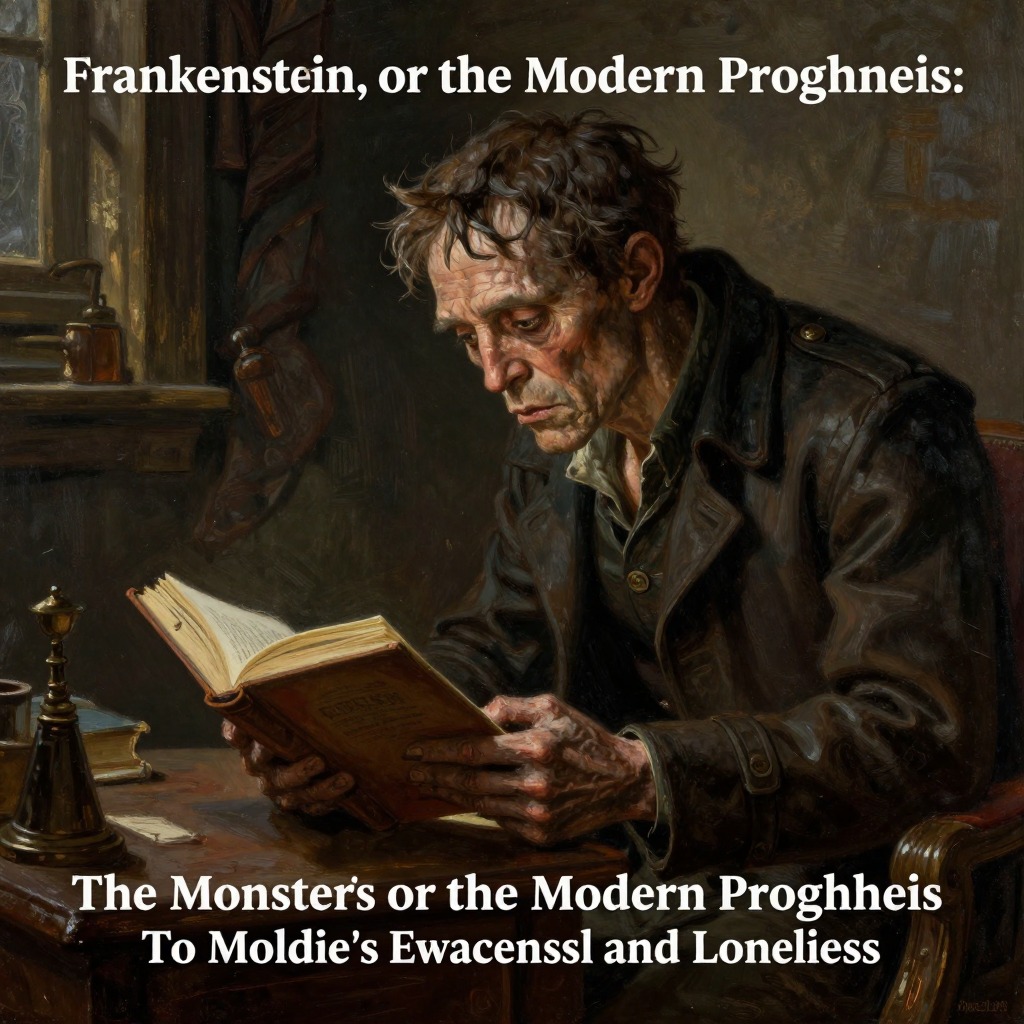
Victor Frankenstein's journal is the detailed, day-by-day account of the four months of obsessive labor that culminated in the animation of the monster. The creature discovers this document in the pocket of a coat he took from Victor's laboratory shortly after his awakening, and it becomes the single most important source of knowledge about his own identity and the circumstances of his birth. The journal is not merely a scientific log; it is a confession of horror, a record of the creator's disgust, and a document that the monster will later use to confront Victor with the full weight of his responsibility.
Discovery and Self-Education
The monster finds the journal in the pocket of the dress he had taken from Victor's laboratory, but he cannot read it at first. It is only after he has learned language by observing the De Lacey family and studying books like Paradise Lost that he is able to decipher the characters. When he finally reads it, the effect is devastating. The journal contains "the whole detail of that series of disgusting circumstances which produced" him, including "the minutest description of my odious and loathsome person, in language which painted your own horrors and rendered mine indelible." The monster sickens as he reads, crying out in agony, "Hateful day when I received life! Accursed creator! Why did you form a monster so hideous that even YOU turned from me in disgust?" The journal thus provides the monster with the first coherent narrative of his own origin, but it also confirms his worst fears about his own deformity and his creator's rejection.
A Record of Horror and Obsession
The journal's contents, as described by the monster, mirror the very scenes Victor himself has narrated. It minutely describes every step Victor took in the progress of his work, mingling the history of the creation with accounts of domestic occurrences. The monster reads of Victor's sleepless nights, his collection of bones from charnel-houses, his dabbling "among the unhallowed damps of the grave," and the moment when, on a dreary night of November, he beheld "the accomplishment of my toils" and saw the dull yellow eye of the creature open. The journal thus preserves the raw, unfiltered horror of the creative act, a horror that Victor himself could barely endure and that the monster now relives through his creator's own words. The monster also learns from the journal that Victor, after the creation, suffered a nervous fever during which he raved incessantly about the monster, further confirming the depth of his creator's terror and revulsion.
A Tool for Confrontation and Revenge
The monster does not merely read the journal for self-understanding; he preserves it as a weapon. When he finally confronts Victor on the glacier of Montanvert, he produces the journal and offers it as proof of his tale. "Here they are," he says, referring to the papers. "Everything is related in them which bears reference to my accursed origin." The journal becomes the material evidence that the monster uses to demand that Victor listen to his story and, ultimately, to compel him to create a female companion. The monster's ability to produce the journal and quote from it gives his otherwise incredible narrative a tangible, undeniable reality. Later, when Victor is recounting his own story to Robert Walton, he confirms that the monster showed him these letters and papers, and Walton himself notes that the "letters of Felix and Safie, which he showed me, and the apparition of the monster seen from our ship, brought to me a greater conviction of the truth of his narrative than his asseverations." The journal thus functions as a piece of internal evidence that authenticates the otherwise unbelievable tale.
The Journal as a Symbol of Victor's Failure
Beyond its narrative function, the journal symbolizes Victor's fundamental failure as a creator. It is a document of his obsession, his neglect of his family, and his immediate abandonment of his creature. The monster reads of Victor's own horror and disgust, and this knowledge fuels his own sense of betrayal and his desire for revenge. The journal is also a record of Victor's broken promises; it contains the account of the creation that he later refuses to repeat, and it stands as a permanent testament to the "filthy creation" he undertook in his solitary chamber. In the end, the journal is one of the few physical objects that survives the story, passed from Victor to the monster and then to Walton, serving as a haunting reminder of the consequences of unchecked ambition and the inescapable bond between creator and creation.