the monster
The monster is the tragic, articulate, and vengeful creature brought to life by Victor Frankenstein, whose rejection by his creator and by all humanity transforms him from a benevolent, sensitive being into a being consumed by hatred and a thirst for revenge, making him the novel's central figure of suffering and moral ambiguity.
Identity and Creation
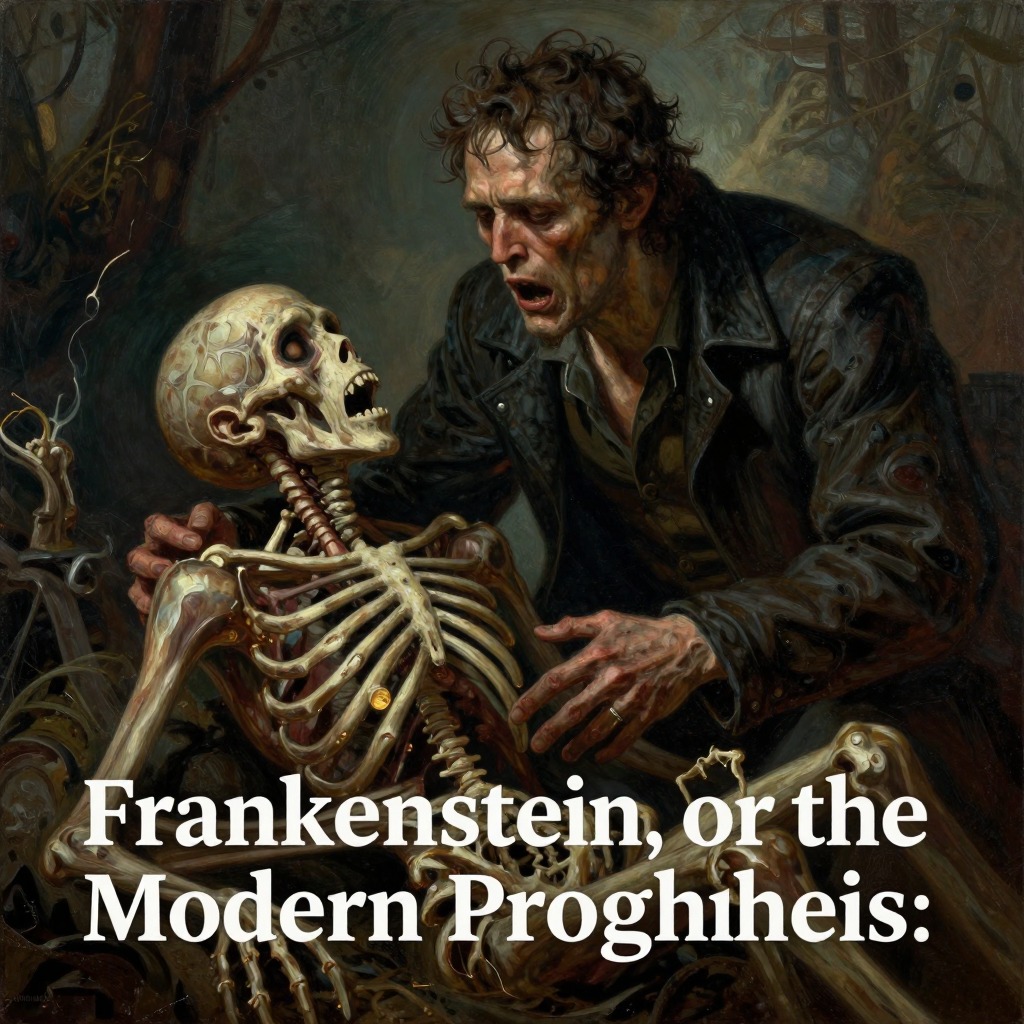
The monster is an artificial human being, assembled by Victor Frankenstein from body parts collected from charnel-houses, dissecting rooms, and slaughterhouses, and animated by a mysterious spark of life on a dreary November night in Ingolstadt. Victor had intended his creation to be beautiful, selecting features he considered handsome, but the result was horrifying: yellow skin that scarcely covered the muscles and arteries beneath, lustrous black hair, pearly white teeth, watery eyes set in dun-white sockets, a shrivelled complexion, and straight black lips. The creature stands about eight feet tall, a gigantic stature Victor chose to expedite his work. Upon seeing the creature move, Victor is filled with "breathless horror and disgust" and abandons him immediately, fleeing the room. The monster, left alone and bewildered, wanders into the forest near Ingolstadt, beginning his existence in a state of complete sensory confusion, unable to distinguish between his various senses or understand the world around him.
Life and Self-Education
After fleeing Ingolstadt, the monster endures a harsh and solitary education in the natural world. He learns to find food, discovers fire, and experiences the pain of burning his hand. He seeks shelter and is violently rejected by villagers who attack him with stones. He finds refuge in a hovel attached to a cottage inhabited by the De Lacey family, where he secretly observes them for many months. Through this hidden observation, he learns human language, customs, and the complexities of social relationships. He develops a deep affection for the family, particularly the blind father De Lacey, the gentle Agatha, and the melancholy Felix. He secretly aids them by gathering wood and clearing snow, earning their wonder at an "invisible hand." His education is furthered by finding a portmanteau containing three books: Paradise Lost, Plutarch's Lives, and The Sorrows of Werter. These works profoundly shape his understanding of himself and his place in the world. He identifies with Adam, but more often with Satan, feeling himself a solitary and abhorred outcast. He also discovers Victor Frankenstein's journal in the pocket of a coat he took from the laboratory, which reveals the horrific details of his own creation and confirms his creator's disgust. This knowledge fills him with agony and a sense of profound injustice.
Key Actions and Objectives
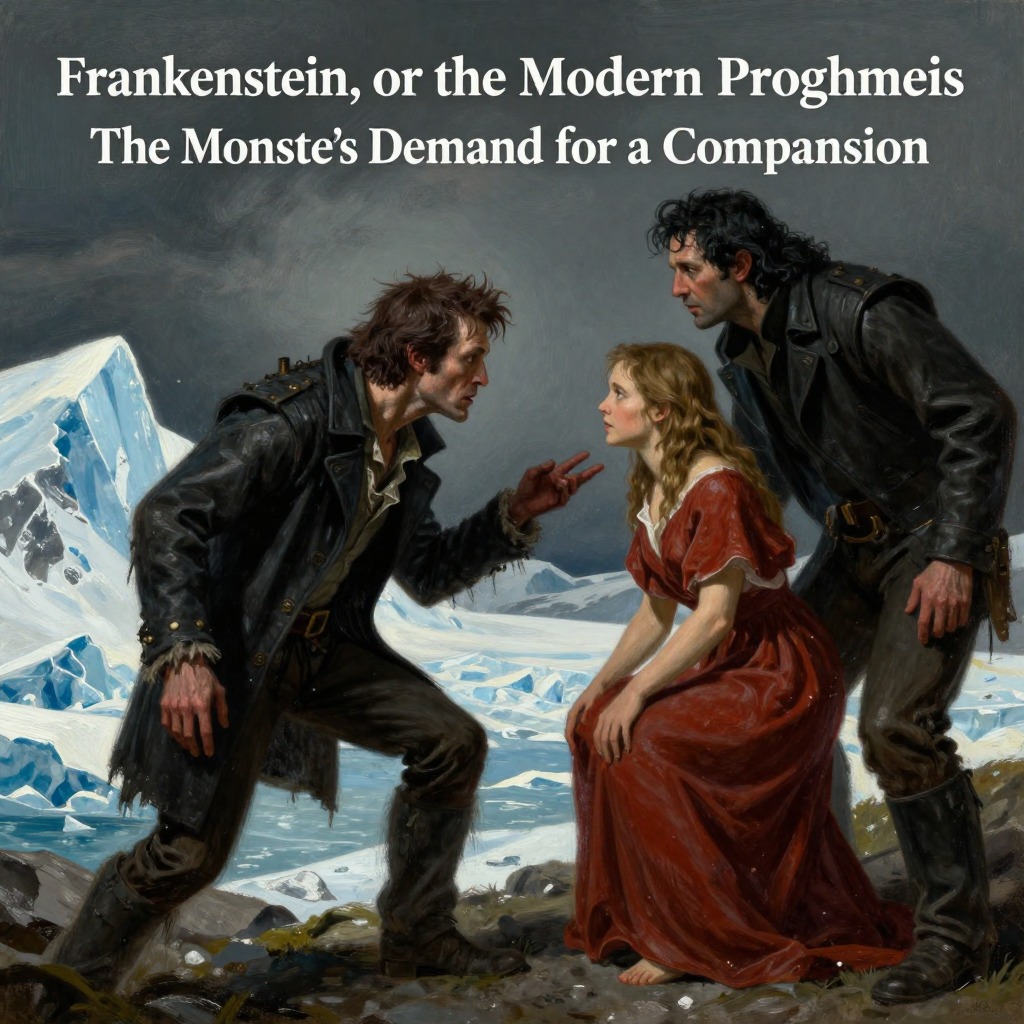
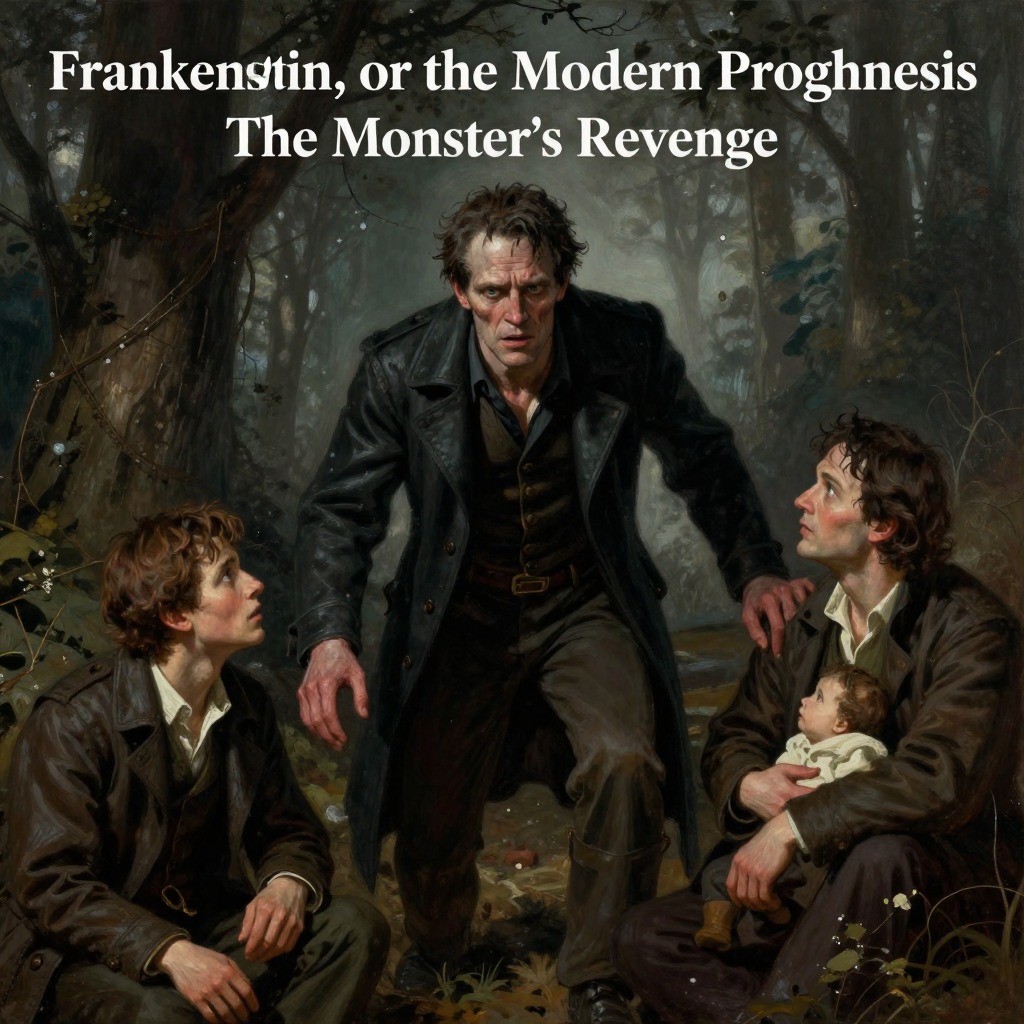
The monster's primary objective is to escape his unbearable isolation and find companionship. His first major action is to attempt to befriend the blind De Lacey, hoping to gain the old man's sympathy and mediation. The attempt fails catastrophically when Felix, Agatha, and Safie return and are horrified by his appearance; Felix violently drives him away. Enraged and despairing, the monster burns the De Laceys' cottage to the ground. He then travels to Geneva, where he encounters Victor's young brother, William. Initially hoping to befriend the child, he is instead met with screams and insults. When William reveals he is a Frankenstein, the monster, in a fit of rage, strangles him. He then places a portrait of Caroline Beaufort, which he finds on William's body, into the folds of the sleeping Justine Moritz's dress, framing her for the murder. This act of calculated revenge is a direct consequence of his rejection. His central demand, articulated during his confrontation with Victor on the glacier, is for Victor to create a female companion of equal hideousness, with whom he can live in exile, vowing to leave humanity in peace if his request is granted.
Relationships and Conflict
The monster's defining relationship is with his creator, Victor Frankenstein, a bond of mutual hatred, fear, and obligation. The monster sees Victor as a father who has failed in his duty, a "natural lord and king" who has abandoned him. He declares, "I ought to be thy Adam, but I am rather the fallen angel, whom thou drivest from joy for no misdeed." Victor, in turn, sees the monster as a demonic enemy, a "vampire" and a "fiend" whose existence is a curse. Their conflict is the engine of the novel's plot. The monster's relationship with humanity is one of total rejection. Every attempt he makes to connect with people—the villagers, the De Laceys, the girl he saves from drowning—is met with violence and fear. This systematic rejection hardens his heart, leading him to declare "everlasting war against the species." He finds a brief, vicarious connection with the De Laceys, but this is ultimately destroyed by their horror of him. His only other significant relationship is with the idea of a female companion, a hope that sustains him until Victor destroys the half-finished creature, an act that seals the monster's commitment to a path of total destruction.
Change and Ending
The monster undergoes a profound transformation from a benevolent, sensitive being to a figure of pure malice and vengeance. He begins his life with a soul that "glowed with love and humanity," but the cruelty and rejection he faces corrupt him. He explicitly states, "I was benevolent and good; misery made me a fiend." After Victor destroys the female creature, the monster vows to be with him on his wedding-night, a threat he fulfills by murdering Elizabeth. He then systematically destroys everyone Victor loves, including Henry Clerval and, indirectly, Victor's father, Alphonse. The monster's final appearance is in Walton's cabin, where he mourns over Victor's dead body. He expresses profound remorse, calling himself a "wretch" and declaring that his crimes are "consummated." He tells Walton that he is "the fallen angel" who has become a "malignant devil," and that he is alone, without even the companions that Satan had. He vows to travel to the northernmost extremity of the globe, build a funeral pyre, and consume himself to ashes, so that no one may ever create another being like him. He leaps from the cabin window onto an ice raft and is "borne away by the waves and lost in darkness and distance."
Narrative Role and Thematic Significance
The monster is the novel's most complex and tragic figure, serving as both the antagonist and the primary victim of Victor's ambition. His narrative, which occupies the central chapters of the book, is a powerful and persuasive first-person account that forces the reader to sympathize with his suffering and question the justice of his persecution. He embodies the novel's central themes of the dangers of unchecked ambition, the creator's responsibility for his creation, the destructive power of prejudice, and the profound agony of isolation. His eloquent arguments challenge Victor's—and the reader's—moral assumptions, making him a far more than a simple monster. He is a being who is "malicious because I am miserable," a creature whose crimes are born from the failure of others to show him compassion. His final, self-willed disappearance into the Arctic wastes is a haunting conclusion to a life defined by rejection and a desperate, unfulfilled search for love.