
The Lilliputian Court Politics
Gulliver's TravelsThe intrigues, factions, and power struggles within the Lilliputian court, including the high-heel/low-heel conflict and the Big-endian controversy.
increasing Bearing strength in each event
 decreasing
Bearing strength in each eventdecreasingReldresal's Explanation of Factions
The Two Parties
The Tramecksan and Slamecksan
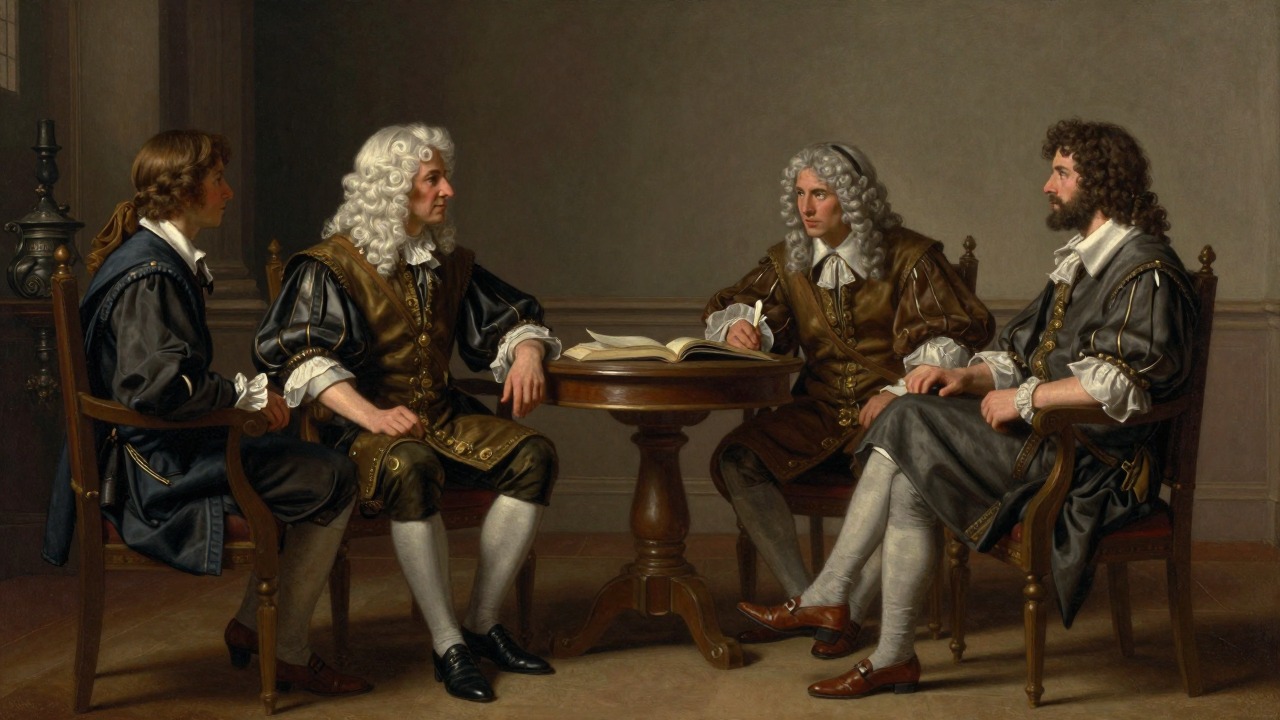
During a private audience, Reldresal tells Gulliver that the empire is plagued by two violent factions: the Tramecksan (high heels) and the Slamecksan (low heels). The high heels claim to adhere to the ancient constitution, but the emperor has chosen to use only low heels in government. The heir to the crown has a tendency toward the high heels, as one of his heels is higher than the other, causing a hobble.
The Threat from Blefuscu
Beyond the internal strife, the empire faces an invasion from Blefuscu, which is almost as large and powerful. The war has been raging for thirty-six moons, with heavy losses. The conflict began over a religious dispute about the proper way to break eggs—the Big-endians versus the Little-endians. The emperor's grandfather, as a boy, cut his finger breaking an egg at the larger end, leading to a law commanding the smaller end. This caused six rebellions, the loss of one emperor's life, and another's crown.
The Danger of Foreign Entanglement
Reldresal hints that Gulliver's release was hastened because the court needed his strength against Blefuscu. The factional strife and the external threat are intertwined, and Gulliver's presence is both a help and a potential danger. This conversation sets the stage for Gulliver's involvement in the war and his eventual downfall.
The Capture of the Fleet and the Emperor's Ambition
The Emperor's Dream of Conquest
The Victory Over Blefuscu
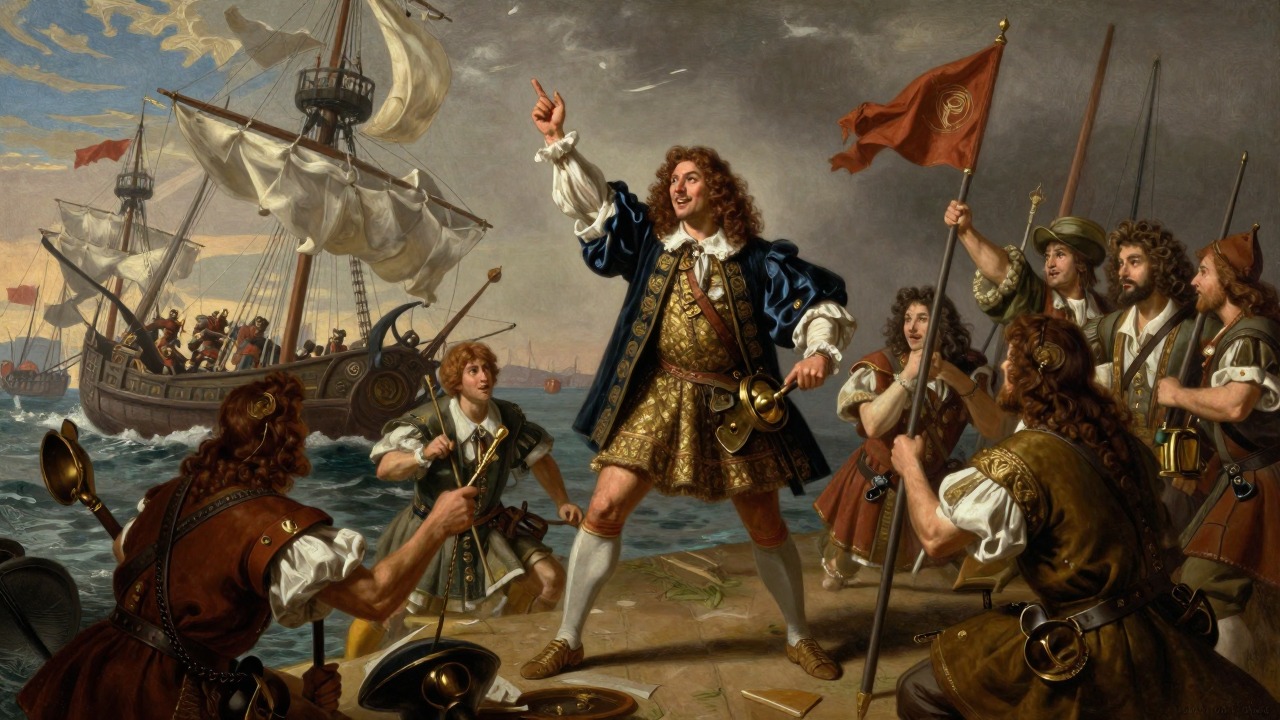
After Gulliver captures the entire Blefuscu fleet, the emperor is overjoyed and creates him a Nardac. However, the emperor's ambition is boundless: he wants to reduce Blefuscu to a province, destroy the Big-endian exiles, and force the whole population to break eggs at the smaller end. This would make him the sole monarch of the world.
Gulliver's Refusal
Gulliver, to his credit, refuses to be an instrument of slavery. He argues that it is against policy and justice to enslave a free and brave people. The wisest ministers agree with him, but the emperor and his secret enemies are offended. The refusal marks the beginning of the emperor's coolness toward Gulliver.
The Seeds of Conspiracy
Flimnap and Bolgolam, who were already jealous of Gulliver, use this refusal to fuel their machinations. The emperor's ambition, thwarted, turns into resentment. The court becomes a minefield of intrigue, and Gulliver's position becomes precarious.
The Fire in the Empress's Apartment
The Unfortunate Service
The Fire and the Extinguishing
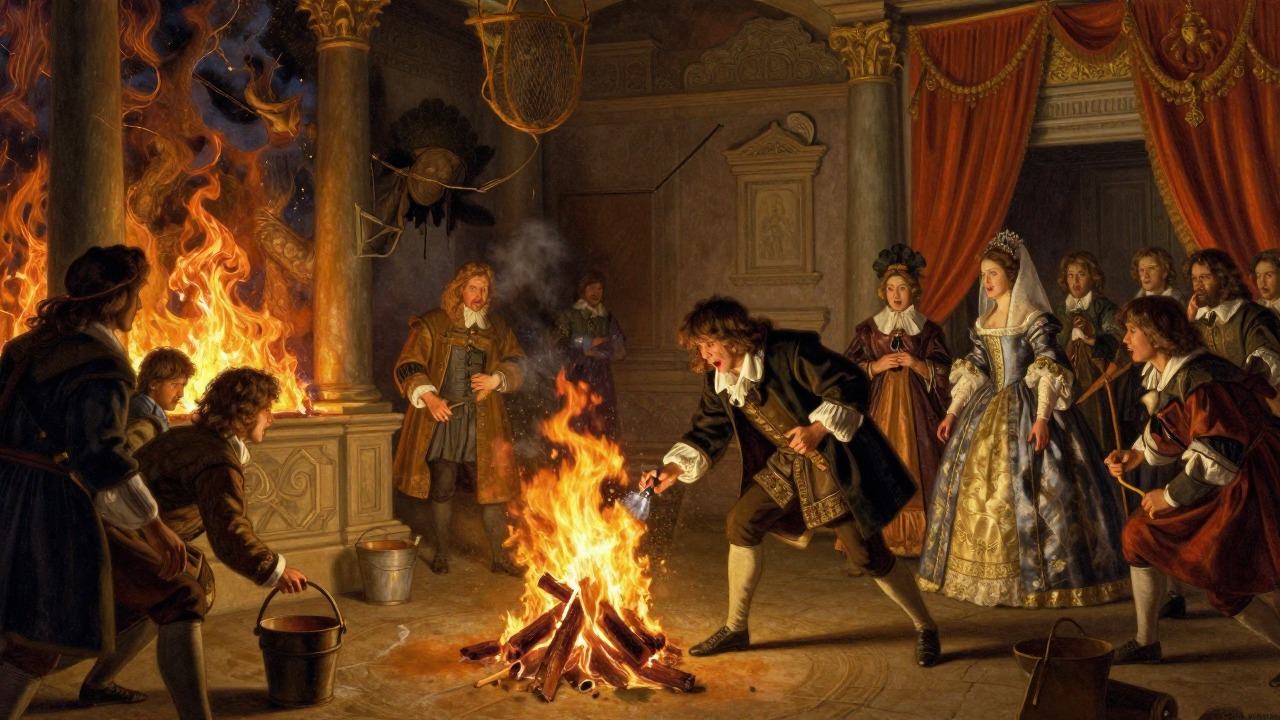
Gulliver is awakened at midnight by cries of fire. The empress's apartment is ablaze, and the water buckets are too small. Without his coat, Gulliver uses an expedient—he urinates on the fire, extinguishing it in three minutes. The palace is saved, but the method is highly offensive to Lilliputian law, which forbids even touching the royal person without invitation.
The Empress's Revenge
The emperor, though grateful, cannot prevent the empress from vowing revenge. She conceives the greatest abhorrence of Gulliver and swears she will never forgive him. This incident gives his enemies a powerful weapon: they can accuse him of treason for touching the empress.
The Legal Charge
Later, the Articles of Impeachment include the charge that Gulliver, under color of extinguishing the fire, did maliciously and traitorously pull the empress by the arms and lift her high in the air. This ironic twist—that a noble deed becomes a crime—illustrates the absurdity of the Lilliputian legal system and the ruthlessness of court politics.
The Conspiracy and the Articles of Impeachment
The Plot Against Gulliver
The Secret Cabal
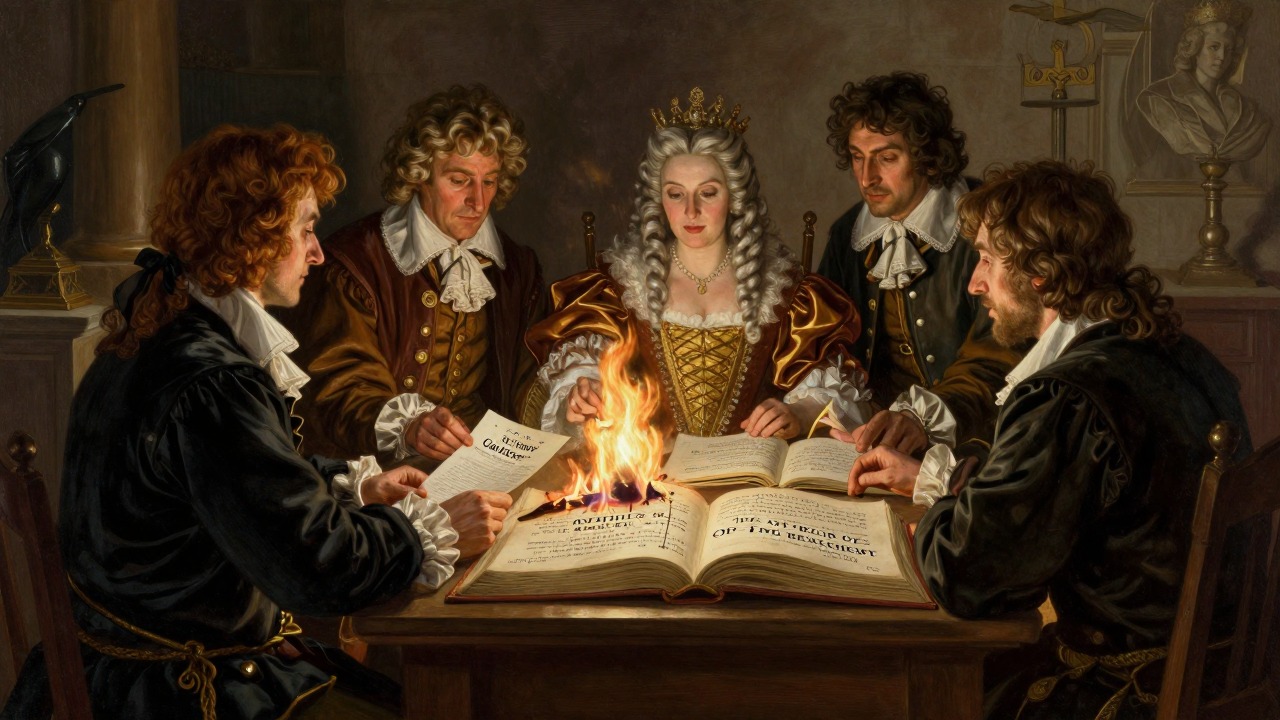
Bolgolam, Flimnap, Limtoc, Lalcon, and Balmuff form a junto to destroy Gulliver. They prepare articles of impeachment, accusing him of high treason. The first article is the touching of the empress during the fire. The second is his refusal to reduce Blefuscu to a province. The third is his aiding the Blefuscu ambassadors. The fourth is his plan to visit Blefuscu without permission.
The Debates in Council
In the council, the emperor shows lenity, but the majority insists on death. The admiral proposes setting fire to Gulliver's house and shooting him with poisoned arrows. Some suggest poisoning his sheets. But the emperor, urged by Reldresal, eventually agrees to a milder punishment: putting out both his eyes. The secretary argues that blindness would make Gulliver still useful and that the emperor's mercy would be praised.
The Final Sentence
Only Bolgolam openly dissents, wanting death. The empress, through her influence, instigates him. The sentence is recorded: Gulliver is to be blinded and then starved to death. The plan is to keep it secret and execute it in three days. Reldresal, risking his own life, warns Gulliver, enabling him to escape.
Gulliver's Escape and the Aftermath
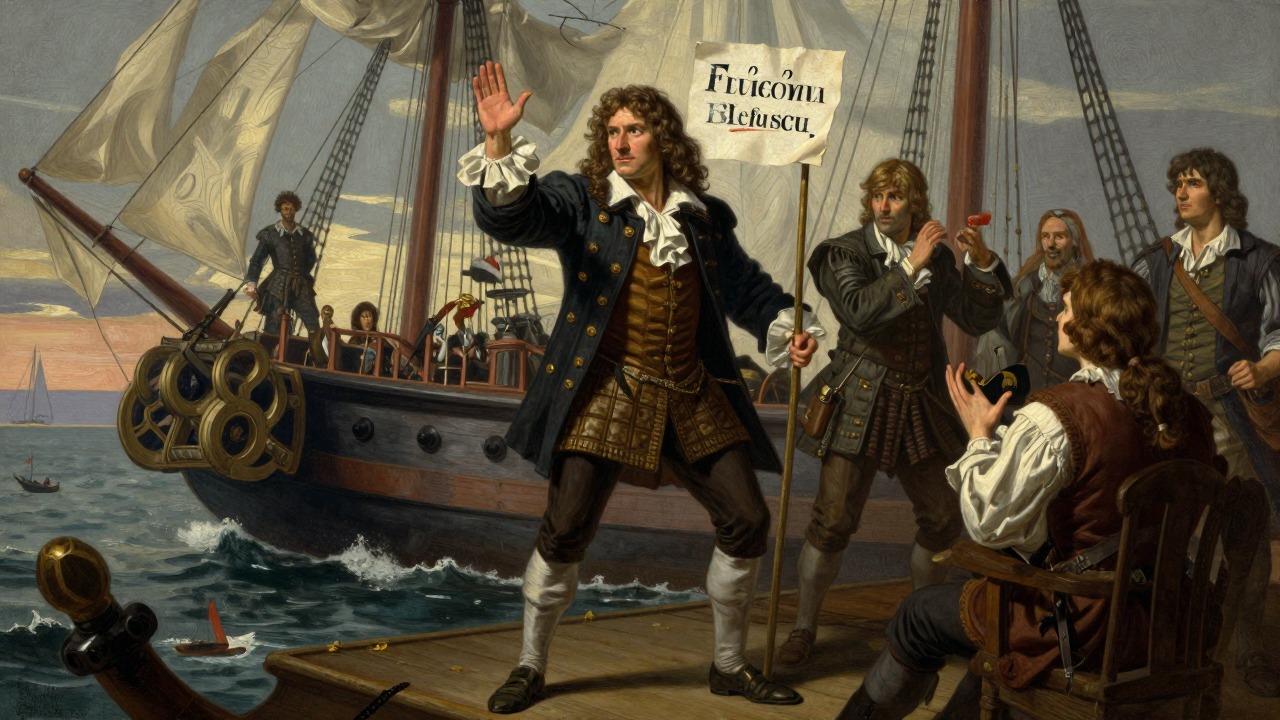
The Flight to Blefuscu
The Decision to Flee
Gulliver, after receiving the warning, is torn between standing trial and escaping. He remembers his oath and the favors he received, but he also fears the power of his enemies. He decides to use his license to visit Blefuscu, takes a man-of-war, and sails to the other empire. The Lilliputian emperor, thinking Gulliver will return, is initially unaware.
The Lilliputian Envoy
When Gulliver does not return, the Lilliputian court sends an envoy to Blefuscu, demanding Gulliver be sent back bound for punishment. The envoy praises the lenity of the emperor, who only wanted to put out his eyes. The Blefuscu emperor, after three days of consultation, refuses, citing that it is impossible to bind such a man and that he has done good offices. He also hints that both empires will soon be freed from the burden.
The End of the Affair
Gulliver, aware of the dangers, decides to leave both kingdoms. He builds a boat and departs, leaving the Lilliputian court to its own devices. The conspiracy against him fails, but only because he escapes. The episode highlights the fickleness of princely favor and the danger of serving absolute monarchs.
shortly after Gulliver's release, about 1700
spring 1700
spring 1700, after the fleet capture
two months after the fleet capture, about mid-1700
three days after the sentence, early 1701
