
The Theme of Relativity
Gulliver's TravelsThe shifting perspective of size and value as Gulliver moves between Lilliput, Brobdingnag, and back to England, highlighting the relativity of human judgments.
increasing Bearing strength in each event
 decreasing
Bearing strength in each eventdecreasingGulliver as a Giant in Lilliput
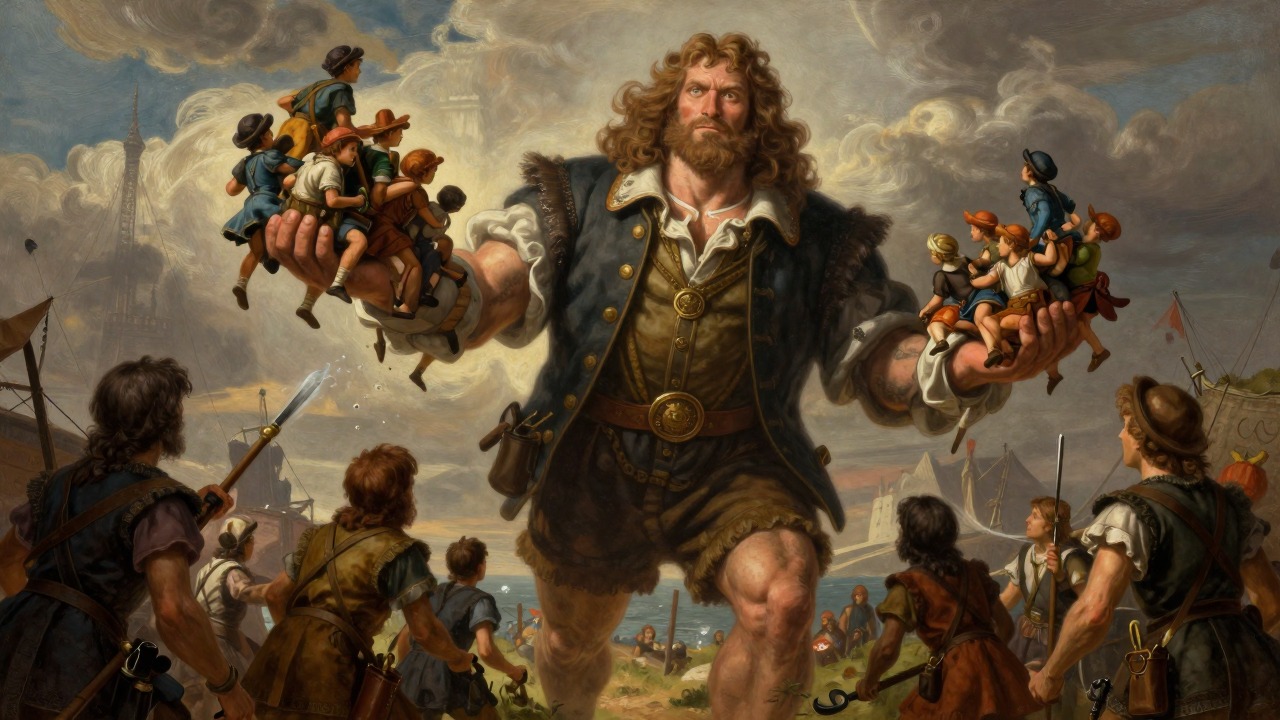
The Man-Mountain
The Physical Superiority
In Lilliput, Gulliver is a giant, towering over the inhabitants. He can pull their entire fleet, extinguish fires with his urine, and carry dozens of them in his hand. The Lilliputians fear his strength but also admire his bulk. Their perspective is that of tiny creatures looking up at a mountain.
The Moral Implications
Gulliver's power gives him a sense of superiority, but he also sees the Lilliputians' political squabbles as petty and absurd. Their conflicts over egg-breaking and shoe heels seem ridiculous to him. Yet he is also subject to their laws and their arrows, which can hurt him. The relativity of power is evident.
The First Hint of Relativity
When Gulliver compares his own size to the giants' size later, he will realize that his position in Lilliput was just a matter of scale. The Lilliputians considered him a prodigy, but he is merely a normal man in a different context.
Gulliver as a Lilliputian in Brobdingnag
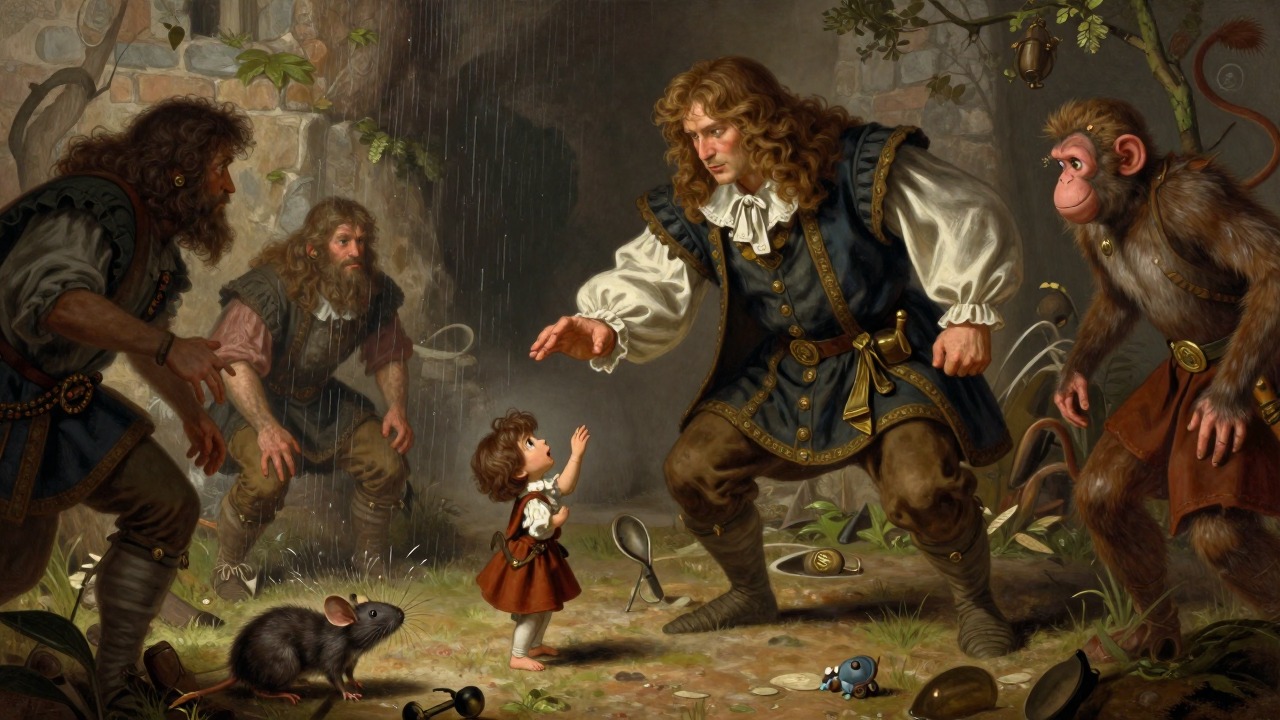
The Tiny Creature
The Reversal of Roles
In Brobdingnag, Gulliver becomes the miniature being. He is terrified of the giant rats, the cat, the hail, and the monkey. The Brobdingnagians see him as a curiosity, a lusus naturae. The king calls him an insect. His great strength in Lilliput is now useless.
The Mirror Scene
When the queen holds Gulliver up to a looking-glass, he sees both their reflections together. He cannot help but laugh at the ridiculous comparison. He begins to imagine himself dwindled below his usual size. This physical reversal forces a psychological shift.
The Humiliation
Gulliver's pride is constantly wounded. The dwarf, the monkey, and the king's laughter all remind him of his insignificance. He internalizes this perspective, and when he returns to England, he sees his own people as pygmies.
The Return to England and Disorientation
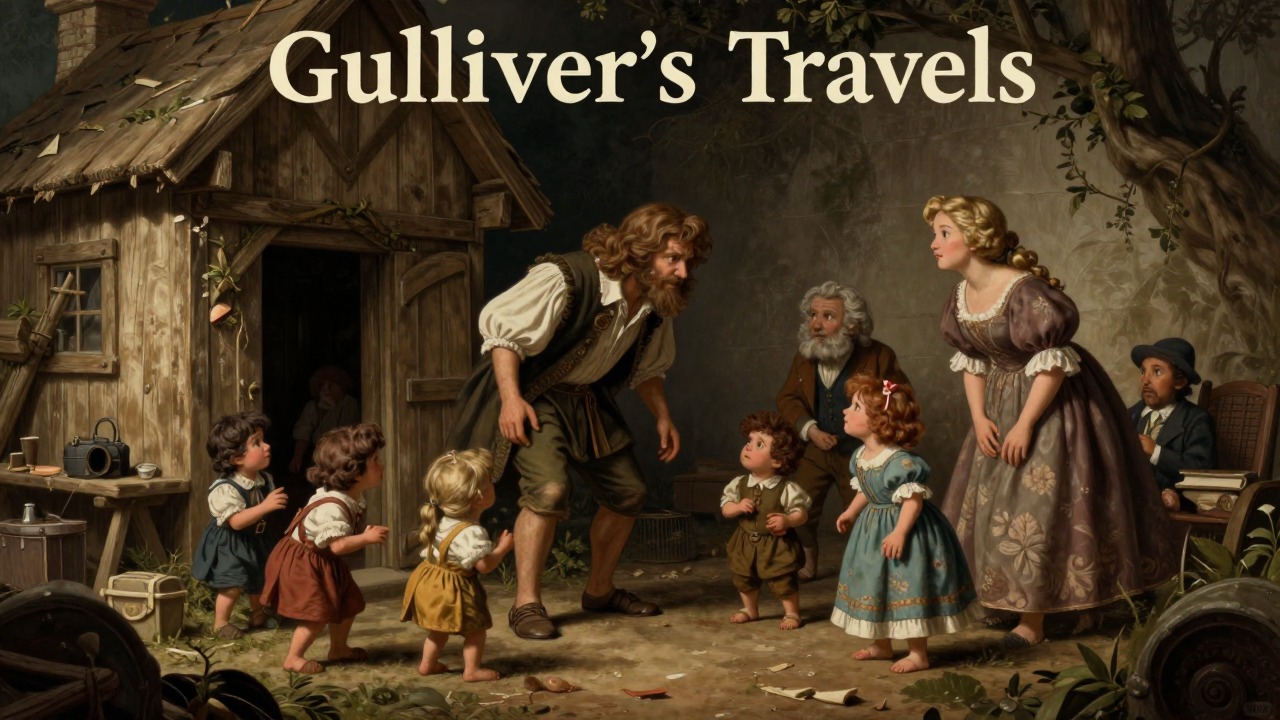
The Pygmy World
The Perception of Smallness
When Gulliver returns to England, he is so used to the giants that he sees his own countrymen as pygmies. He is afraid of trampling them. He bends down to enter his house. He tells his wife that she has starved herself to nothing. His family thinks he is mad.
The Power of Habit
Gulliver reflects on the great power of habit and prejudice. He has become so accustomed to one scale of existence that he cannot adjust to another. The reader understands that his perception is relative, not absolute.
The Theme Stated
This episode explicitly states the theme of relativity. Gulliver's experience shows that "nothing is great or little otherwise than by comparison." The book uses this physical relativity to comment on moral and intellectual relativity as well.
The Contrast Between Lilliput and Brobdingnag
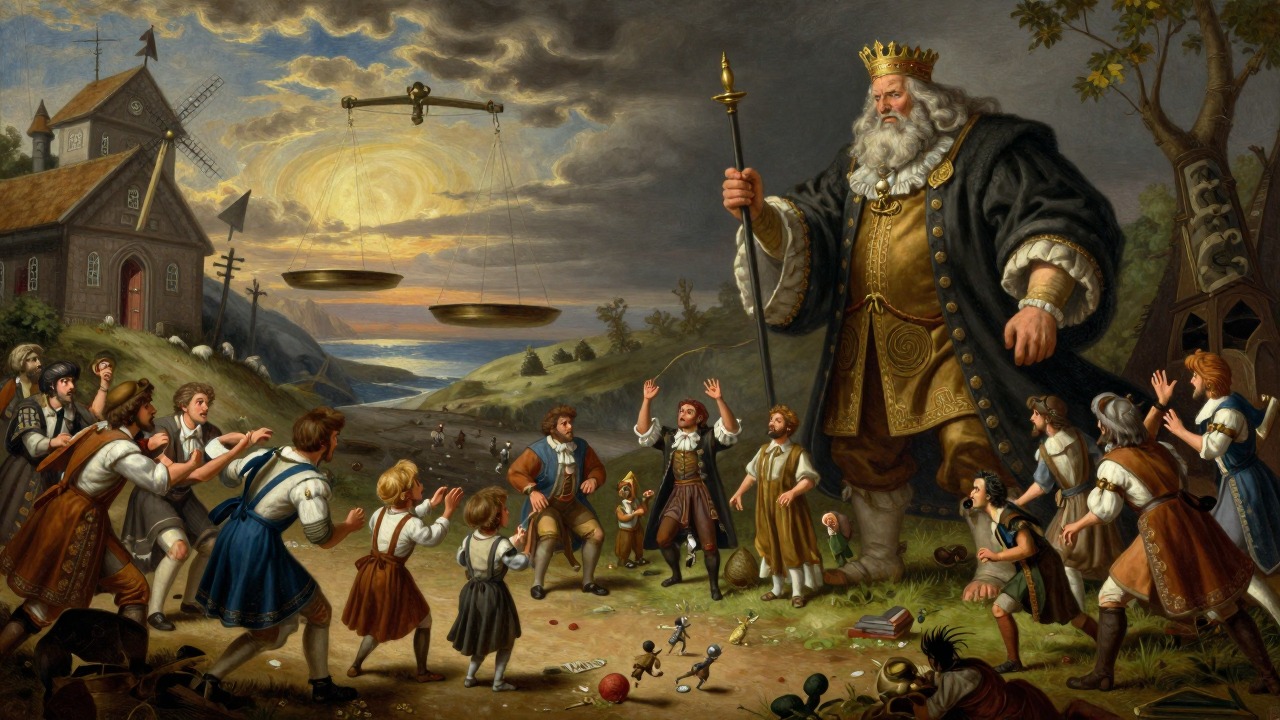
The Two Scales of Human Nature
The Political Relativity
In Lilliput, the political conflicts are small and absurd, but the Lilliputians are also cruel and treacherous. In Brobdingnag, the king is wise and benevolent, but the country is physically overwhelming. The two societies are not just different in size but in moral character.
The Moral Relativity
Gulliver's admiration for the Brobdingnagian king's rationality contrasts with his contempt for Lilliputian pettiness. Yet the Brobdingnagians are not perfect; they are physically huge but morally limited. The book suggests that virtue is not proportional to size.
The Reader's Perspective
By shifting the scale, Swift forces the reader to reconsider what is normal and what is important. The reader is invited to see the foolishness of European politics through the lens of these extreme comparisons. The theme of relativity is the central cognitive tool of the satire.
The Philosophical Reflection on Comparison
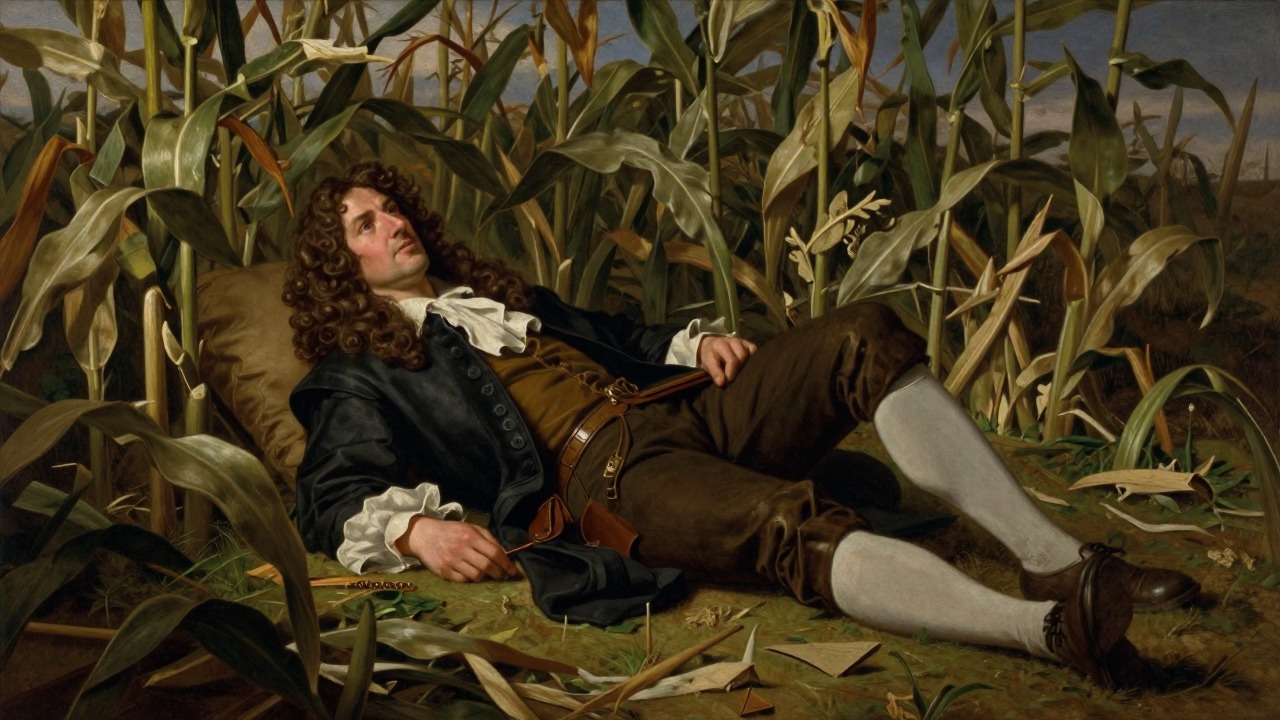
Gulliver's Thoughts on Great and Little
The Reflection on Lilliput
While lying in the cornfield, Gulliver reflects on his time in Lilliput. He was a prodigy there, able to draw an imperial fleet. Now he is a mere insect. He realizes that philosophers are right: nothing is great or little but by comparison.
The Possibility of Even Larger Worlds
He speculates that there might be other nations where even the Brobdingnagians would be dwarfs. This chain of thought, though not pursued, suggests an infinite regress of scales. Human pride is thus humbled.
The Application to Human Vanity
Gulliver's musings are a direct commentary on the folly of human vanity. The reader is reminded that our own sense of importance is contingent on our environment. This theme runs throughout the book and is one of its most enduring insights.
1699-1701, during the Lilliput stay
1703-1706, during the Brobdingnag stay
June 1706, after arrival
throughout both voyages
during the Brobdingnag stay, after the monkey incident
