Balmuff
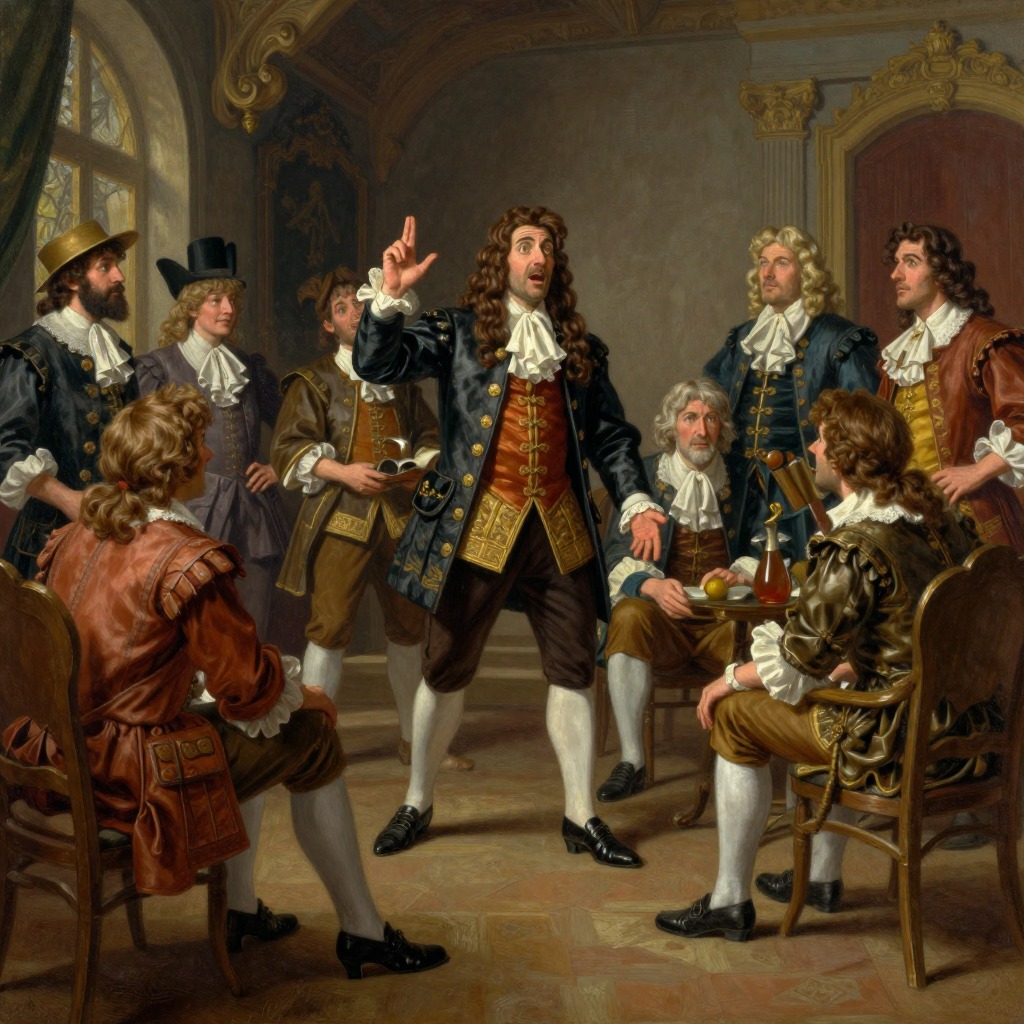
Balmuff is the grand justiciary of Lilliput, the highest judicial officer in the realm, who plays a decisive role in the legal persecution of Lemuel Gulliver. As one of the five principal conspirators who prepare articles of impeachment against the Man-mountain for treason and other capital crimes, Balmuff embodies the corruption of justice in the Lilliputian court, where legal authority is wielded as a weapon of political faction rather than a safeguard of truth.
Identity and Position
Balmuff holds the title of grand justiciary, making him the chief magistrate of Lilliput and the head of its judicial system. In this capacity, he is responsible for overseeing the administration of justice and interpreting the laws of the empire. His position places him among the highest officers of state, alongside the high admiral Skyrris Bolgolam, the high treasurer Flimnap, the general Limtoc, and the chamberlain Lalcon. Together, these five ministers form the core of the cabal that moves against Gulliver after his great services to the crown.
Role in the Conspiracy
Balmuff is explicitly named among the five officials who prepare the articles of impeachment against Gulliver, charging him with high treason. The impeachment document, which is delivered to Gulliver by his friend Reldresal, the principal secretary for private affairs, accuses the Man-mountain of four specific crimes: laying hands upon the empress under color of extinguishing the fire in her apartment, refusing to seize the remaining ships of Blefuscu and reduce that empire to a province, aiding and comforting the ambassadors from Blefuscu who came to sue for peace, and preparing to make a voyage to the court of Blefuscu under a verbal license with traitorous intent. As grand justiciary, Balmuff's signature on these articles gives them the weight of legal authority, transforming what is essentially a political vendetta into a formal judicial proceeding.
Alignment with the Hostile Faction
Balmuff aligns himself with the most extreme elements of the court, particularly with Skyrris Bolgolam and Flimnap, who advocate for Gulliver's death by the most painful and ignominious means. The conspirators propose setting fire to Gulliver's house at night, having the general attend with twenty thousand men armed with poisoned arrows to shoot him in the face and hands, and ordering servants to strew poisonous juice on his shirts and sheets so that he would tear his own flesh and die in utmost torture. Balmuff, as a signatory to the impeachment, implicitly supports these measures, standing in opposition to the more moderate proposal of Reldresal, who suggests that Gulliver should merely have his eyes put out. The grand justiciary's participation in the conspiracy demonstrates how the judicial system of Lilliput has been subordinated to the personal malice of the emperor's favorites.
Thematic Significance
Balmuff represents the perversion of justice in a court where legal institutions exist only to serve the passions of the powerful. His role as grand justiciary should, in theory, make him a guardian of fairness and the rule of law, yet he becomes an instrument of persecution against a man who has performed the greatest services to the empire—capturing the entire Blefuscu fleet and saving the royal palace from destruction by fire. The irony is sharpened by the fact that Lilliput's laws, as Gulliver earlier describes them, include admirable provisions such as the quadruple recompense for falsely accused persons and the punishment of accusers with ignominious death. Balmuff's willingness to subvert these very principles for political ends reveals the gap between Lilliput's ideal legal institutions and their corrupt practice, a gap that Swift uses to satirize the gap between the stated principles and actual practices of European justice systems.