Big-endian
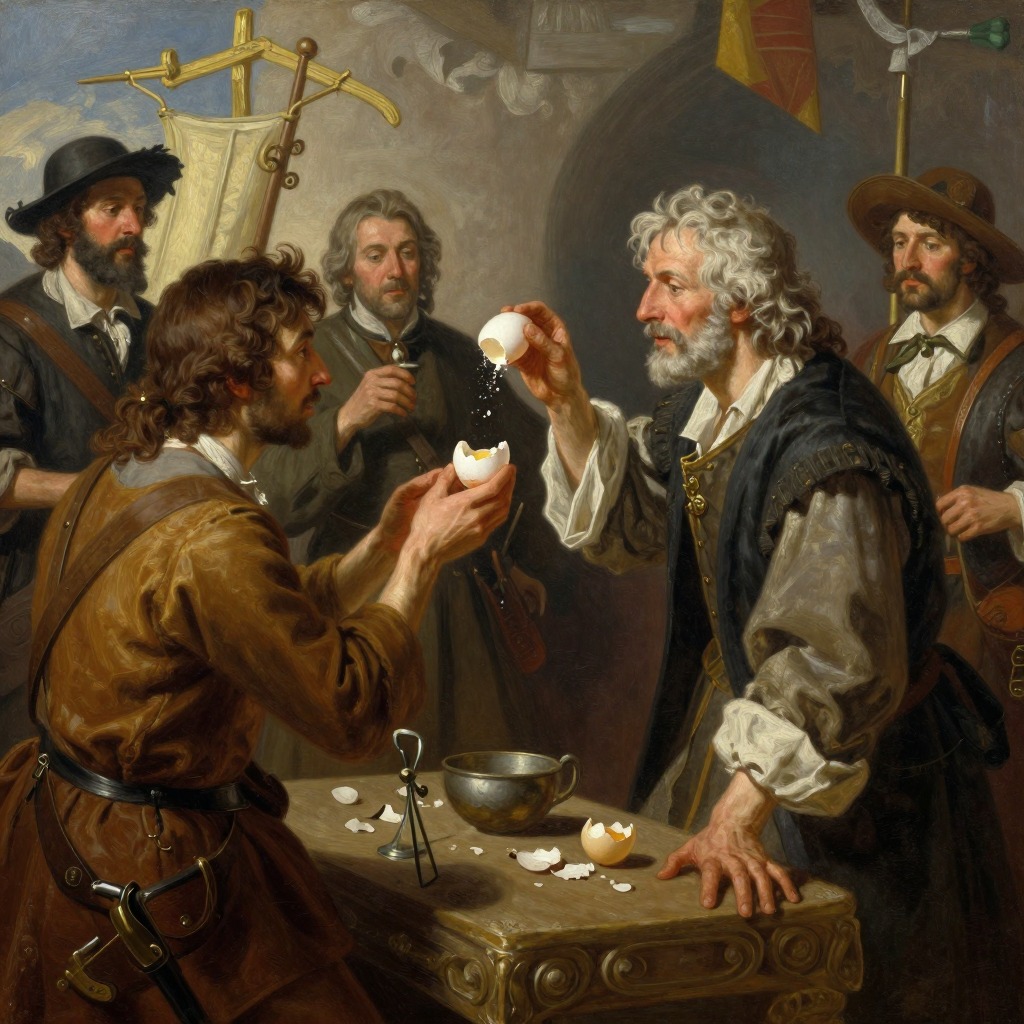
The Big-endian controversy is the central religious and political dispute in the empire of Lilliput, a conflict that began over the proper way to break an egg and escalated into a schism that cost thousands of lives, fueled six rebellions, and embroiled two empires in a devastating war. The dispute, as recounted by Reldresal, the principal secretary for private affairs, to Lemuel Gulliver, originated with a trivial accident: the emperor's grandfather, while still a boy, cut his finger breaking an egg according to the ancient practice of cracking it at the larger end. In response, the emperor's father published an edict commanding all subjects, under severe penalties, to break the smaller end of their eggs instead. This decree was met with fierce resentment. The people who insisted on the traditional method—breaking the egg at the larger end—became known as the Big-endians. Their refusal to comply led to six rebellions, during which one emperor lost his life and another lost his crown. The civil commotions were constantly fomented by the monarchs of Blefuscu, the other great empire of the universe, which provided refuge for the exiles. It is computed that eleven thousand persons suffered death rather than submit to breaking their eggs at the smaller end. The controversy was not merely a matter of custom but was framed as a fundamental doctrine of religion, derived from the fifty-fourth chapter of the Blundecral (their Alcoran), which states that "all true believers break their eggs at the convenient end." The Big-endians argued that this left the choice to individual conscience, while the Lilliputian authorities insisted on the smaller end. The books of the Big-endians were long forbidden, and the whole party was rendered incapable by law of holding employments. The Big-endian exiles found so much credit at the court of Blefuscu that a bloody war was carried on between the two empires for six-and-thirty moons, with various success. During this war, Lilliput lost forty capital ships and a much greater number of smaller vessels, together with thirty thousand of its best seamen and soldiers. The damage received by the enemy was reckoned to be somewhat greater. Gulliver's own actions became entangled in this conflict. After he captured the Blefuscu fleet, the Emperor of Lilliput desired him to take the remaining ships and reduce Blefuscu to a province, destroying the Big-endian exiles and compelling the people to break the smaller end of their eggs. Gulliver refused, protesting that he would never be an instrument of bringing a free and brave people into slavery. This refusal made him a target of the emperor's resentment and the court's intrigue. The Big-endian controversy also served as a lens through which the King of Brobdingnag viewed the history of Europe. When Gulliver gave him an account of English affairs, the king was perfectly astonished, protesting that it was only a heap of conspiracies, rebellions, murders, massacres, revolutions, and banishments—the very worst effects that avarice, faction, hypocrisy, and ambition could produce. The king concluded that the bulk of Gulliver's natives were "the most pernicious race of little odious vermin that nature ever suffered to crawl upon the surface of the earth." The Big-endian dispute thus functions as a satirical microcosm of the religious wars and political schisms of Swift's own time, exposing the absurdity of conflicts that arise from arbitrary interpretations of doctrine and the manipulation of religious authority for political ends.