Gulliver's spectacles
Gulliver's spectacles are a pair of eyeglasses he carries for the weakness of his eyes, a seemingly mundane object that becomes a decisive tool in one of his most daring exploits. Their significance lies not in their everyday function but in the fact that Gulliver deliberately hides them from the Lilliputian authorities during the search of his pockets, and later deploys them as improvised armor against a hail of enemy arrows. The spectacles thus embody the theme of concealed knowledge and the practical edge that a seemingly ordinary European object can provide in a world of radically different proportions.
Concealment and the Search of the Pockets
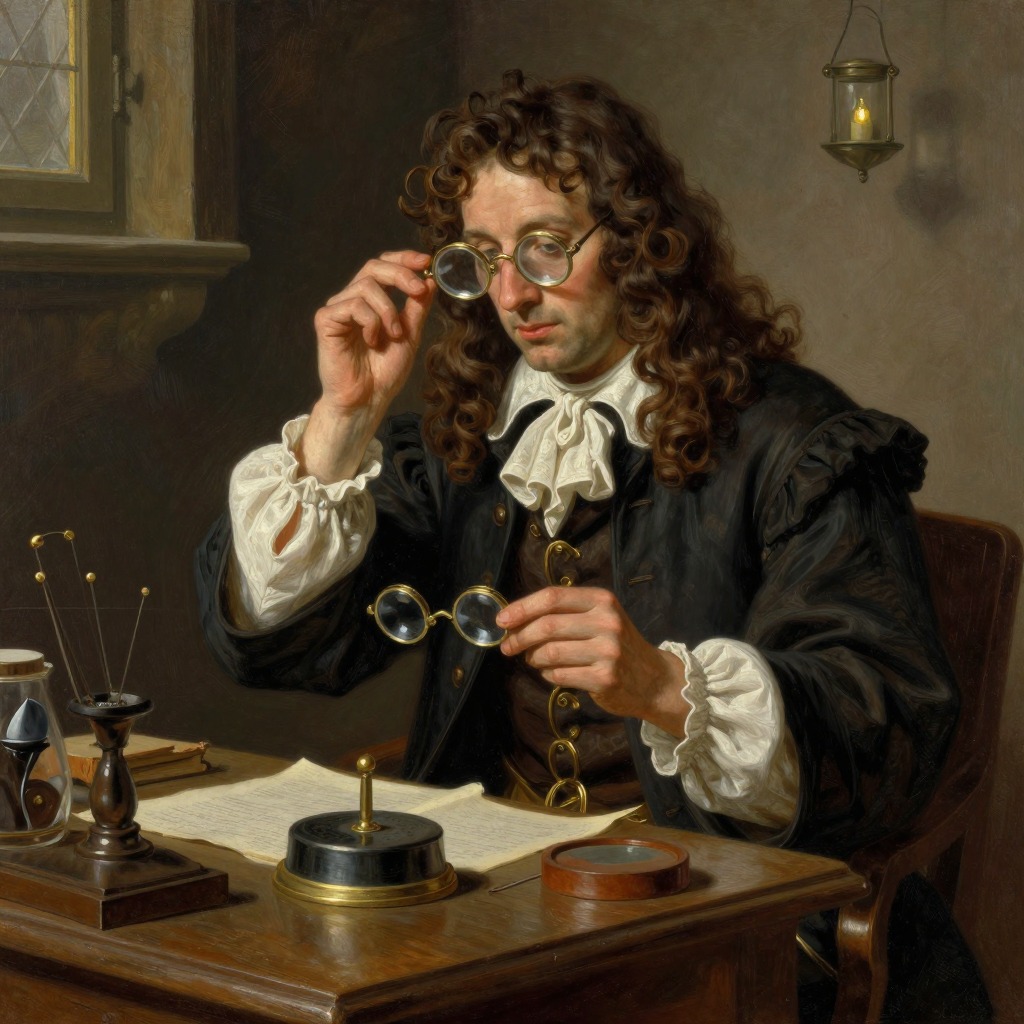
When the Emperor of Lilliput orders a formal search of Gulliver's person, two officers produce an exact inventory of everything they find. They record a great silver chest, a prodigious number of white thin substances (writings), a hollow pillar of iron (a pistol), and a wonderful engine that makes an incessant noise like a water-mill (his watch). But Gulliver, exercising a deliberate act of concealment, keeps one private pocket hidden from the searchers. In this pocket he stores a pair of spectacles, which he sometimes uses for the weakness of his eyes, along with a pocket perspective and some other little conveniences. He does not think himself bound in honor to reveal these items, apprehending they might be lost or spoiled if he ventured them out of his possession. This act of withholding is a rare moment of strategic deception by the otherwise compliant narrator, and it preserves a piece of his own technological superiority that the Lilliputians, with their acute but unaided sight, cannot match.
Protective Use in the Capture of the Blefuscu Fleet
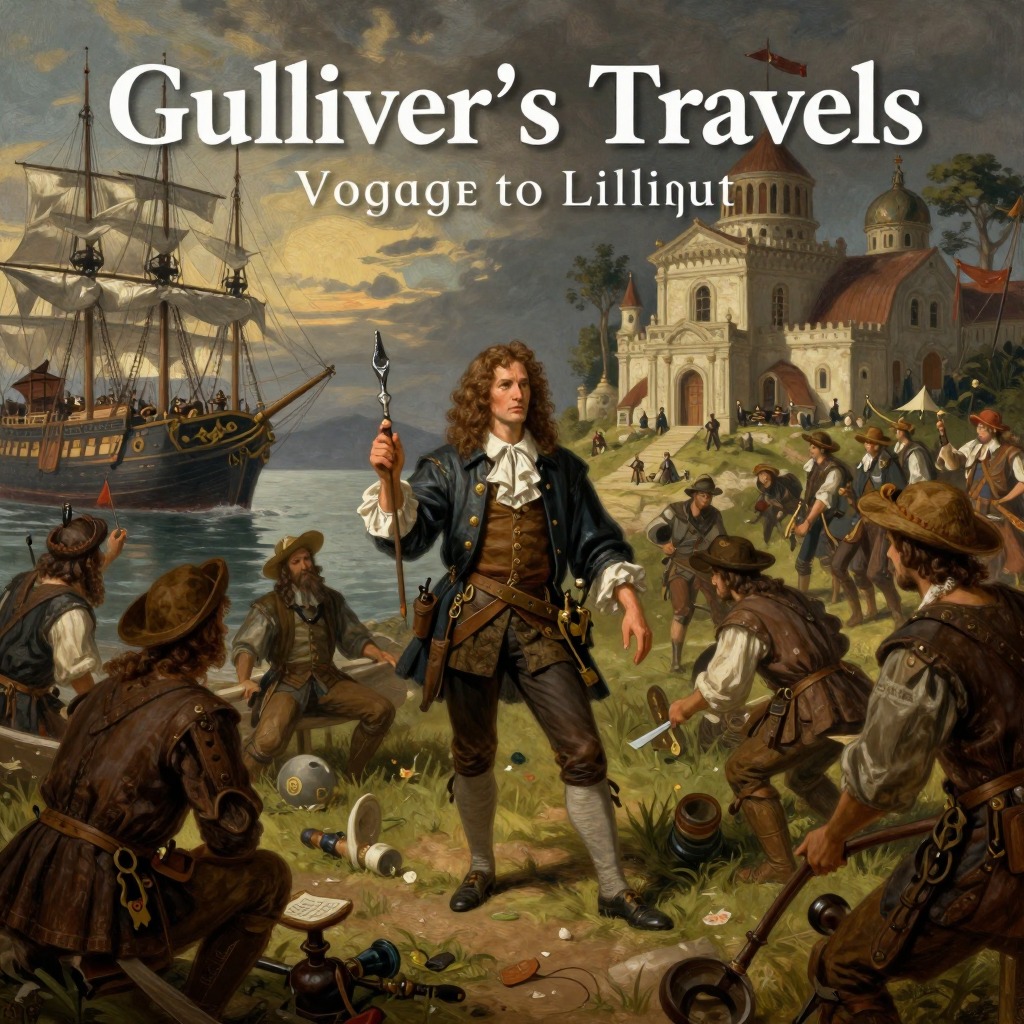
The spectacles' most dramatic appearance comes during Gulliver's extraordinary stratagem to prevent an invasion by the island of Blefuscu. Having waded into the channel and fastened hooks to the prows of the enemy's men-of-war, he finds himself under a furious barrage of arrows. The enemy discharges several thousand arrows, many of which stick in his hands and face, causing excessive smart and disturbance to his work. His greatest apprehension is for his eyes, which he would have infallibly lost if he had not suddenly thought of an expedient. He remembers the pair of spectacles in his private pocket, which had escaped the emperor's searchers. He takes them out and fastens them as strongly as he can upon his nose. Thus armed, he goes on boldly with his work in spite of the enemy's arrows, many of which strike against the glasses of his spectacles without any other effect than a little to discompose them. The spectacles function here as a literal shield, transforming a medical aid for weak eyes into a piece of battlefield equipment that allows Gulliver to complete his mission and secure the entire Blefuscu fleet for the Lilliputian emperor.
Narrative and Thematic Significance
The spectacles are a quiet but persistent motif of Gulliver's dual nature: he is both a giant among the Lilliputians, capable of drawing an imperial fleet, and a physically vulnerable being who needs corrective lenses. The fact that he must hide them from the Lilliputian authorities underscores the gap between his apparent power and his actual dependence on the tools of his own civilization. In the Brobdingnag episode, the theme of relative perception is inverted: the King of Brobdingnag, after hearing Gulliver's panegyric on England, famously declares the bulk of the natives to be "the most pernicious race of little odious vermin." The spectacles, which Gulliver uses to see clearly in a world of small things, become a symbol of the limited, distorting lens through which every culture views others. They are a concrete object that carries the novel's central argument about perspective, scale, and the relativity of human judgment.