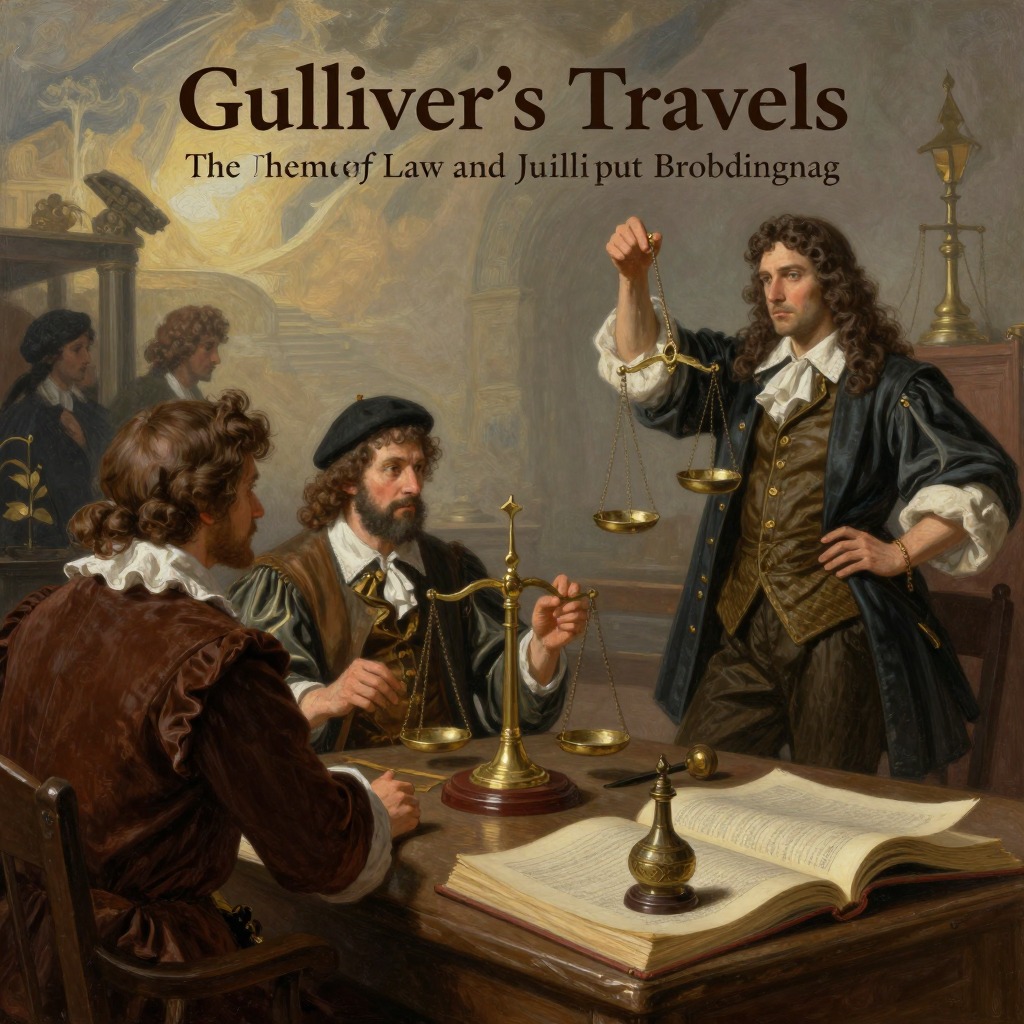
Lilliputian law of false accusation
The Lilliputian law of false accusation stands as one of the most distinctive and severe legal principles in the empire of Lilliput, embodying a radical approach to justice that reverses the typical burden of risk in criminal proceedings. Under this law, any person who brings an accusation against another for a crime against the state is subject to the utmost penalty if the accused is able to prove their innocence at trial. The accuser is immediately put to an ignominious death, and from the accuser's goods or lands the innocent person is quadruply recompensed for the loss of time, the danger undergone, the hardship of imprisonment, and all charges incurred in making a defense. If the confiscated funds prove deficient, the crown supplies the difference. Beyond material restitution, the emperor confers some public mark of favor upon the acquitted person, and a proclamation of their innocence is made through the whole city.
Legal Philosophy and Social Function
This law operates within a broader Lilliputian legal framework that treats certain offenses with extraordinary gravity. Fraud, for instance, is considered a greater crime than theft and is seldom punished with less than death, on the grounds that honesty has no defense against superior cunning and that the honest dealer is always undone where fraud is permitted. The Lilliputian system also includes a reward mechanism for virtue: anyone who can prove they have strictly observed the laws for seventy-three moons acquires the title of snillpall, or "legal," along with privileges and a sum from a dedicated fund. The image of Justice in their courts reflects this dual emphasis—she is depicted with six eyes (two before, two behind, and one on each side) to signify circumspection, holding a bag of gold open in her right hand and a sword sheathed in her left, showing she is more disposed to reward than to punish.
Contrast with European Practice
Gulliver, the narrator, explicitly contrasts this Lilliputian approach with the legal customs of his own country. When he once interceded with the emperor for a criminal who had wronged his master of a great sum of money and run away with it, Gulliver offered as extenuation that it was "only a breach of trust." The emperor found this monstrous, treating the breach of trust as the greatest aggravation of the crime. Gulliver confesses he had little to say in return beyond the common answer that different nations have different customs, and that he was heartily ashamed. He further observes that while reward and punishment are usually called the two hinges upon which all government turns, he could never see this maxim put into practice by any nation except Lilliput. When he told the Lilliputians that English laws were enforced only by penalties without any mention of reward, they considered it a prodigious defect of policy.
Thematic Significance
The law of false accusation serves as a key element in Swift's satirical portrait of Lilliput, which at first appears to be a model of rational governance but gradually reveals itself to be riddled with corruption, faction, and arbitrary power. The law's severity against false accusers seems to protect the innocent and deter malicious litigation, yet it coexists with the court's own practices of intrigue, the use of rope-dancing to select officials, and the emperor's willingness to condemn Gulliver on trumped-up charges of treason. The gap between the law's ideal and its actual enforcement—Gulliver notes that he means the original institutions, not the scandalous corruptions into which the people have fallen—mirrors the gap between the professed values of European governments and their real operations. The law thus functions as both a genuine alternative to European legal practice and a measure of how far Lilliput has degenerated from its own founding principles.