Lilliputian law of ingratitude
The Lilliputian law of ingratitude stands as one of the most distinctive and severe statutes in the legal code of Lilliput, a society that, despite its diminutive scale, operates under a sophisticated and morally rigorous system of justice. This law declares ingratitude a capital crime, punishable by death, and is rooted in a specific philosophical rationale: whoever makes ill returns to his benefactor must needs be a common enemy to the rest of mankind, from whom he has received no obligation, and therefore such a man is not fit to live. The law thus treats ingratitude not merely as a personal failing but as a fundamental threat to the social contract, equating it with treason against the entire community.
Legal Context and Comparison with Other Laws
The law of ingratitude is part of a broader legal framework in Lilliput that emphasizes moral accountability and the protection of social bonds. The Lilliputians also punish fraud as a greater crime than theft, often with death, arguing that honesty has no defense against superior cunning and that fraud undermines the perpetual intercourse of buying and selling and dealing upon credit. In contrast, the law of ingratitude targets a different kind of betrayal: the failure to reciprocate kindness, which the Lilliputians see as a violation of the fundamental duty of gratitude that binds individuals to one another. Gulliver, when interceding for a criminal who had wronged his master of a great sum of money and run away with it, told the emperor by way of extenuation that it was only a breach of trust; the emperor thought it monstrous to offer as a defense the greatest aggravation of the crime, and Gulliver confessed he was heartily ashamed, acknowledging that different nations had different customs.
The Reward System and the Image of Justice
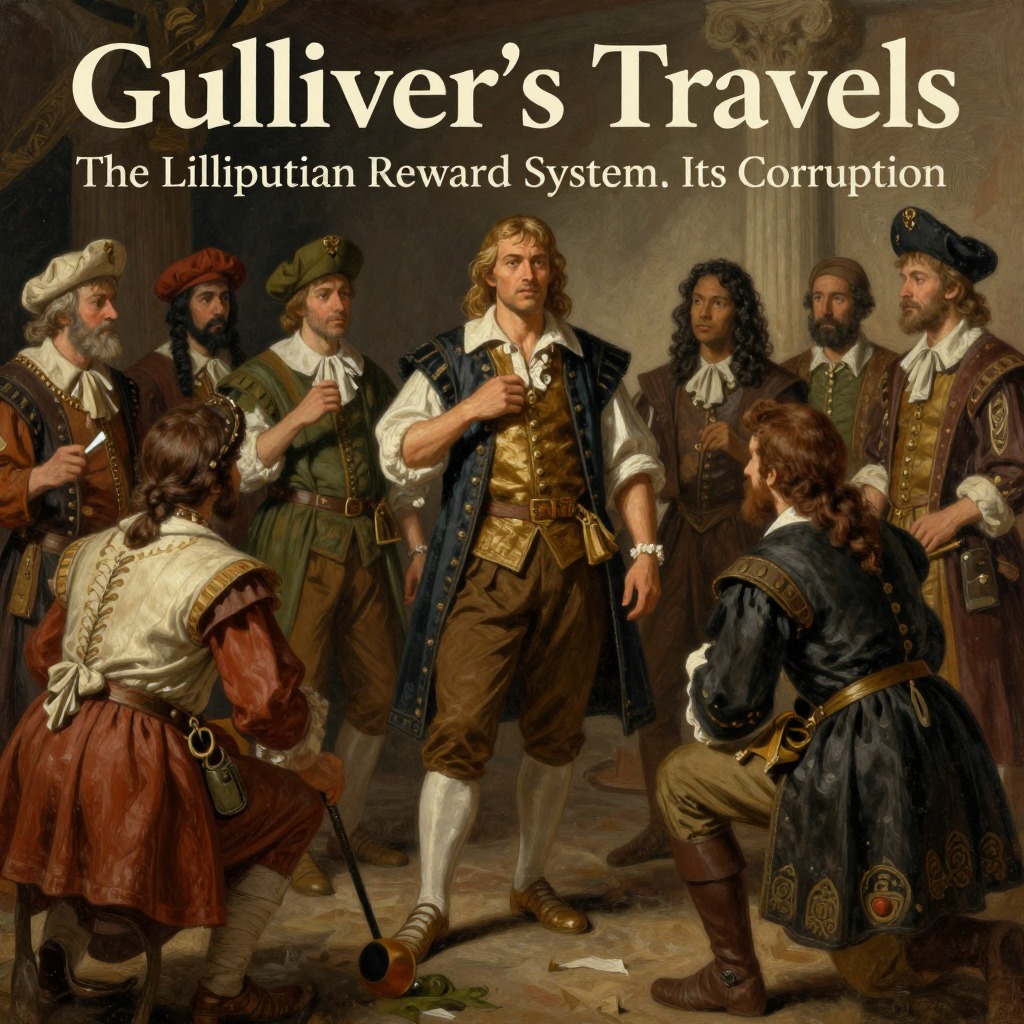
The Lilliputian legal system also includes a unique reward mechanism that complements the punitive law of ingratitude. Whoever can bring sufficient proof that he has strictly observed the laws of his country for seventy-three moons has a claim to certain privileges according to his quality and condition of life, with a proportionable sum from a fund appropriated for that use, and acquires the title of snillpall, or legal, which is added to his name but does not descend to his posterity. The Lilliputians thought it a prodigious defect of policy among the Europeans that their laws were enforced only by penalties without any mention of reward. Accordingly, the image of Justice in their courts of judicature is formed with six eyes—two before, as many behind, and on each side one—to signify circumspection, with a bag of gold open in her right hand and a sword sheathed in her left, to show she was more disposed to reward than to punish.
The Law's Thematic Significance in the Narrative
The law of ingratitude serves as a pointed satirical device within Gulliver's Travels, contrasting the Lilliputians' moral rigor with the corruption and ingratitude that Gulliver himself encounters among European courts and ministers. Gulliver, after performing great services for the Emperor of Lilliput—capturing the Blefuscu fleet and extinguishing the palace fire—finds himself accused of high treason and facing a sentence of blinding, a punishment that the emperor's council justifies through a cynical manipulation of legal forms. The emperor's speech, published throughout the kingdom, expresses great lenity and tenderness, yet the more these praises were enlarged, the more inhuman was the punishment and the more innocent the sufferer. Gulliver, having never been designed for a courtier, could not discover the lenity and favor of this sentence but conceived it rather to be rigorous than gentle. The law of ingratitude thus becomes an ironic benchmark: the Lilliputians codify gratitude as a supreme virtue, yet their own rulers betray the very principle when it suits their political ends, exposing the gap between ideal law and corrupt practice.
Comparison with Brobdingnagian Legal Principles
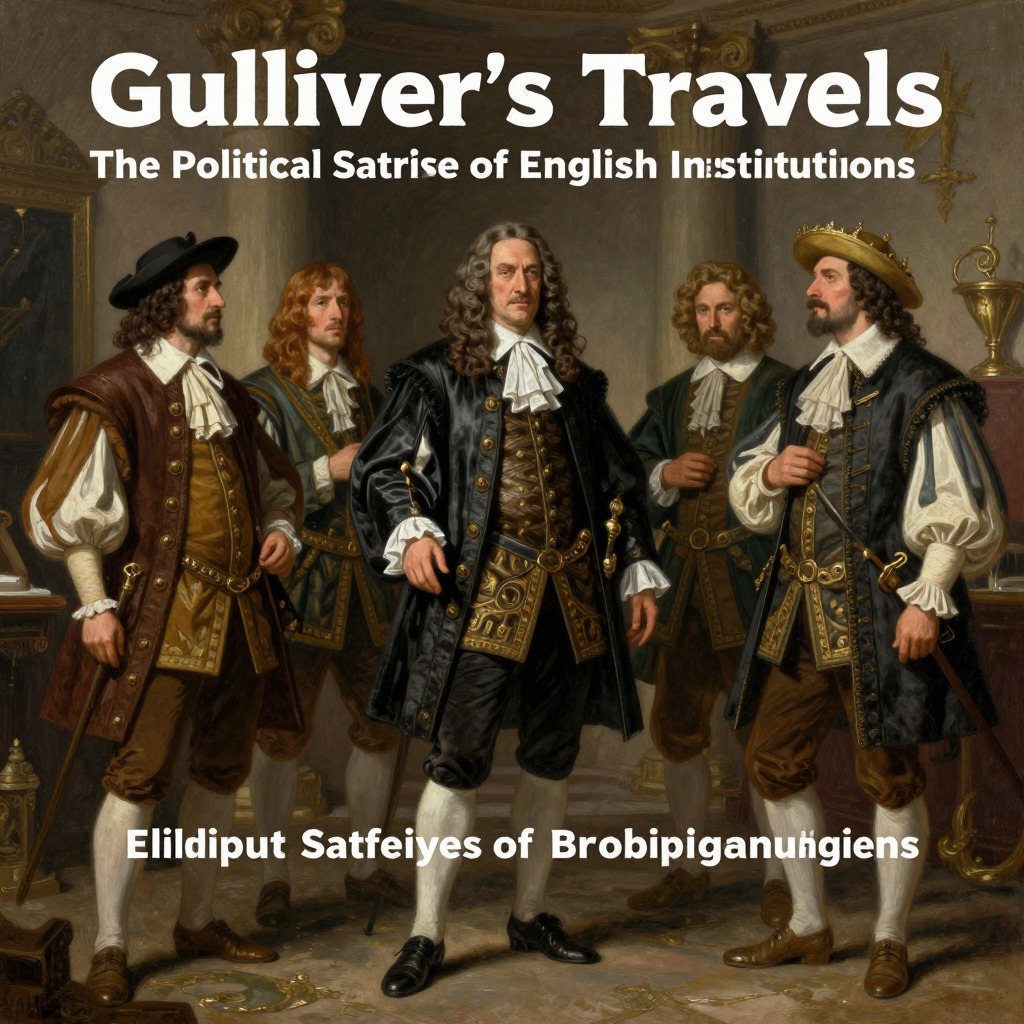
The law of ingratitude in Lilliput stands in stark contrast to the legal philosophy of Brobdingnag, where the King of Brobdingnag rejects all forms of political mystery and refinement, confining the knowledge of governing within very narrow bounds to common sense and reason, to justice and lenity, to the speedy determination of civil and criminal causes. In Brobdingnag, no law may exceed in words the number of letters in their alphabet, which consists only of two-and-twenty, and to write a comment upon any law is a capital crime. The Brobdingnagian approach emphasizes clarity, simplicity, and the prevention of legal manipulation, whereas Lilliput's law of ingratitude, though morally ambitious, becomes entangled in the very political intrigues it was designed to prevent. The contrast underscores Swift's broader critique of how legal systems, however well-intentioned, can be subverted by human corruption and the abuse of power.