Lilliputian reward system (snillpall)
The Lilliputian reward system, known as the snillpall or legal title, stands as one of the most remarkable legal institutions in the empire of Lilliput. Unlike the legal systems of Europe, which Lemuel Gulliver reports enforce laws only through penalties, the Lilliputians have institutionalized a mechanism that actively rewards long-term obedience to the law. This system reflects a fundamental belief that justice should be as much about encouraging virtue as about punishing vice, and it forms a central pillar of Lilliputian governance and social philosophy.
Structure and Qualification
The reward system operates on a clear and measurable principle. Any subject who can bring sufficient proof that he has strictly observed the laws of his country for seventy-three moons—a period of just over six years—becomes eligible for a set of privileges. The exact nature of these privileges varies according to the individual's quality and condition of life, but they include a proportionable sum of money drawn from a fund specifically appropriated for this purpose. Most significantly, the qualifying individual acquires the title of snillpall, or legal, which is added to his name. This title, however, does not descend to his posterity; it is a personal honor earned by the individual's own conduct, not an inherited distinction.
Philosophical Foundations
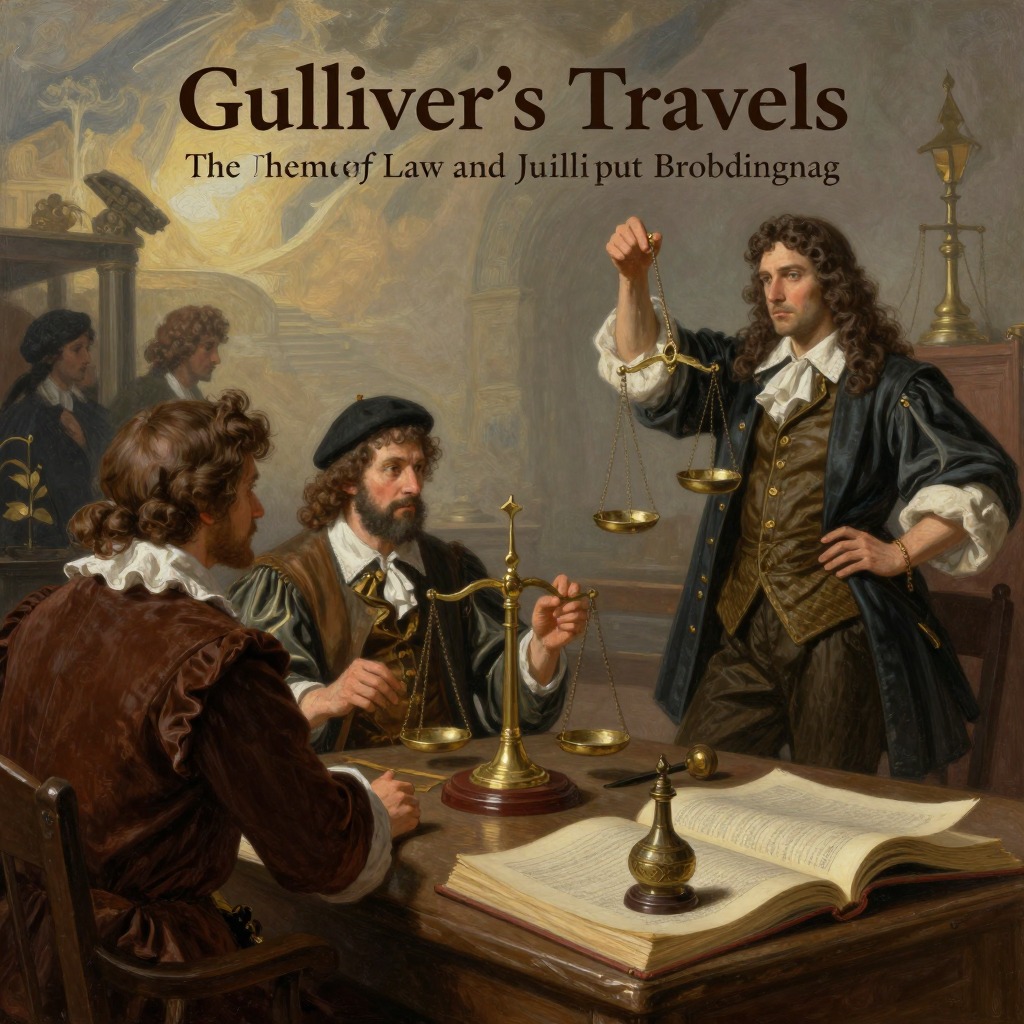
The Lilliputian approach to justice is embodied in the very image they use to represent it. In their courts of judicature, the figure of Justice is formed with six eyes: two before, as many behind, and on each side one, to signify circumspection. In her right hand she holds a bag of gold open, and in her left a sword sheathed. This iconography makes explicit what the legal system practices: Justice is more disposed to reward than to punish. Gulliver, who had been almost ruined by a long suit in chancery in England, found this principle striking. When he told the Lilliputians that English laws were enforced only by penalties without any mention of reward, they considered it a prodigious defect of policy. The system also operates in tandem with other distinctive Lilliputian laws, such as the severe punishment of fraud as a capital crime and the rule that an accuser whose charge proves false is put to an ignominious death while the innocent person is quadruply recompensed. Together, these laws create a legal culture that incentivizes honesty, circumspection, and long-term civic virtue.
Contrast with Other Lilliputian Practices
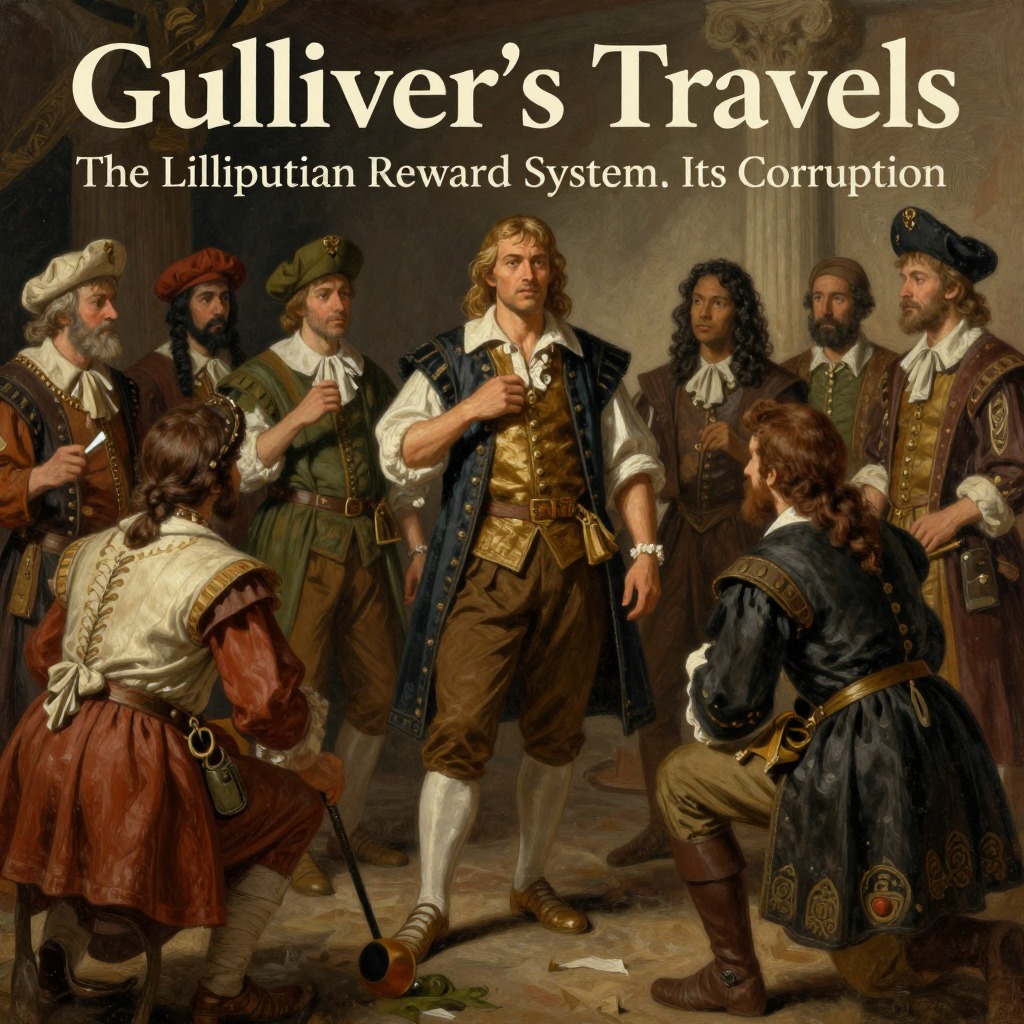
Gulliver is careful to note that the snillpall system represents the original institutions of Lilliput, not the most scandalous corruptions into which the people have since fallen. He explicitly contrasts this reward-based legal framework with the infamous practice of acquiring great employments by dancing on the ropes, or badges of favor and distinction by leaping over sticks and creeping under them. These latter practices, he explains, were first introduced by the grandfather of the reigning emperor and grew to their present height by the gradual increase of party and faction. The snillpall system, by contrast, appears to belong to an older, more principled layer of Lilliputian law, one that values demonstrated moral conduct over courtly agility or political connection. This tension between the ideal of law and the reality of court corruption is a recurring theme in Gulliver's account of Lilliput.
Significance and Thematic Role
The snillpall system serves as a satirical counterpoint to eighteenth-century European legal practices, which Swift, through Gulliver, portrays as relying exclusively on punishment and lacking any institutional mechanism to reward virtue. The Lilliputian approach, however absurd in its precise quantification of virtue (seventy-three moons of strict obedience), embodies a rational and humane ideal: that a government should actively cultivate good citizenship rather than merely deter bad behavior. The system also resonates with the broader Lilliputian emphasis on moral character over raw ability in selecting persons for employments, a principle that Gulliver reports with evident approval. Yet the very existence of the snillpall system, alongside the corruptions of rope-dancing and stick-leaping, creates a layered portrait of a society that once valued genuine virtue but has since allowed faction and court intrigue to erode its institutions. The reward system thus functions as both a model of what law could be and a measure of how far Lilliput has fallen from its own founding principles.