
Rodrigues' Mission Journey
Silence (Library Edition)The trajectory of Sebastian Rodrigues from his departure from Portugal to his apostasy and life as a Japanese citizen.
increasing Bearing strength in each event
 decreasing
Bearing strength in each eventdecreasingDeparture from Lisbon
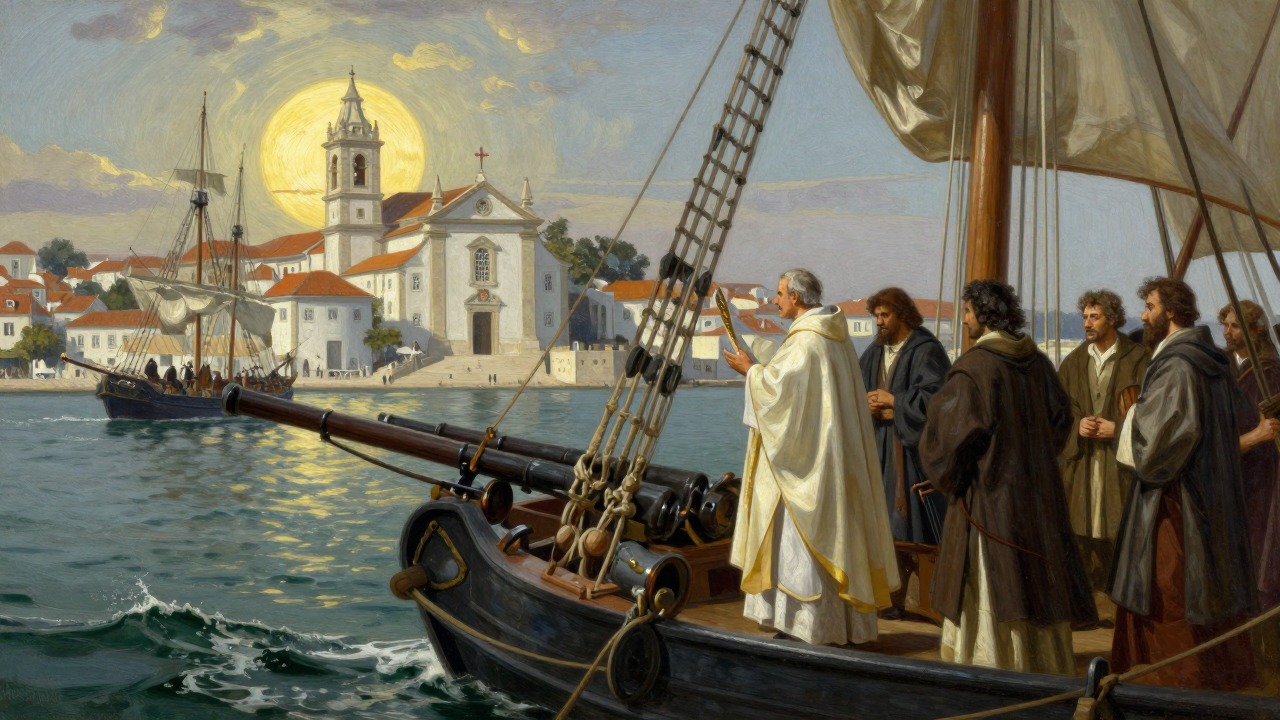
Departure from Lisbon
The Voyage Begins
The Santa Isabella sailed from the River Tagus with a salvo of guns. Rodrigues, Garrpe, and Santa Marta received the blessing of Bishop Dasco. As they left the river, they watched the church tower and the promontory gleaming in the sun.
The Atlantic Crossing
Three days out, a terrible storm struck off West Africa. The ship battled storms, disease, and a grounding. Over a hundred victims lay moaning; Rodrigues and Garrpe helped tend them. The journey was prolonged by calms and shortages.
Significance
This departure marks the beginning of a hazardous mission. The arduous voyage foreshadows the trials in Japan. The initial hope contrasts with later despair.
Secret Ministry in Tomogi
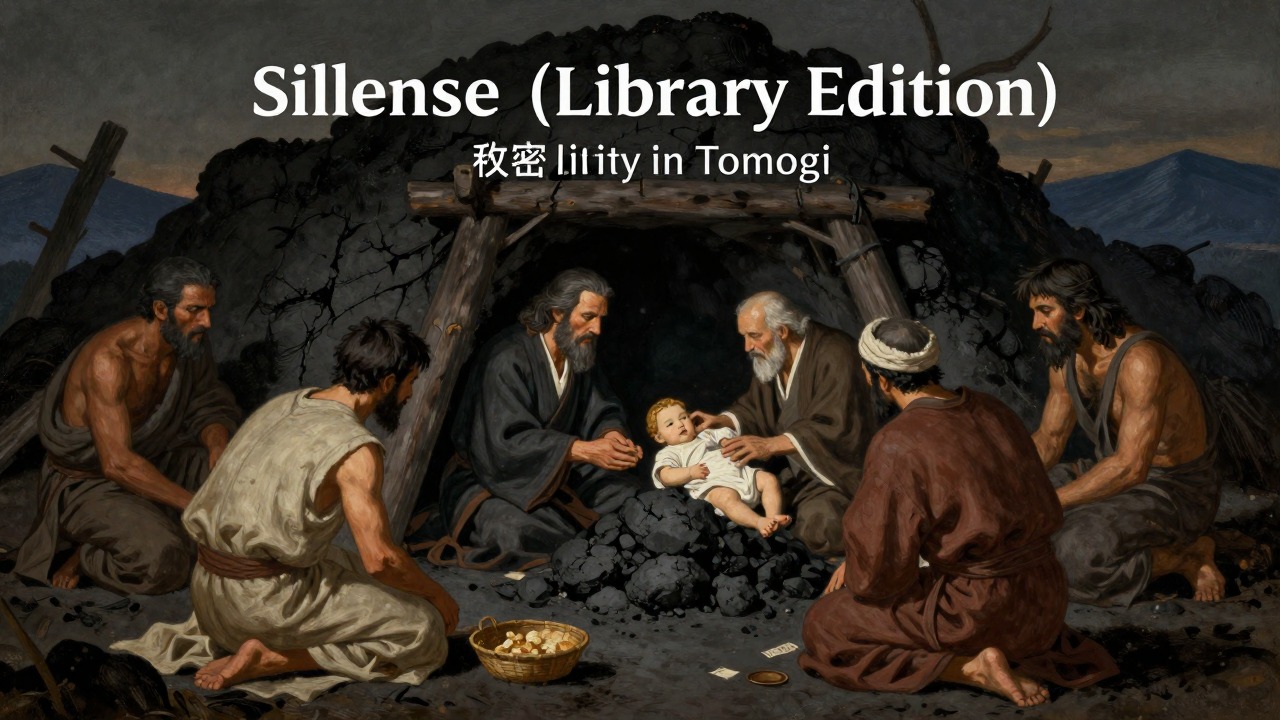
Secret Ministry in Tomogi
Hiding in the Charcoal Hut
Rodrigues and Garrpe hid in a charcoal hut on the mountain behind Tomogi. They offered Mass at night, heard confessions, and baptized a baby. The peasants brought food and the secret organization of Jiisama and Tossama kept the faith alive.
Contact with Christians
Mokichi, Ichizo, and Omatsu visited regularly. Rodrigues learned about the persecution and the six-year absence of priests. The Christians were like a ship lost without a chart, and the priests' presence gave them immense joy.
Significance
This period of hidden ministry represents the fulfillment of their missionary dream. The simplicity and devotion of the peasants strengthen Rodrigues' faith, but also expose him to the dangers of betrayal.
Journey to Goto Islands
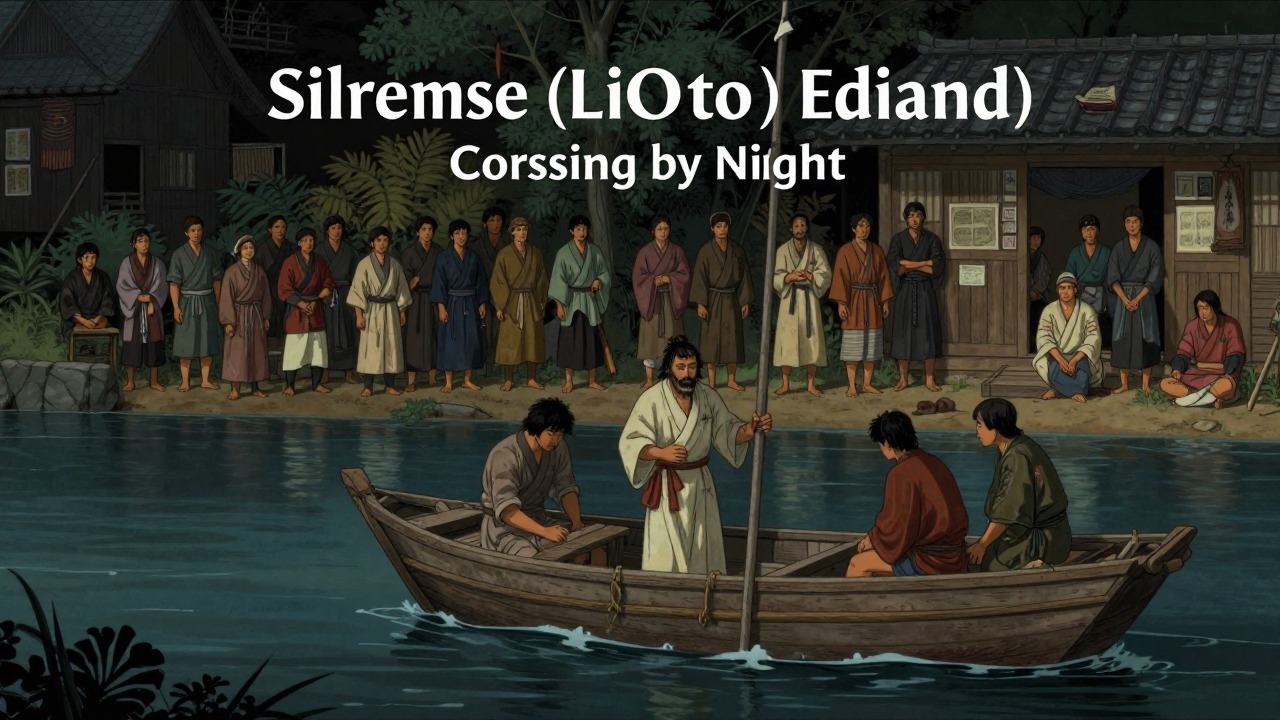
Journey to Goto Islands
Crossing by Night
Rodrigues crossed to the Goto Islands in a small boat, guided by Kichijiro. He was terrified of betrayal but driven by the pleas of Christians who had walked twenty leagues. He found a thriving hidden community.
Ministry in Goto
He baptized thirty adults and children, heard over fifty confessions, and taught the people to organize their own leadership. The peasants were hungry for the sacraments. Kichijiro, who had led him there, became a local hero.
Significance
Rodrigues' ministry in Goto seemed to validate his mission. The fervor of the Christians contrasted with the dangers. This success gave him confidence, but also made him more visible to the authorities.
Capture and Imprisonment
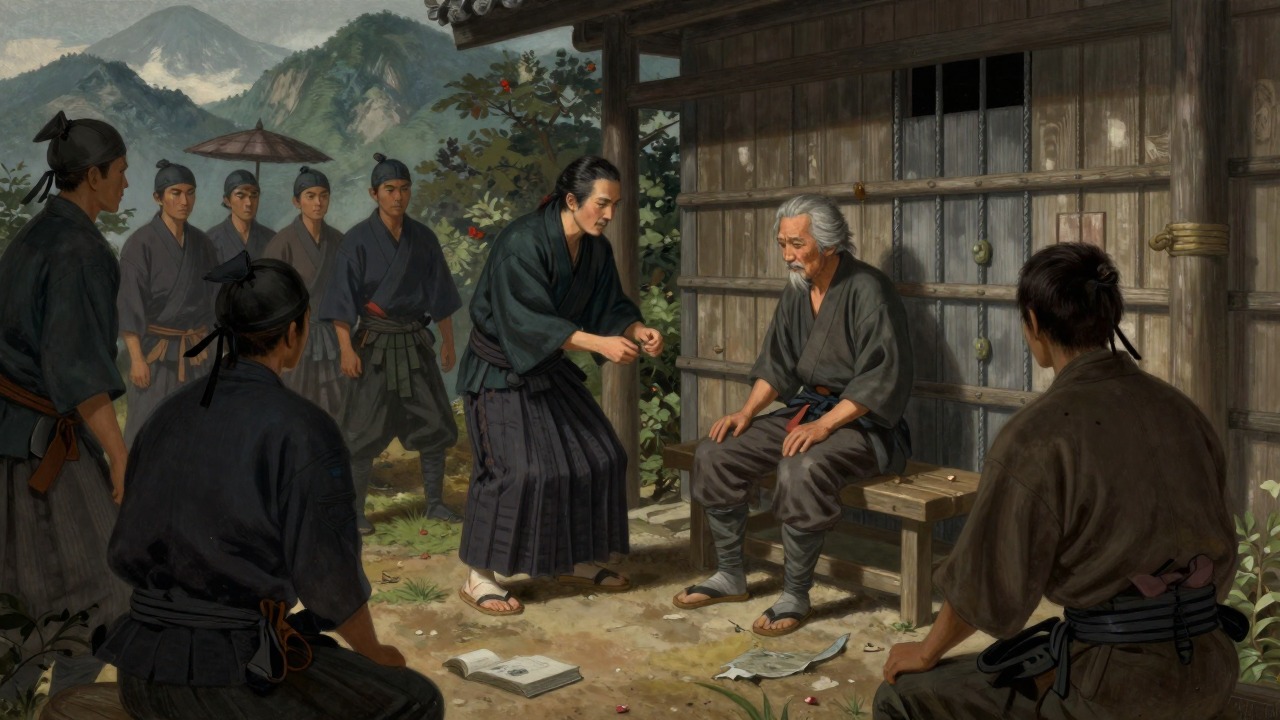
Capture and Imprisonment
Betrayal by Kichijiro
Kichijiro led Rodrigues into a trap in the mountains. The guards seized him and brought him before the officials. The interrogation began with the gentle old samurai and later with Inoue.
Imprisonment in Nagasaki
Rodrigues was put in a new prison near Nagasaki. He was allowed to visit other Christians, hear confessions, and write letters. The guards were generous, but this treatment was a psychological tactic to weaken him.
Significance
Capture marked the end of his active ministry. The prison life gave him time to reflect, but also exposed him to the suffering of other Christians. The silence of God began to trouble him deeply.
Meeting with Ferreira and Apostasy
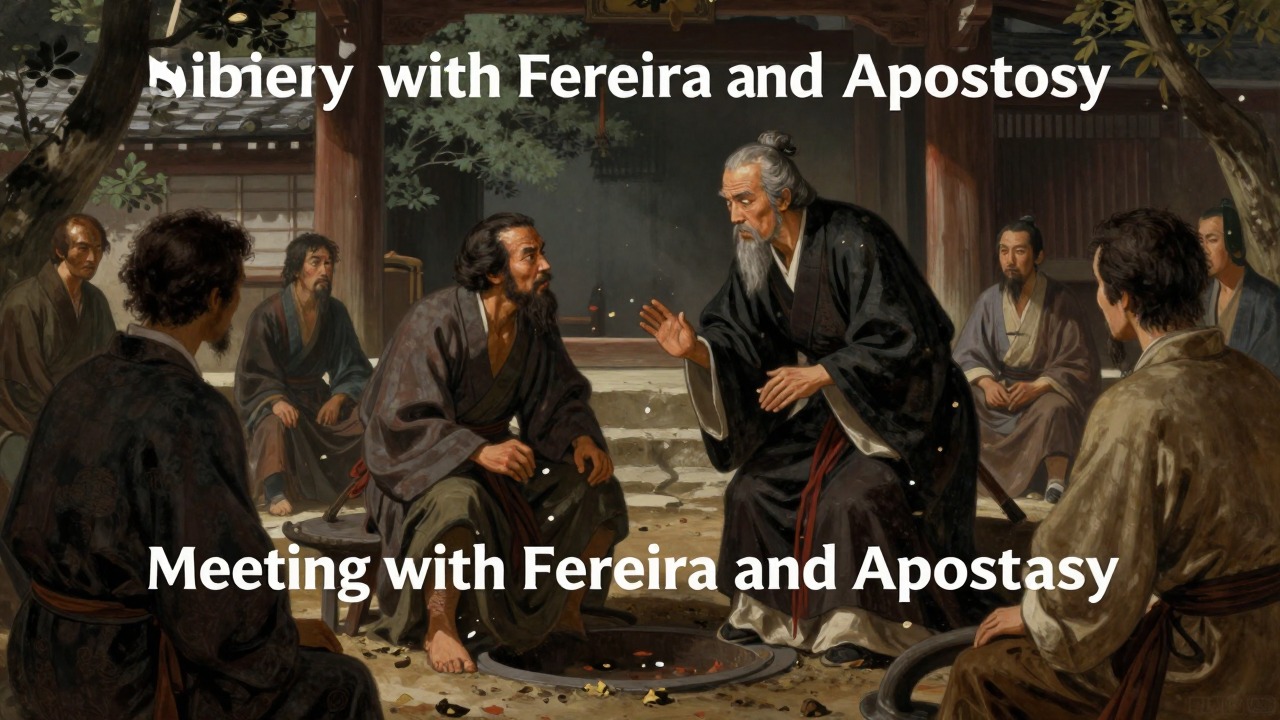
Meeting with Ferreira and Apostasy
Encounter at Saishoji Temple
Rodrigues was brought to Saishoji to meet Ferreira, now called Sawano Chuan. Ferreira had apostatized after the pit torture. He argued that Christianity could not take root in Japan, that the peasants worshipped a distorted God.
The Argument
Ferreira insisted that the Japanese had never understood the Christian God and that the mission was a failure. He claimed that Christ would have apostatized to save others. Rodrigues resisted but was shaken.
The Trampling
At dawn, the fumie was placed before him. The face of Christ seemed to speak: 'Trample! It is to be trampled on by men that I was born.' Rodrigues placed his foot on the image. The cock crowed.
Significance
This is the pivotal moment of the novel. Rodrigues' apostasy is not a simple failure but a complex act of love and despair. The silence of God is broken by the voice of the trampled Christ.
March 25, 1638
June 1638, after landing
Soon after the water punishment of Mokichi and Ichizo
After returning to Tomogi, June 1638
September 1638
