Edo
Edo, the capital of the Tokugawa Shogunate, functions as the central node of political power from which the campaign to eradicate Christianity in Japan is directed. It is not merely a city but the seat of the supreme authorities who issue the edicts of expulsion and orchestrate the nationwide persecution. The novel's historical background explains that the Shogun Tokugawa ordered the expulsion of all missionaries in 1614, a policy pursued with increasing savagery by his successors from their seat of power in Edo. The city represents the ultimate source of the sovereign power that defines Christianity as an 'evil law' and a threat to the state, transforming believers into targets of a systematic, state-sponsored inquisition.
The Seat of Persecution and Control
Edo is the location where the highest levels of government formulate and disseminate the anti-Christian policies that are brutally enforced in Nagasaki and throughout the country. The magistrate Inoue, the Lord of Chikugo, who is the architect of the persecution, operates with the authority of the Shogunate based in Edo. It is to the 'Supreme Authorities' in Edo that Inoue reports, and it is from Edo that the orders for the most effective tortures, like the pit, and the system of rewards for informants—three hundred pieces of silver for a priest, two hundred for a brother, one hundred for a lay Christian—are ultimately sanctioned. The city is the political engine of the 'swamp' that Inoue claims defeats Christianity, the place where the decision is made to cut the roots of the faith so that the sapling withers.
Rodrigues' Final Confinement and Death
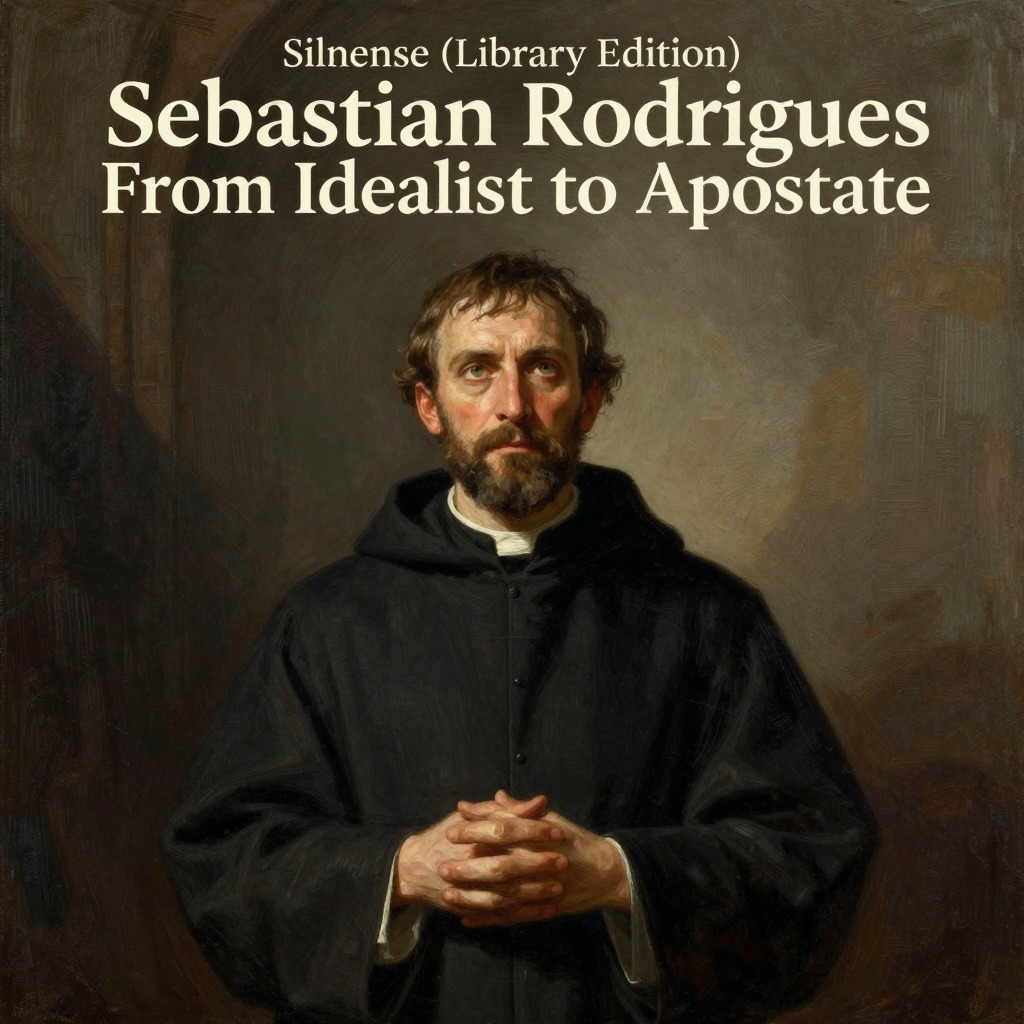
For Sebastian Rodrigues, Edo becomes the site of his final, prolonged imprisonment and death. After his apostasy, Inoue informs him that he will be sent to live in Edo, in a house in Kobinatacho, the very district where Inoue himself once lived. This relocation is not a liberation but a transfer to a permanent, state-controlled confinement known as the Christian Residence in Edo. Here, Rodrigues is given the Japanese name Okada San'emon and is compelled to take a wife, living out his days under constant surveillance. He is forced to write a disavowal of his religion at the command of the authorities, a task that occupies him for months. After thirty years of this life, he dies of illness at the age of sixty-four. His body is cremated at Muryoin Temple in Koishikawa, and his posthumous Buddhist name is Myusen Joshin Shinshi. Edo, therefore, is not just the origin of the persecution but the final, silent cage where the last priest of the mission is absorbed into the Japanese system and dies, his faith and his identity erased.
A Symbol of the Swamp
Edo embodies the 'swamp of Japan' that Inoue and the apostate Ferreira describe. It is the cultural and political center that is utterly impervious to the foreign tree of Christianity. The city's power is not just military but ideological; it represents a system that can absorb, twist, and ultimately neutralize any foreign influence. The fact that Rodrigues is sent to live in the heart of this power, to adopt a Japanese name and a Japanese wife, and to spend the rest of his life writing refutations of his own faith, is the ultimate demonstration of the swamp's victory. The city is the place where the missionary's dream is not just defeated but systematically dismantled and buried, leaving no trace of the 'glorious martyrdom' he had once imagined.