Macao
Macao, the Portuguese trading settlement at the mouth of the Pearl River, is the last outpost of European Christendom before the closed and hostile shores of Japan. For Sebastian Rodrigues and his companions, it is the place where their missionary dream confronts the first hard evidence of the impossibility of their enterprise, and where the comfortable certainties of the European Church begin to dissolve into the ambiguities of the Japanese 'swamp'.
Geography and Colonial Character
Macao is built on one of the many islands at the entrance to the bay, and unlike European towns it has no surrounding wall, so that the city boundaries are impossible to define. The Chinese houses stretch out 'like dust,' and the only structures that might recall Portugal are the governor's palace, the Portuguese warehouses, and the cobbled roads. A fortress with cannons faces the bay, though the cannons have never had to fire. The population is said to be about twenty thousand, a figure Rodrigues considers almost certainly false. The greater part of the Chinese show no interest in Christian teaching, a fact that Rodrigues contrasts with Japan, which Saint Francis Xavier called 'the country in the Orient most suited to Christianity.' Ironically, because the Japanese government has forbidden its own ships to go abroad, the monopoly of the silk trade in the Far East has fallen into Portuguese hands, and the total income from this import is expected to rise to four hundred seraphim, up from one hundred the previous year.
The College at Macao and Valignano's Opposition
The College at Macao, founded ten years earlier by Alessandro Valignano, is the administrative center for the Japanese mission. Valignano, the Rector, has been utterly opposed to sending any more missionaries to Japan. From his room overlooking the bay, he explains to Rodrigues, Garrpe, and the ailing Juan de Santa Marta that the sea journey is extremely dangerous for Portuguese ships, that since 1636 the Japanese government has cut all commercial relations with Portugal, suspecting Portuguese involvement in the Shimabara Rebellion, and that the seas near Japan are infested by English and Dutch warships that open fire on Portuguese trading ships. Valignano is deeply troubled by the dilemma between his duty as a Superior and the fate of the persecuted Christians, and he rests his forehead on his hands in silence. It is only after Garrpe's ardent pleading that Valignano finally consents to the secret mission. Rodrigues reflects that Valignano, prudent Superior though he is, was moved by their importunity, and that the die is now cast.
The Encounter with Kichijiro
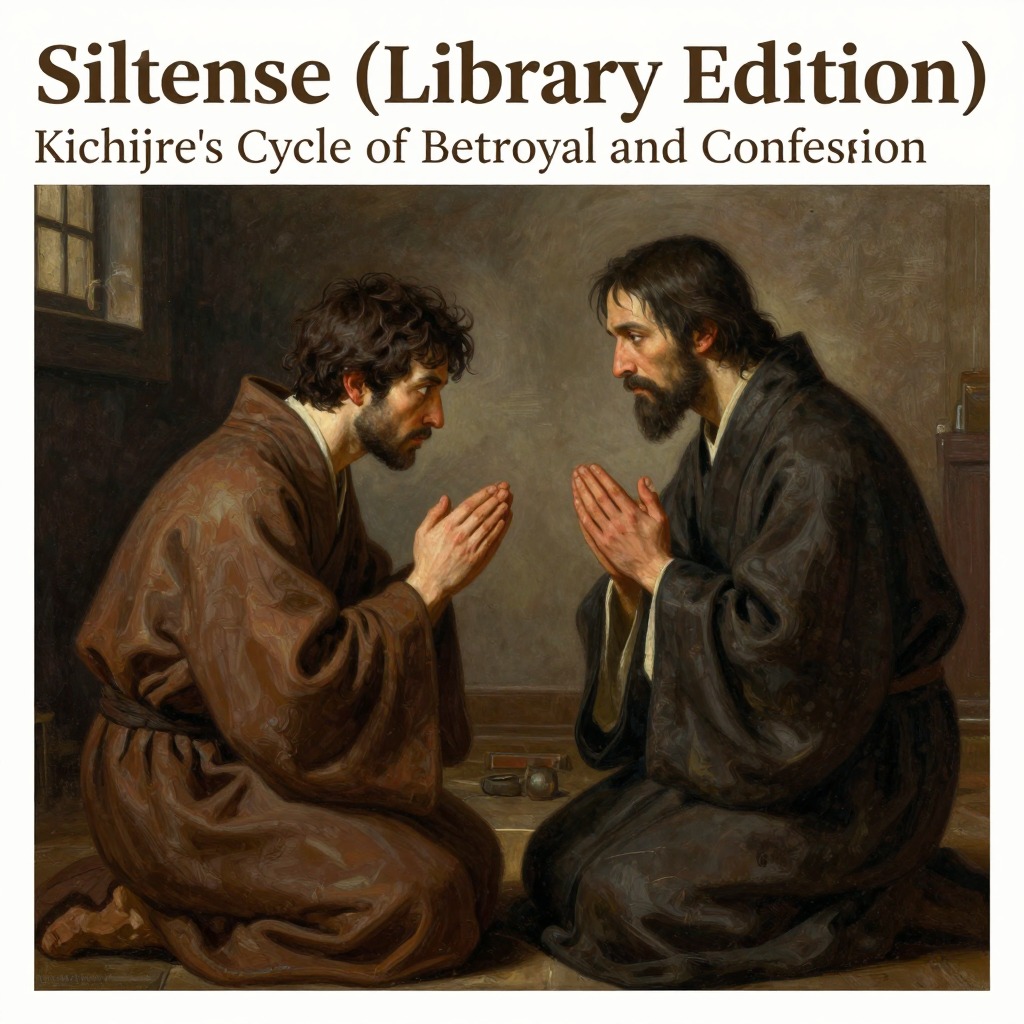
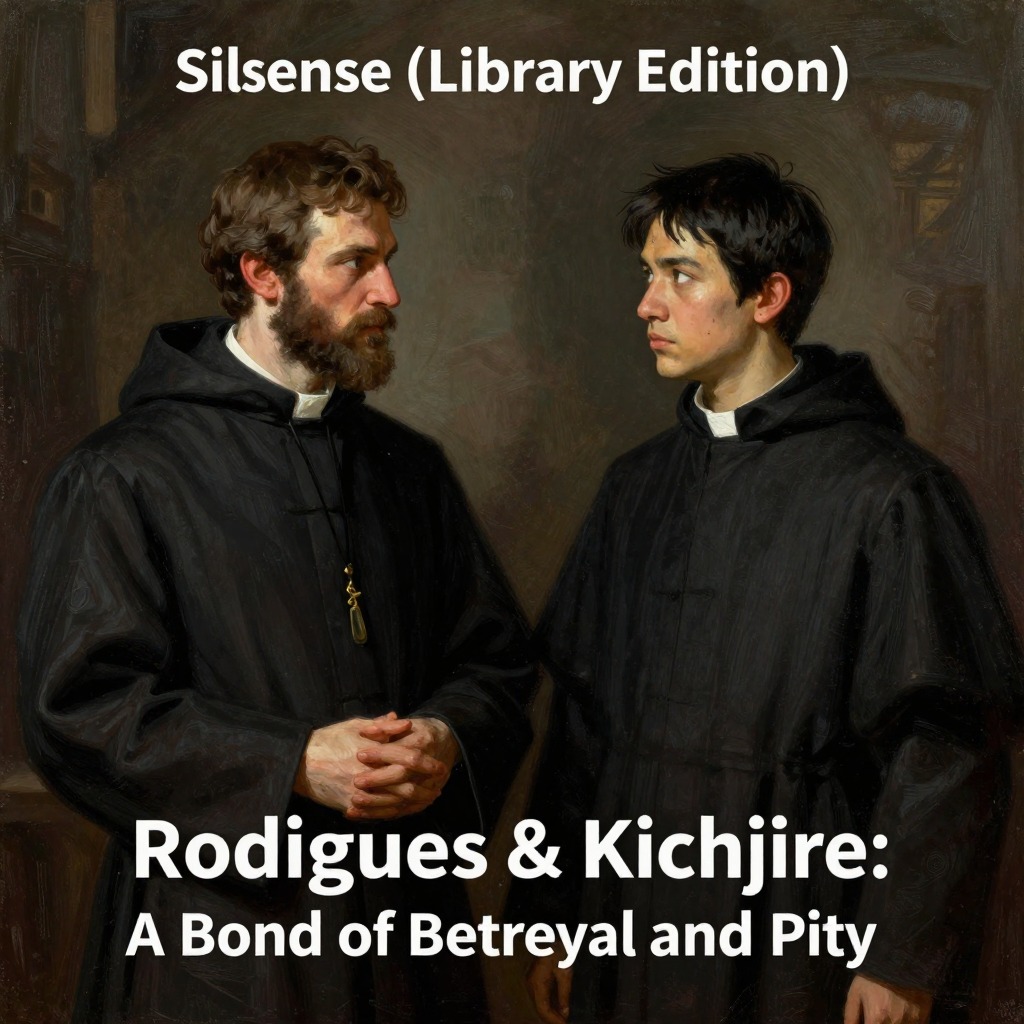
In Macao, Rodrigues and Garrpe meet the Japanese fisherman Kichijiro, who will become their guide and betrayer. On a rainy day, visiting the Chinese sector of the town in search of a ship bound secretly for Japan, they are directed to a drunken man of about twenty-eight or twenty-nine, dressed in rags, who staggers into the room. Kichijiro is from the district of Hizen near Nagasaki; before the Shimabara insurrection he had been adrift at sea and picked up by a Portuguese ship. When Garrpe asks if he is a Christian, Kichijiro shuts up like a clam, and only gradually, yielding to entreaties, does he tell the story of the Christian persecution in Kyushu, describing the water punishment at Kurasaki where twenty-four Christians were bound to stakes in the sea and died over a week as the tide rose and fell. Rodrigues notices that Kichijiro's face becomes distorted as he speaks, and that he shakes his hand as though some terrible memory haunts him. Kichijiro denies being a Christian, but when offered passage back to Japan, his dirty yellow eyes flash craftily and he begs to be allowed to return to see his beloved relatives. Rodrigues reflects that they need this man as their first guide once they land in Japan, where they will not know right from left.
The Ship and the Departure
Thanks to Valignano, the missionaries secure a big junk, but it is almost consumed by white ants. They seal up the inside and plan to set sail for Taiwan, then, if the emergency measure holds, go straight on to Japan. The twenty-five Chinese sailors Valignano finds for them look thin and wasted like sick men, but their wiry hands are incredibly powerful. Rodrigues observes Kichijiro closely during the preparations: when the Chinese overseer is watching, Kichijiro works with all his might, but when the overseer goes away he immediately idles. When three sailors beat him, he grows deadly pale and, kneeling on the sand, pleads for pardon in the most ugly way imaginable. Rodrigues reflects that he has entrusted his future to a fellow like Kichijiro, and that Our Lord himself entrusted his destiny to untrustworthy people. In the night of Macao, the sad, long-drawn-out sound of the bugle from the fortress echoes out, and Rodrigues, sitting beneath the light of a candle, feels that he is at the end of the earth, in a place he cannot believe is real. On the wall, a great cockroach rasps in the solemn silence.
Symbolic Significance
Macao represents the last point at which the missionaries still inhabit a world of institutional order, theological certainty, and European comfort. It is from here that Valignano warns them about Inoue, 'a terror for the Christians,' cunning as a serpent, a former Christian himself. It is here that Rodrigues first hears the name of the persecutor he will eventually face. The contrast between the relative safety and prosperity of Macao—where the missionaries once seriously discussed whether their religious habit should be made of silk or of cotton—and the desperate, hunted existence they will lead in Japan becomes a measure of the transformation the mission undergoes. Macao is the place of preparation, of warning, and of the first encounter with the human weakness that will define the entire Japanese enterprise. It is also the place from which, after the apostasy, news of Rodrigues's fall will reach the Church in Europe, and where the Superiors who 'warm themselves by the fire in a tent' will judge the soldier taken prisoner on the battlefield.