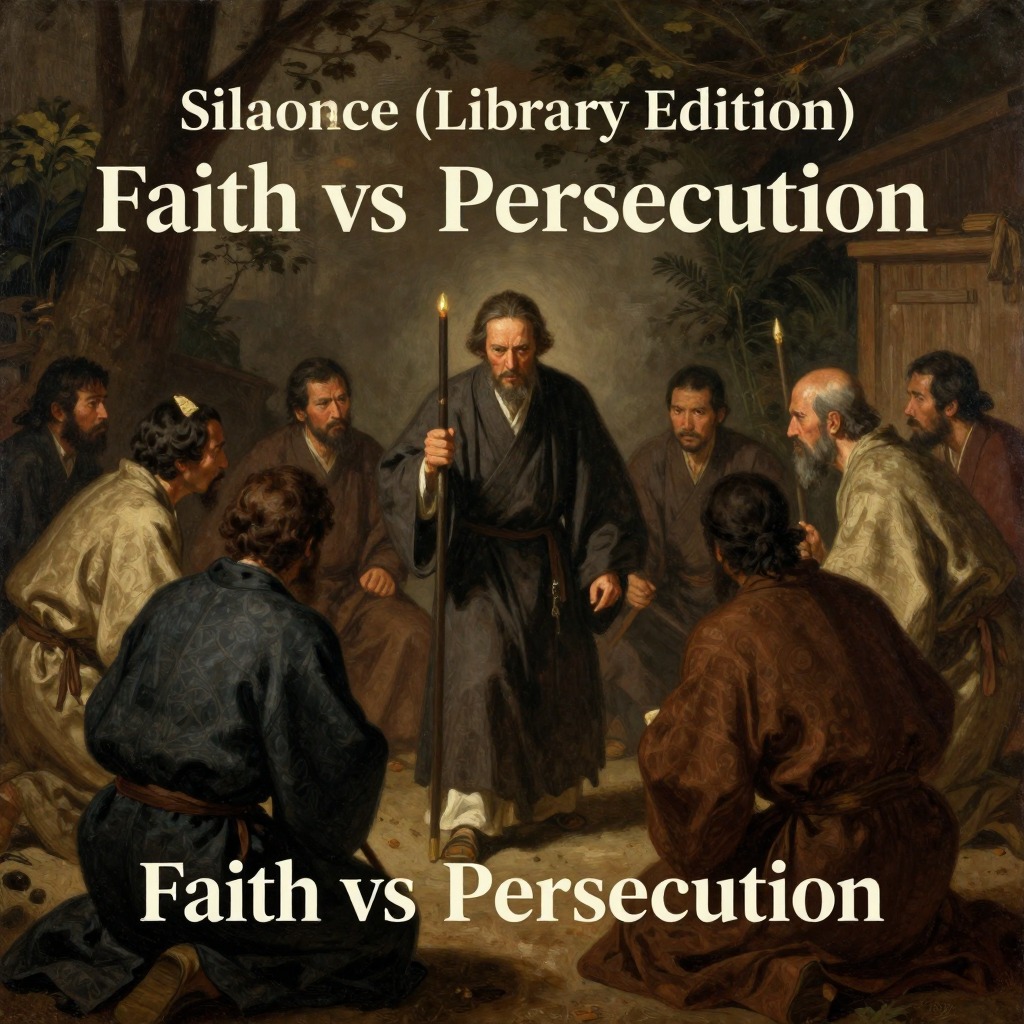
Shimabara Rebellion
The Shimabara Rebellion was the decisive event that sealed the fate of Christianity in Japan and led to the country's complete isolation from the outside world. It was a violent uprising of peasants and masterless samurai, many of whom were Christians, against the Tokugawa Shogunate's merciless taxation and persecution. The rebellion's brutal suppression convinced the shogunate that Christianity was a subversive foreign force that had to be eradicated entirely, leading to the final expulsion of missionaries, the systematic torture of believers, and the sealing of Japan's borders for over two centuries.
Causes and Background
The rebellion was rooted in the unbearable suffering imposed on the peasants of the Shimabara domain and the Amakusa Islands. The magistrate of Nagasaki, Takenaka Uneme, had exacted such harsh taxes that the farmers were reduced to a state of near starvation. In the village of Tomogi, for example, the wife and children of a man named Mozaemon were seized as hostages and put in the water prison simply because he could not pay a tax of five bags of rice. The feudal lords had unlimited power over their people, and the yearly tax was bitterly high, with those who failed to pay punished mercilessly. The Shimabara Rebellion was a terrible reaction against these unbearable sufferings. At the same time, the Tokugawa Shogunate, under the neurotic shogun Iemitsu, had intensified the persecution of Christians, using increasingly savage methods to force apostasy. The rebellion thus became a manifestation of Christian faith as well as a desperate revolt against economic oppression. The insurgents carried banners with the inscription "Praised be the Most Holy Sacrament" and shouted the names of Jesus and Mary as they fought.
What Happened
The uprising began in 1637 and quickly spread, with an estimated thirty-five thousand Christians and peasants joining the insurrection. The rebels fortified themselves in Hara Castle in Shimabara, where they held out against the shogunate's forces. The Bakufu responded with overwhelming military force, and the rebellion was crushed in a bloody conflict. The rebels were butchered to the last man—men and women, young and old, all alike were slain. As a result of the war, the whole district was so desolate that scarcely a human shadow could be seen, while the remnants of the Christians were being hunted down one by one. The news of this massacre reached the three young priests, Sebastian Rodrigues, Francisco Garrpe, and Juan de Santa Marta, while they were in Goa preparing for their secret mission to Japan, and it gave them the greatest shock. They learned that Japan had cut all trade relations and intercourse with Portugal as a result of the war, and that Portuguese ships were forbidden to enter the harbors of Japan.
Consequences and Aftermath
The Shimabara Rebellion had catastrophic consequences for Christianity in Japan and for the country's foreign relations. The Tokugawa Bakufu, convinced that such a rebellion could only have been possible with help from outside, decided once and for all to cut their ties with Portugal and seal off their country from the world. This led to the policy of national seclusion (Sakoku), which would isolate Japan for over two centuries. The rebellion also intensified the persecution of Christians. The shogunate, now more determined than ever to eradicate Christianity, employed increasingly cruel tortures, including the pit torture (ana-tsurushi), to force apostasy. The reward system for informing on Christians was formalized: three hundred pieces of silver for a priest, two hundred for a brother, and one hundred for a lay Christian. The rebellion also created a climate of fear and suspicion that made it nearly impossible for missionaries to operate. When Rodrigues and Garrpe arrived in Japan, they found that the Christians were like a flock of sheep without a shepherd, and that the officials were making an extremely thorough effort to hunt down hidden Christians. The rebellion's legacy was a Japan that had become a "swamp" in which Christianity could not take root, as the Lord of Chikugo, Inoue, would later tell Rodrigues: "You were defeated by this swamp of Japan."