Tomogi
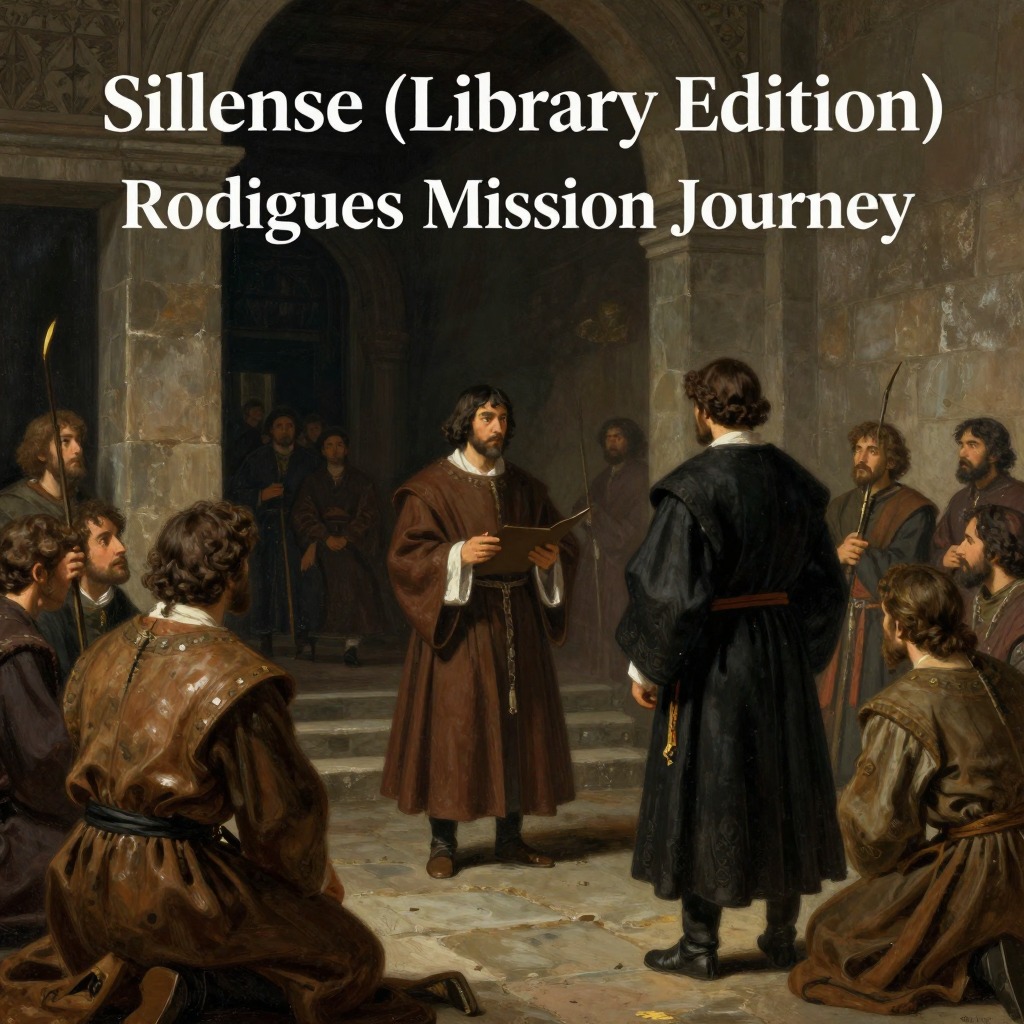
Tomogi is a small fishing village in Kyushu, not far from Nagasaki, that serves as the first landing place and initial refuge for the Portuguese priests Sebastian Rodrigues and Francisco Garrpe after their secret arrival in Japan. The village, with about two hundred households, is almost entirely Christian, and its inhabitants have maintained their faith for six years without any priest or brother, relying on a secret organization they devised themselves. It is in Tomogi that the priests first witness the depth of the peasants' devotion and the terrible cost of their mission, as the village becomes the site of a brutal crackdown and the martyrdom of two of its most faithful men, Mokichi and Ichizo. The events in Tomogi shatter Rodrigues' initial optimism and force him to confront the agonizing silence of God in the face of innocent suffering, making the village a crucible for his spiritual crisis.
Identity and Introduction
Tomogi is a fishing village of about two hundred households, located not too far from Nagasaki. The greater number of its villagers have already received baptism, and they have been without a priest or brother for six years, since the deaths of the Japanese priest Miguel Matsuda and the Jesuit brother Mateo de Coros in November 1633. The villagers are poor farmers who eke out a living by cultivating potatoes and wheat in little fields, with no ricefields. The land is cultivated right up into the middle of the mountain facing the sea, a testament to their indefatigable industry and the cruelty of the life they have inherited. The magistrate of Nagasaki exacts an exceedingly harsh revenue from them, and for a long time these farmers have worked like horses and cattle, and like horses and cattle they have died. The reason Christianity has penetrated this territory like water flowing into dry earth is that it has given to this group of people a human warmth they never previously knew, as they have met men who treated them like human beings.
The Secret Christian Organization
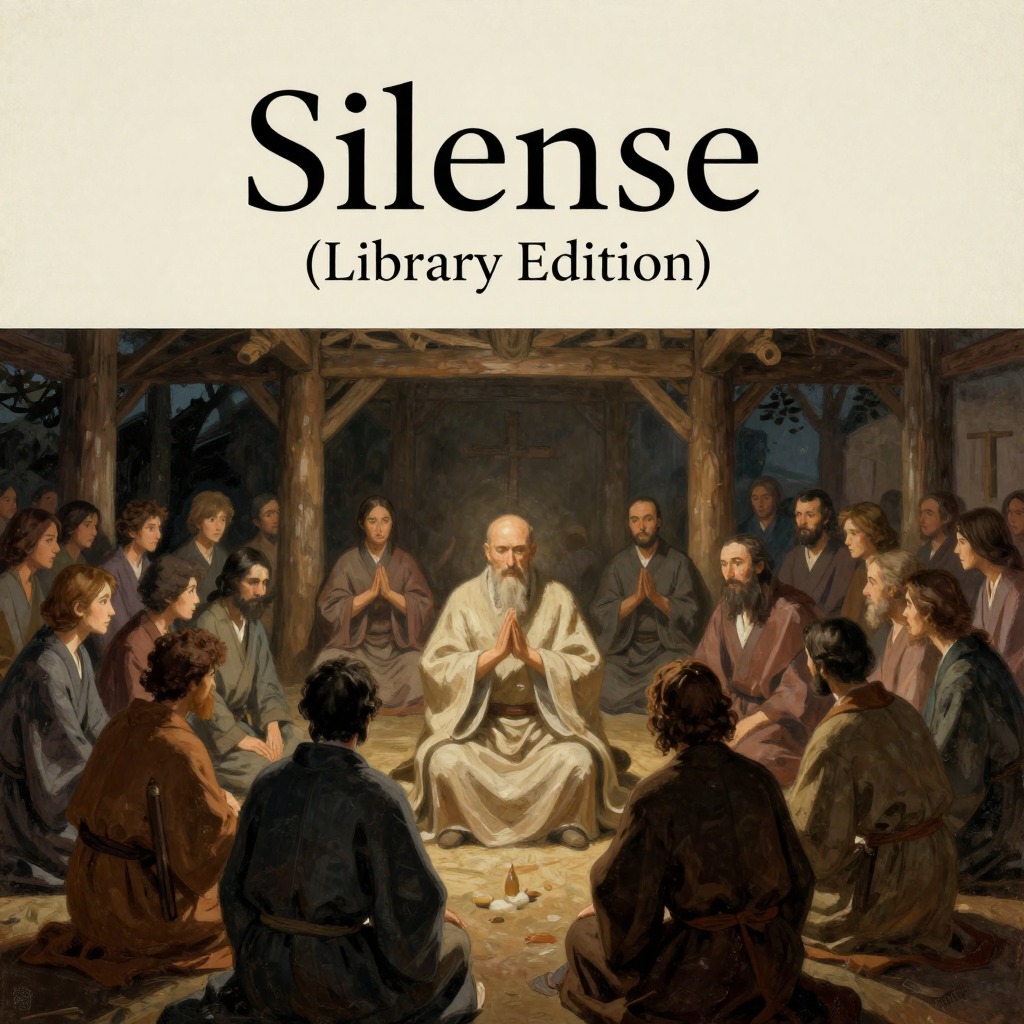
In the absence of priests, the Christians of Tomogi have secretly made their own organization for the administration of the sacraments to keep their faith alive. An older man, called 'Jiisama', holds the highest post of authority, leads a blameless life, and is entrusted with baptising the children. Beneath the Jiisama is a group of men known as 'Tossama' whose job is to teach the Christians and lead them in prayer. There are also helpers known as 'Mideshi'. All are engaged in a life-and-death struggle to keep the faith alive. The Tossama have made a calendar of all the feasts of the Church and teach the faithful accordingly, celebrating Christmas, Good Friday, and Easter by secretly setting up a holy picture in one of the houses and reciting prayers in Latin. The organization is so arranged that if officials burst in, the Christians can say they were simply having some kind of meeting together. The long years of secrecy have made the faces of these Christians like masks, unable to register sorrow or joy.
The Priests' Refuge and the First Signs of Danger
Rodrigues and Garrpe are initially hidden in a charcoal hut on a mountain behind the village, where they offer Mass at dead of night and hear confessions. The villagers, including Mokichi, Ichizo, and Omatsu, bring them food and protect them. The priests' initial self-confidence grows, and they begin to walk along the slopes, but this carelessness leads to them being spotted by two men from the Goto Islands, who later reveal themselves to be Christians seeking a priest. The arrival of these men, who have traveled for two days, is a turning point, as it leads to Rodrigues' journey to Goto and, upon his return, the discovery that government officials are ransacking the village. The officials, having received information from an informer, take the Jiisama hostage and later demand three more hostages from the village.
The Martyrdom of Mokichi and Ichizo
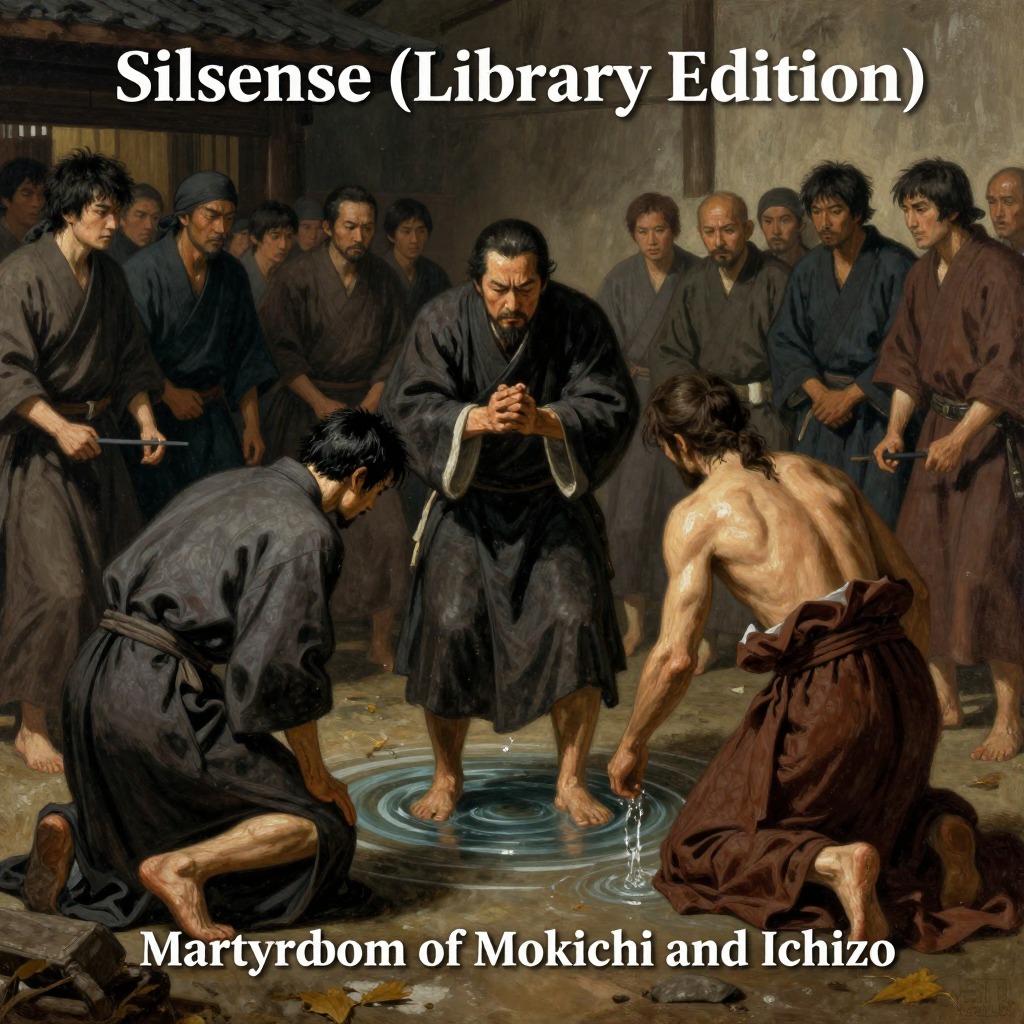
The three hostages chosen are Kichijiro, Ichizo, and Mokichi. After a cross-examination in Nagasaki where they are forced to trample on the fumie, Mokichi and Ichizo confess to being Christians and are sentenced to the water punishment. On June 22nd, they are fastened to two trees made into the form of a cross at the water's edge of Tomogi's beach. As the tide comes in, their bodies are immersed in the sea up to the chin, and they are left to die over two or three days. The officials intend for the people of Tomogi and other peasants to witness this prolonged suffering as a deterrent. Omatsu and her niece bring food, but Mokichi refuses, saying he can endure no more. On the night of June 24th, after a day of moaning, they die. Their bodies are then burned and the ashes thrown into the sea to prevent the Christians from venerating their remains. The martyrdom is not a glorious spectacle but a miserable and painful business, with the rain falling unceasingly on the sea and the sea surging on in silence. This event leaves Rodrigues with the unbearable feeling of the silence of God.
Aftermath and Narrative Significance
Following the martyrdom, the people of Tomogi regard Rodrigues as a foreigner who has brought disaster upon them. He and Garrpe part company, with Rodrigues leaving the village in a small boat, feeling utterly alone and terrified. The village of Tomogi thus represents the initial hope and the subsequent devastating reality of the Japanese mission. It is a place where the faith is alive and deeply organized, but also where the brutal power of the state is exercised without mercy. The events in Tomogi are the first major test of Rodrigues' faith and the catalyst for his subsequent spiritual crisis, as he is forced to witness the suffering and death of those he came to serve, all while God remains silent. The village embodies the 'swamp of Japan' that Ferreira later describes, a place where the sapling of Christianity is planted but where the roots begin to rot under the pressure of persecution and the weight of a different cultural and spiritual soil.