crypto-Christians
The crypto-Christians of Japan were the hidden believers who, after the Tokugawa Shogunate's systematic persecution and expulsion of missionaries from 1614 onward, preserved their faith in secret for generations without priests, sacraments, or visible churches, developing their own lay-led organization and adapting Christian practice to survive in a hostile environment. Their existence and eventual emergence in 1865 form the historical backdrop of Shusaku Endo's novel Silence, and their fate—both their heroic endurance and the gradual transformation of their faith—becomes the central theological and cultural problem the novel explores.
Origins and Historical Context
Christianity was brought to Japan by the Basque missionary Francis Xavier, who arrived in Kagoshima in 1549. Within decades, the mission flourished under the Italian Alessandro Valignano, who envisioned a totally Christian island in the north of Asia and founded seminaries, colleges, and a novitiate to train a local clergy. By the time of the 1614 Edict of Expulsion, there were about 300,000 Christians in a total population of roughly twenty million, along with colleges, seminaries, hospitals, and a growing local clergy. The edict declared that "the Kirishitan band have come to Japan…longing to disseminate an evil law, to overthrow true doctrine, so that they may change the government of the country, and obtain possession of the land. This is the germ of a great disaster, and must be crushed." Under the third Tokugawa shogun, Iemitsu, the hunt for Christians became systematically ruthless, employing crucifixions, burnings, water torture, and the "ana-tsurushi" or hanging in the pit—a torture so effective that it induced the apostasy of Christovao Ferreira, the Portuguese Provincial, after six hours of agony. Yet Christianity's roots had gone too deep to be eradicated. Besides the estimated five or six thousand martyrs for the period 1614–40 alone, thousands of crypto-Christians kept their faith.
Secret Organization and Practices
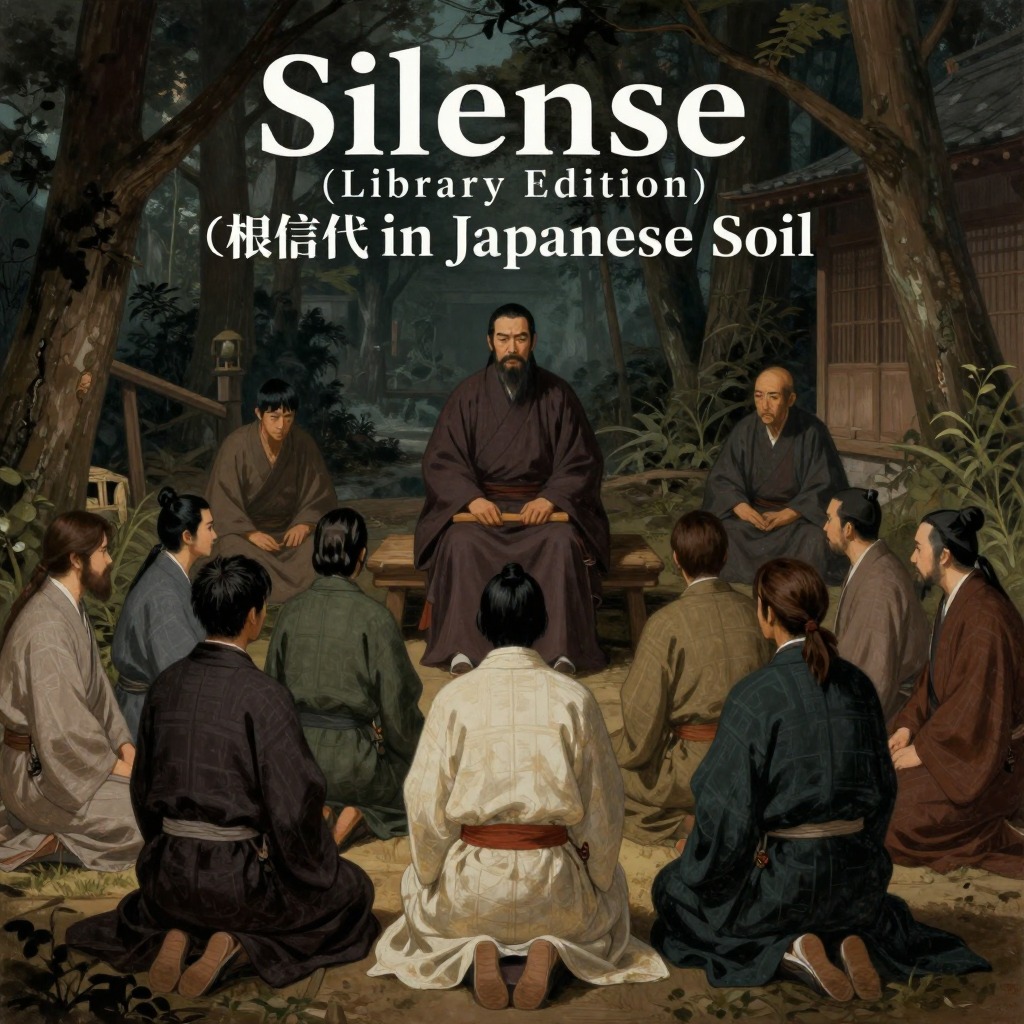
The crypto-Christians developed a secret organization to administer the sacraments and teach the faith in the absence of priests. In the village of Tomogi, this organization was structured as follows: an older man called "Jiisama" held the highest post of authority, leading a blameless life and entrusted with baptizing children. Beneath him were men known as "Tossama," whose job was to teach the Christians and lead them in prayer, and helpers called "Mideshi." The Tossama made a calendar of all the feasts of the Church—Christmas, Good Friday, Easter—and taught the faithful accordingly. Without priests, they could not have Mass, but they secretly set up a holy picture in one of the houses and recited their prayers in Latin—"Pater Noster," "Ave Maria"—in front of it, chatting about everyday matters in the intervals. If officials burst in, everything was arranged so the Christians could claim they were simply having a meeting. The crypto-Christians gave their names to their Buddhist temple and complied with the order to trample on the sacred image—the fumie—but they preserved pieces of the soutanes, rosaries, and disciplines that had belonged to the priests they loved, and retained their devotion to Santa Maria. Their prayers retained smatterings of old Portuguese and Latin.
Life and Suffering of the Crypto-Christians
The crypto-Christians were overwhelmingly poor farmers and fishermen who eked out a miserable existence. In Tomogi, a fishing village of about two hundred households near Nagasaki, the greater number of villagers had already received baptism. They were poor farmers cultivating potatoes and wheat in little fields, with no rice fields, and the magistrate of Nagasaki exacted an exceedingly harsh revenue from them. For a long time, these farmers had worked like horses and cattle, and like horses and cattle they had died. The reason Christianity penetrated this territory "like water flowing into dry earth" was that it gave these people a human warmth they had never previously known—the human kindness and charity of the fathers touched their hearts. The Buddhist bonzes simply treated them like cattle, and for a long time they had lived in resignation to such a fate. The crypto-Christians found in Christian teaching a path in which they could cast away the fetters that bound them. When Sebastian Rodrigues and Francisco Garrpe arrived in Tomogi in 1638, they found that the villagers had not met a priest or brother for six years. The last Japanese priest, Miguel Matsuda, and a Jesuit brother, Mateo de Coros, had secretly kept in contact until November 1633, when both passed to their reward. The villagers had kept their faith alive through their own organization. When Rodrigues gave them crucifixes he had worn around his neck, they bowed to the very ground, pressing the crucifixes to their foreheads and spending a long time in adoration—they had not had such crucifixes for many, many years.
The Transformation of Faith and the "Swamp" of Japan
The novel's central theological argument, articulated by the apostate Ferreira and the magistrate Inoue, is that Christianity could not take root in Japan because the country is a "swamp" that transforms whatever is planted in it. Ferreira, who had labored in Japan for twenty years, told Rodrigues that the Japanese had never had the concept of a God completely divorced from man, and that they could not think of an existence that transcends the human. He claimed that even in the glorious missionary period, the Japanese did not believe in the Christian God but in their own distortion—they twisted and changed God to their own way of thinking. "In Japan our God is just like that butterfly caught in the spider's web: only the exterior form of God remains, but it has already become a skeleton." Inoue, the Lord of Chikugo, who had once received baptism himself, told Rodrigues that the God whom the peasants of Goto and Ikitsuki secretly served had gradually changed so as to be no longer like the Christian God at all. "The Christianity you brought to Japan has changed its form and has become a strange thing," he said. "Japan is that kind of country; it can't be helped." The novel's translator, William Johnston, notes that Endo himself spoke of "the mud swamp Japanese in me"—a Japan that sucks up all sorts of ideologies, transforming them into itself and distorting them in the process. Endo believed that the tree of Hellenised Christianity cannot simply be pulled out of Europe and planted in the swamp of a Japan that has a completely different cultural tradition; if such a thing is done, the fresh young sapling will wither and die.
Legacy and Emergence
Despite centuries of ruthless vigilance, the crypto-Christians survived. In 1865, when Japan was reopened, they came out from their hiding, asking for the statue of Santa Maria, speaking about Christmas and Lent, recalling the celibacy of the priests. They are still there in their thousands, in Nagasaki and the offshore islands, clinging tenaciously to a faith that could not be stamped out. Some are united with the world-wide Church; others are not. In their prayers remain smatterings of old Portuguese and Latin; they preserve pieces of the soutanes and rosaries and disciplines that belonged to the fathers whom they loved; they retain their devotion to Santa Maria. It was while living among them that Shusaku Endo wrote Silence. The novel's interest in Japan was less historical than contemporary: the two foreign apostates were immediately taken as symbols of a Christianity which has failed in Japan because it is so stubbornly Western. "Father, you were not defeated by me," says the victorious Inoue. "You were defeated by this swamp of Japan." Yet the very survival of the crypto-Christians—their tenacious faith, their secret organization, their willingness to die as martyrs—stands as a counter-testimony to Ferreira's and Inoue's claim that Christianity cannot take root in Japan. The novel does not resolve this tension; it holds it open as the central mystery of faith in a hostile world.