
The Holiness of All Life
The Grapes of WrathExplores Jim Casy's philosophy that all life is holy and interconnected, and how this idea is realized in the novel's climax.
increasing Bearing strength in each event
 decreasing
Bearing strength in each eventdecreasingCasy's Revelation
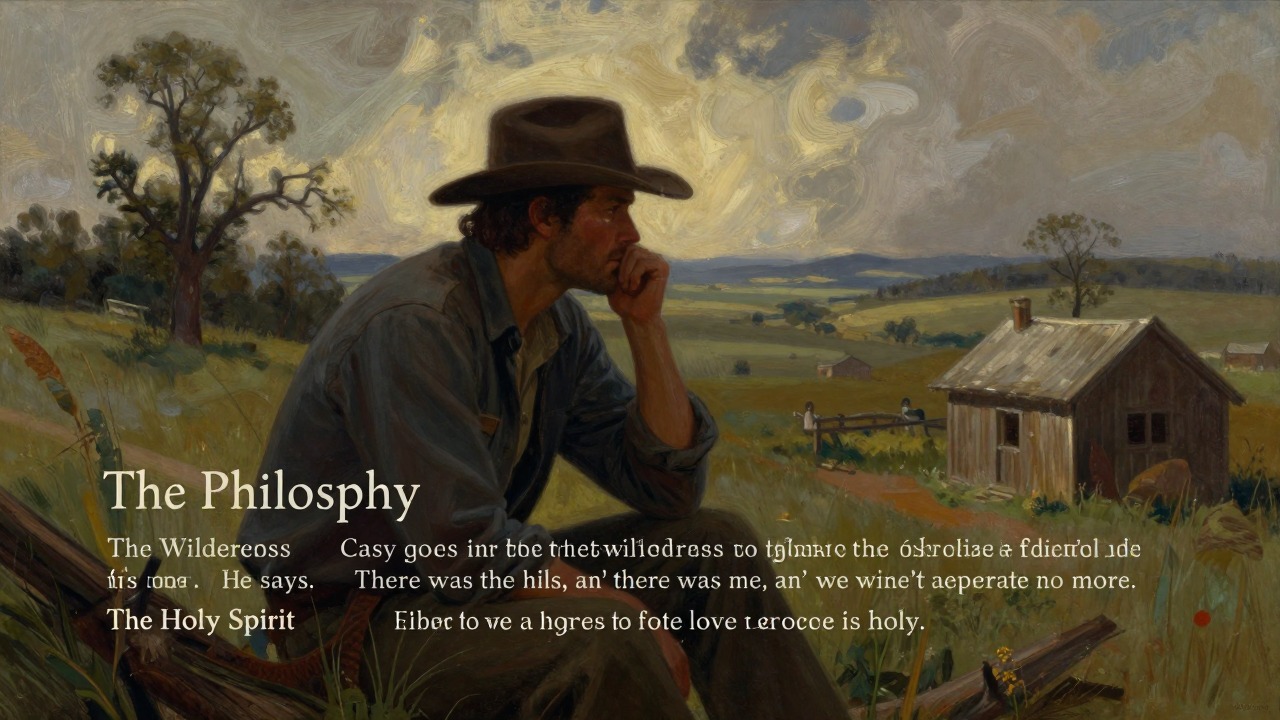
The Philosophy
The Wilderness
Casy goes into the wilderness to think. He realizes that all life is one. He says, "There was the hills, an' there was me, an' we wasn't separate no more."
The Holy Spirit
Casy redefines the Holy Spirit as the human spirit. He believes that love for people is holy. He rejects traditional religion.
The Implication
If all life is holy, then no one is separate. Everyone is part of one big soul. This idea becomes the novel's moral foundation.
Casy's Practice
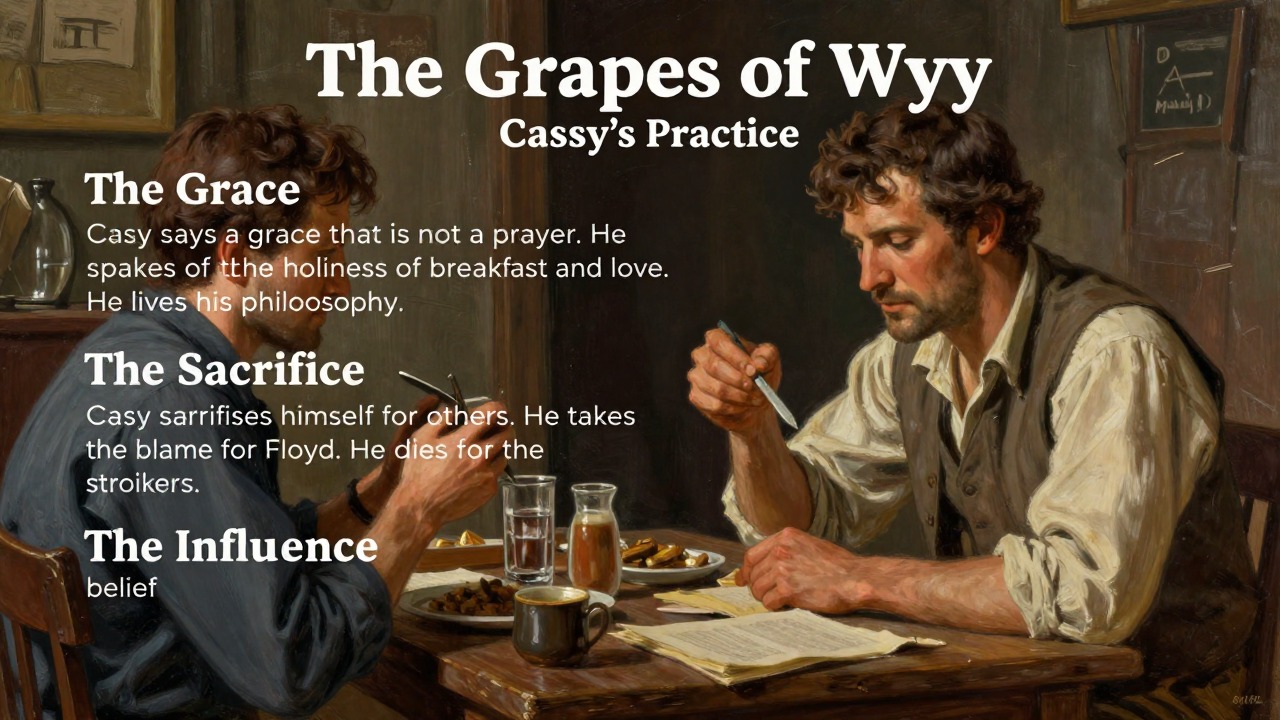
The Application
The Grace
Casy says a grace that is not a prayer. He speaks of the holiness of breakfast and love. He lives his philosophy.
The Sacrifice
Casy sacrifices himself for others. He takes the blame for Floyd. He dies for the strikers. His actions reflect his belief.
The Influence
Casy's philosophy influences Tom. Tom later says he will be everywhere. The idea of universal connection spreads.
The Final Realization
The Act
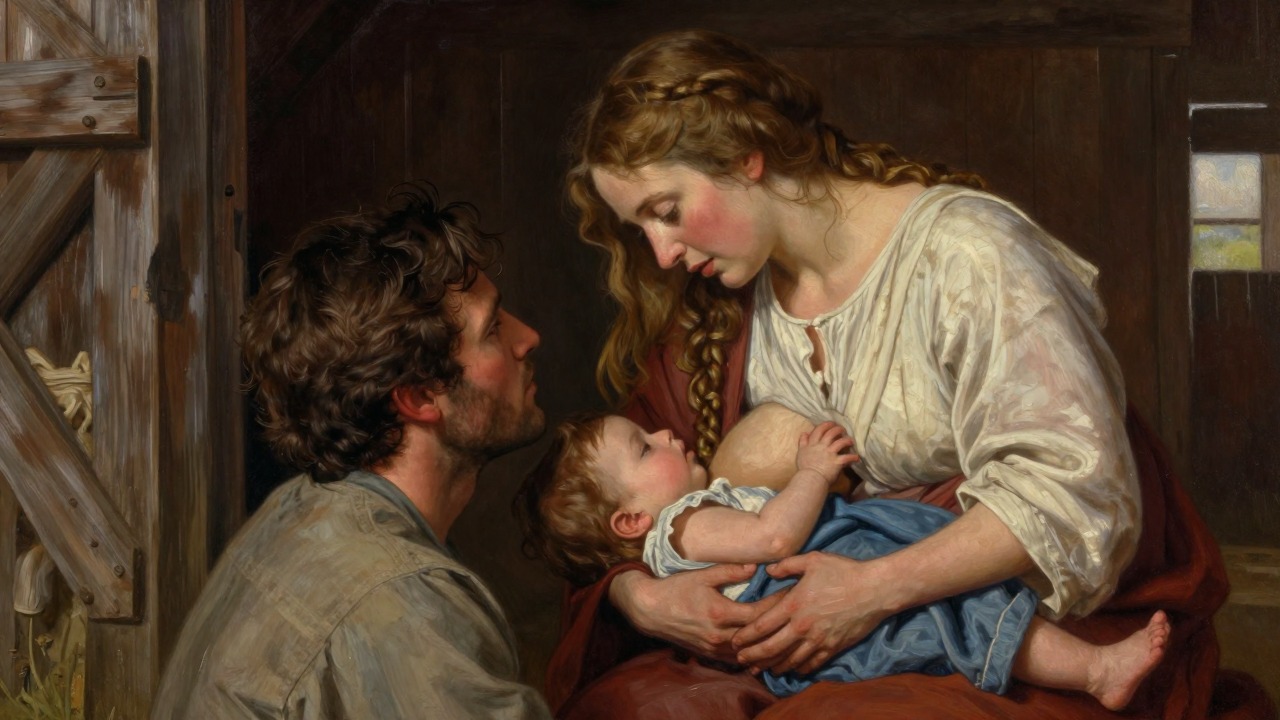
The Barn
Rose of Sharon breastfeeds a starving man. This act is the ultimate expression of the holiness of life. She gives life to a stranger.
The Connection
The act transcends family, class, and individuality. It is a moment of pure connection. All life is one.
The Meaning
The novel ends with this image. It is the realization of Casy's philosophy. The holiness of all life is affirmed.
early in the story
throughout the story
the final scene
