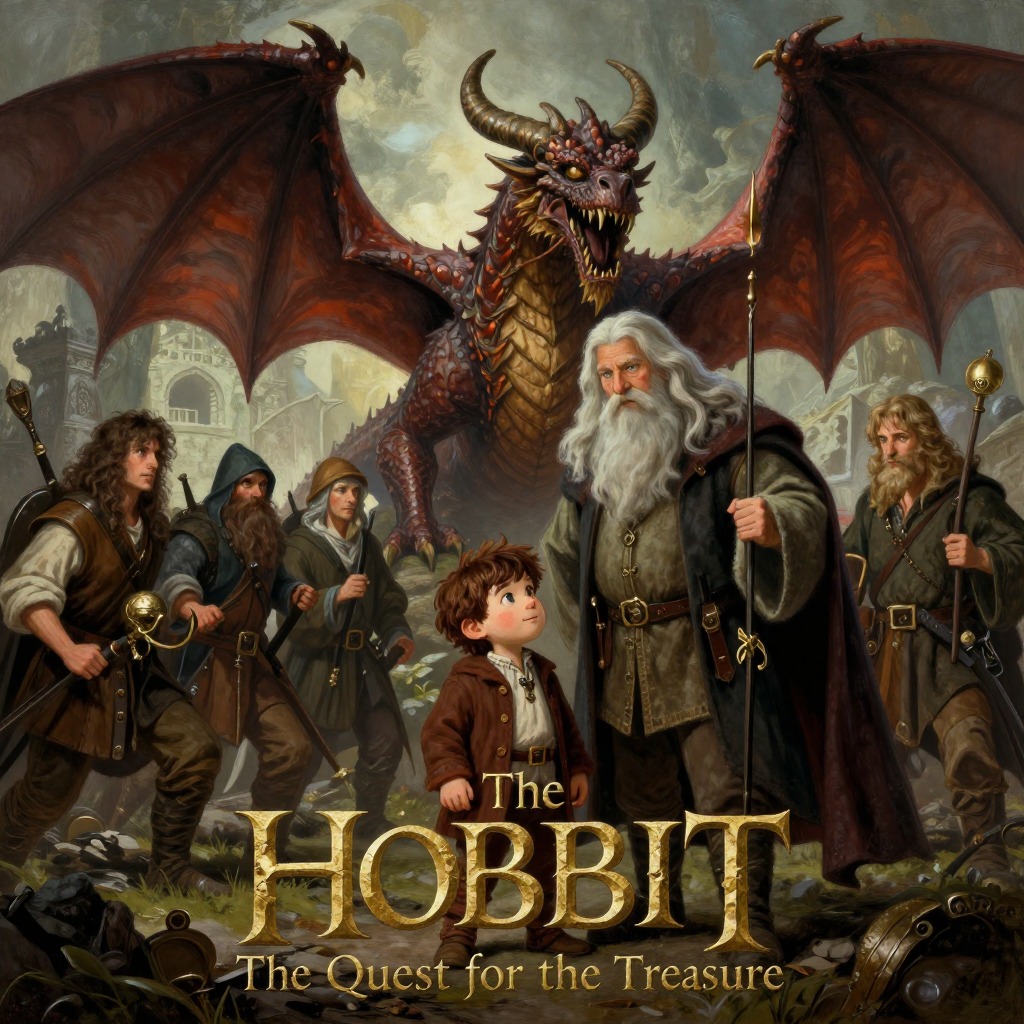
Bard's Parley with Thorin
Bard's Parley with Thorin is the pivotal diplomatic confrontation that follows the death of Smaug, in which the dragon-slayer, speaking for the homeless people of Lake-town and as the rightful heir of Girion of Dale, demands a portion of the treasure from Thorin Oakenshield, only to be met with the dwarf-king's gold-lust and refusal, thereby transforming former allies into besiegers and setting the stage for the Battle of Five Armies.
Causes and Background
The parley was the direct consequence of Smaug's destruction of Lake-town. After Bard shot the dragon dead with a black arrow, the town lay in ruins, its people homeless and starving on the western shores in the bitter autumn cold. Bard, a descendant in long line of Girion, Lord of Dale, had emerged as the people's leader, hailed as "King Bard" by the crowd, though the Master of Lake-town resisted his authority. Meanwhile, the Elvenking, who had received news of Smaug's fall from his own messengers and the birds, marched with many spearmen and bowmen toward the Mountain, and when Bard's messengers found him, he turned aside to aid the Lake-men. Within five days of the dragon's death, the joined armies of Elves and Lake-men arrived at the valley of Dale and encamped between the arms of the Mountain. The dwarves, having fortified the Front Gate with a wall of squared stones, watched from behind their defenses as the host gathered below.
The Parley at the Gate
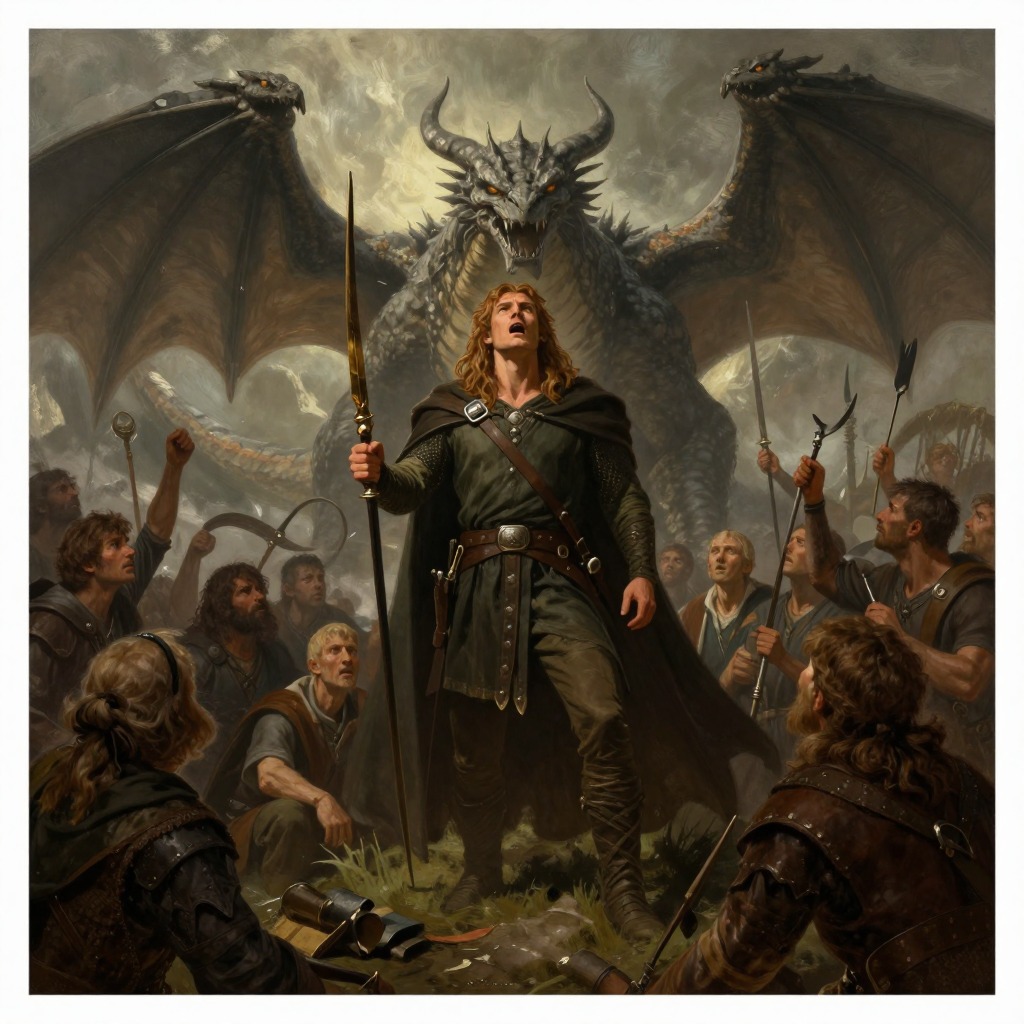
On the morning after the camp was moved, a company of spearmen bearing the green banner of the Elvenking and the blue banner of the Lake advanced to stand before the wall. Thorin hailed them from above, demanding to know who came armed for war to his gates. Bard stepped forward, dark of hair and grim of face, and answered with three claims. First, he had slain the dragon and thereby delivered the treasure. Second, as the heir of Girion, much of the wealth in the hoard had been stolen by Smaug from Dale. Third, the dragon's last battle had destroyed the dwellings of Esgaroth, and Bard spoke for the Master of Lake-town, asking whether Thorin had no thought for the sorrow and misery of the people who had aided the dwarves in their distress. These were fair words and true, but Thorin, who had spent long hours in the treasury and felt the lust of gold heavy upon him, would not listen. He answered that no man had a claim to the treasure of his people, that the price of goods and assistance from the Lake-men would be fairly paid in due time, but nothing would be given under threat of force. He declared that while an armed host lay before his doors, he looked on them as foes and thieves. Bard replied with a just question: what share of their inheritance would the dwarves have paid to his kindred had they found the hoard unguarded and themselves slain? Thorin refused to parley with armed men at his gate, especially with the people of the Elvenking, whom he remembered with small kindness, and ordered them to begone before arrows flew. He demanded that the elvish host be dismissed to the woods and that Bard return laying down his arms before approaching the threshold. Bard answered that the Elvenking was his friend and had succoured the Lake-people in their need, and gave Thorin time to repent his words before departing.
The Ultimatum and the Arrow
Ere many hours passed, the banner-bearers returned with trumpeters who blew a blast and delivered a formal ultimatum. In the name of Esgaroth and the Forest, they bade Thorin consider the claims or be declared a foe. At the least, he was to deliver one twelfth portion of the treasure to Bard as the dragon-slayer and heir of Girion, from which Bard would himself contribute to the aid of Esgaroth; and if Thorin would have the friendship and honour of the lands about, he would also give somewhat of his own for the comfort of the Lake-men. In answer, Thorin seized a bow of horn and shot an arrow at the speaker, which smote into his shield and stuck there quivering. He declared the Mountain besieged, and the messengers departed swiftly. The dwarves were left to consider their case, and Thorin had become so grim that even if they had wished, the others would not have dared to find fault with him, though Bilbo disapproved of the whole turn of affairs.
Consequences and Significance
The parley's failure hardened the lines of conflict. Thorin, under the bewilderment of the treasure, sent messengers by Roäc to Dain in the Iron Hills, bidding him come with wary speed. The siege settled into a weary stalemate, with the dwarves piling and ordering the treasure while Thorin spoke obsessively of the Arkenstone. The parley also set the stage for Bilbo's desperate plan: that night he made up his mind to take the Arkenstone and deliver it to Bard and the Elvenking, hoping to avert war. The confrontation at the Gate thus marks the moment when the quest's success—the death of Smaug and the recovery of the treasure—turns into a moral and political crisis, revealing how the dragon's long brooding has poisoned even the rightful heir, and how the bonds of gratitude and alliance can be shattered by the lust for gold.