Nastasia's letters to Aglaya
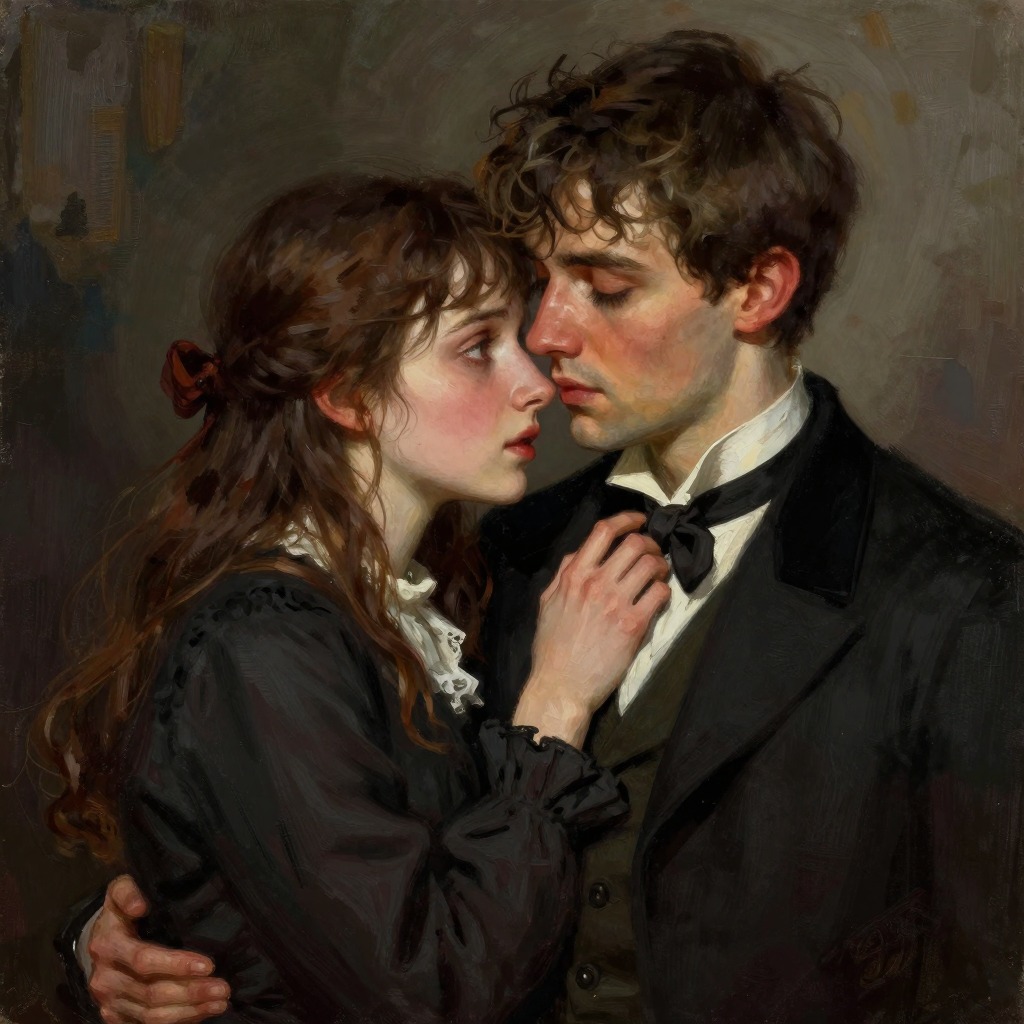
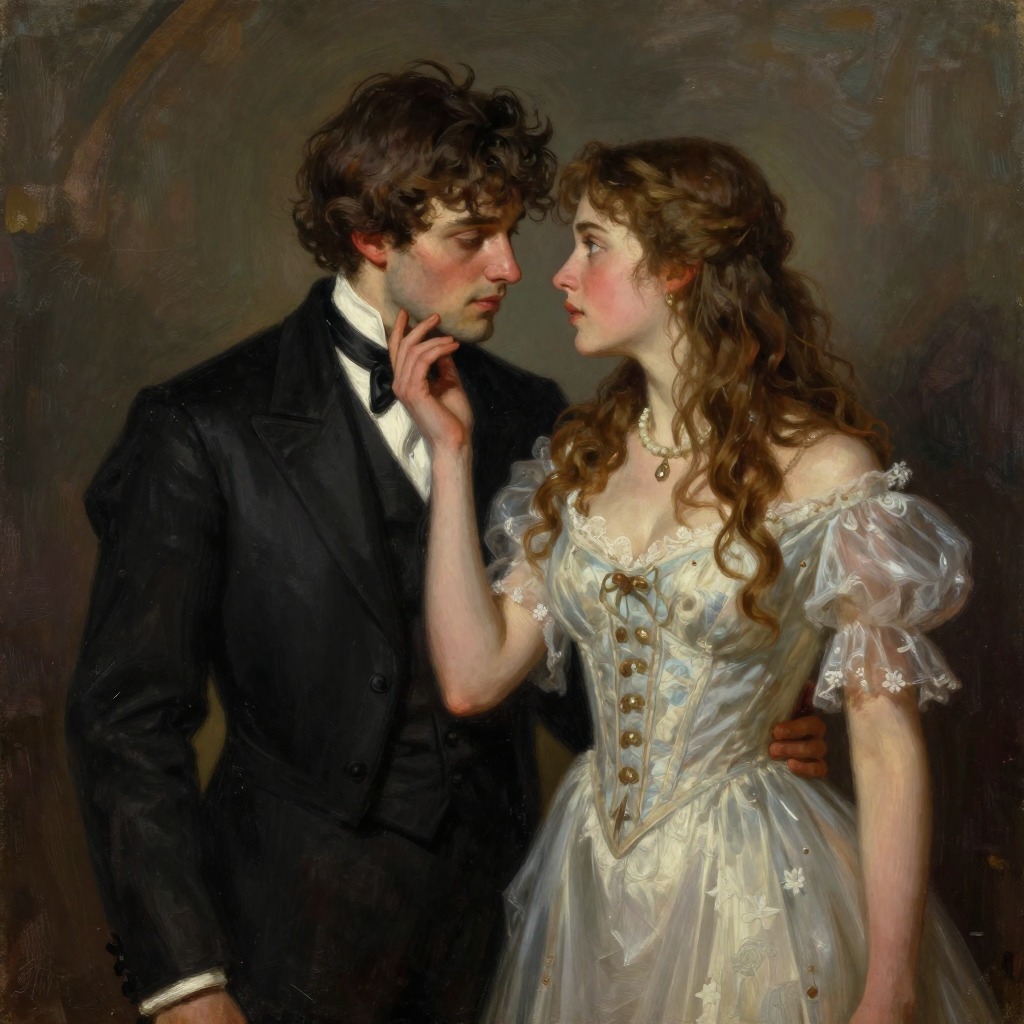
Nastasia's letters to Aglaya are a series of three unsent letters written by Nastasia Philipovna Barashkoff to Aglaya Ivanovna Epanchin, which the prince receives from Aglaya during their early-morning meeting on the green bench in Pavlovsk Park. These letters constitute one of the most psychologically complex and disturbing documents in the novel, revealing Nastasia's profound self-awareness, her conviction that she is a ruined and fallen woman, her obsessive love for the prince, and her desperate, paradoxical scheme to unite the prince with Aglaya while simultaneously asserting her own ineradicable presence in their lives. The letters function as a confession, a love letter, a testament of madness, and a strategic intervention in the love triangle, and their reading precipitates the final crisis between the prince, Aglaya, and Nastasia.
Content and Structure of the Letters
The three letters, which Aglaya has kept secret and now hands to the prince in a single bundle, are written in a state of extreme emotional and psychological agitation. They are not a coherent narrative but a series of feverish, self-lacerating, and visionary outpourings. In the first letter, Nastasia instructs the prince to look first at the signature, which she claims will explain everything, and declares that she is so far removed from him that she cannot offend him. She writes that she considers him perfection, not through rational judgment but as an article of faith, and confesses that she loves him, though she insists that love equalizes and that she has not lowered him to her level. In another letter, she couples the prince with Aglaya, stating that she has heard the prince speak of Aglaya as "the light" and that she thinks of them as one. She describes a vision of a painting of Christ alone with a child, which she says represents the prince's innocence. The final letter is the most desperate, in which Nastasia begs the prince not to misunderstand her and not to think she is humiliating herself from pride. She declares that she has renounced the world and that her very self has almost ceased to exist, and she speaks of seeing two dreadful eyes that are always watching her, even when not present, and of a hidden razor tied with silk, like the one the Moscow murderer had. She writes that she is convinced that somewhere beneath the floor of Rogojin's house there is a hidden corpse, and that Rogojin loves her so much that he must hate her. She concludes by stating that her wedding and the prince's are to be on the same day, as she has arranged with Rogojin, and that she would kill him from fear, but he will kill her first.
Psychological and Thematic Significance
The letters are a direct expression of Nastasia's fractured psyche, oscillating between abject self-abasement and defiant pride, between a desire for the prince's happiness and a compulsion to destroy any possibility of it. Her declaration that she loves the prince but cannot marry him because it would ruin him reveals a tragic self-awareness that is both genuine and self-dramatizing. The recurring motif of the hidden razor and the corpse beneath the floorboards reflects her paranoid conviction that she is surrounded by violence and death, a conviction that is both a symptom of her mental state and a prophetic intuition of her own murder. The letters also function as a strategic intervention in the love triangle: by urging Aglaya to marry the prince, Nastasia simultaneously asserts her own central role in their story and attempts to control the outcome from beyond the grave, as it were. The prince, upon reading them, is plunged into a state of horror and pity, recognizing in them the unmistakable signs of madness. He tells Aglaya that the letters are "madness" and "merely another proof of her insanity," but he is also deeply shaken by their power and their truth. The letters thus serve as a catalyst for the final confrontation between Aglaya and Nastasia, as Aglaya, having read them, becomes consumed with jealousy and a desire to confront her rival, leading to the disastrous meeting at Daria Alexeyevna's house.
The Letters as a Narrative Device
As a narrative device, the letters compress the entire history of Nastasia's relationship with the prince and Rogojin into a single, explosive document. They reveal to the reader, and to the prince, the full extent of Nastasia's suffering and her delusional logic, which had previously only been hinted at. The letters also serve to deepen the mystery of Nastasia's character, presenting her not simply as a victim or a femme fatale but as a complex, self-aware, and tragically divided human being. The prince's reaction to the letters—his horror, his pity, his recognition of her madness—is a crucial moment in his own psychological journey, as he is forced to confront the impossibility of saving her and the inevitability of the tragedy that is about to unfold. The letters, therefore, are not merely a plot device but a concentrated expression of the novel's central themes of love, pity, madness, and the destructive power of the past.