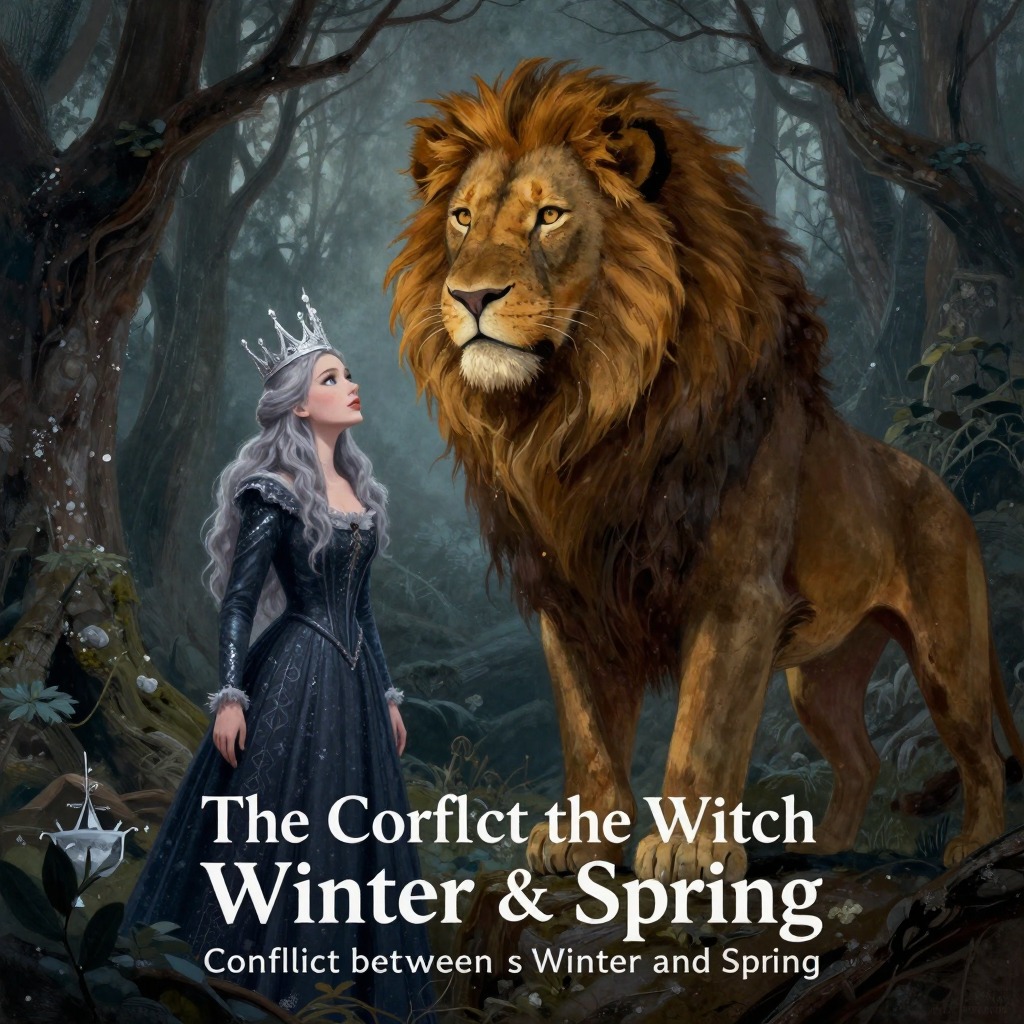
Always Winter, Never Christmas
Always Winter, Never Christmas is the defining enchantment of the White Witch's reign over Narnia, a magical curse that locks the land in an unending frozen season while forbidding the arrival of Christmas. It is the most visible and oppressive symbol of her tyranny, and its eventual dissolution signals the return of hope and the arrival of Aslan.
Origin and Nature of the Curse
The White Witch's spell ensures that Narnia experiences "always winter and never Christmas" . This is not a natural winter but a magical one, enforced by her power. The Faun Tumnus explains to Lucy that the Witch "has made a magic so that it is always winter in Narnia—always winter, but it never gets to Christmas" . Lucy later repeats this to her siblings, saying the Witch "has made an enchantment over the whole country so that it is always winter here and never Christmas" . The curse is thus both climatic and cultural: it freezes the land and denies its inhabitants the celebration and renewal that Christmas represents.
The Curse as a Symbol of Tyranny
The perpetual winter is directly linked to the Witch's illegitimate rule. Mr. Beaver tells the children that the Witch "makes it always winter. Always winter and never Christmas; think of that!" . The absence of Christmas is not merely a seasonal detail but a mark of her cruelty, as it deprives Narnia of its rightful joy and religious or festive cycle. The curse is so thorough that even the mention of Aslan—the true King—is associated with its end. Mr. Beaver recites the old rhyme: "When he bares his teeth, winter meets its death / And when he shakes his mane, we shall have spring again" . The winter is thus a direct antithesis to Aslan's presence and power.
The Breaking of the Spell
The thaw begins when Aslan is on the move. As the children and Beavers journey toward the Stone Table, the winter suddenly breaks. The snow melts, streams begin to run, and flowers appear. The Dwarf accompanying the Witch exclaims, "This is no thaw. This is spring. What are we to do? Your winter has been destroyed, I tell you! This is Aslan's doing" . The Witch herself acknowledges the loss of her power when she says, "Her knowledge goes back only to the dawn of Time. But if she could have looked a little further back... she would have known that when a willing victim who had committed no treachery was killed in a traitor's stead, the Table would crack and Death itself would start working backwards" . The breaking of the winter is thus tied to the deeper magic of sacrifice and resurrection.
Thematic Significance
Always Winter, Never Christmas functions as a powerful metaphor for spiritual and natural barrenness under evil rule. Its reversal is not merely a change of weather but a cosmic restoration. After the Witch's defeat, the children are crowned at Cair Paravel, and the land enters a golden age of peace and prosperity . The curse's end is the precondition for Narnia's true spring—both literal and figurative—and for the establishment of the rightful kings and queens.