Prophecy of the Four Thrones
The Prophecy of the Four Thrones is the central magical and political law of Narnia, a verse of Deep Magic that determines the fate of the entire land. It states that when two Sons of Adam and two Daughters of Eve—human beings—occupy the four thrones at Cair Paravel, the castle on the eastern sea, the evil time of the White Witch will be over and done, ending not only her reign but her life. This prophecy is the engine of the entire story, driving the Witch's relentless pursuit of the Pevensie children and shaping Aslan's plan of salvation.
Origin and Form
The prophecy is preserved in an old rhyme recited by Mr. Beaver: "When Adam's flesh and Adam's bone / Sits at Cair Paravel in throne, / The evil time will be over and done." It is a saying in Narnia "time out of mind," known to all the wood people. The prophecy is tied to the four thrones at Cair Paravel, which ought to be the capital of the whole country if all was as it should be. The rhyme is part of a larger body of Deep Magic, which also includes the law that every traitor belongs to the White Witch as her lawful prey.
The Witch's Fear and the Children's Arrival
The White Witch has been watching for any humans in Narnia for many years precisely because of this prophecy. Mr. Beaver explains that if she knew there were four of them—two Sons of Adam and two Daughters of Eve—she would be even more dangerous. When the Witch learns from Edmund that there are four children, she immediately understands the threat. Later, after Edmund's rescue, the Witch muses to her Dwarf, "Four thrones in Cair Paravel. How if only three were filled? That would not fulfil the prophecy." This shows that she believes the prophecy is conditional on all four thrones being occupied simultaneously, and she hopes to prevent its fulfillment by killing one of the children.
Aslan's Sacrifice and the Deeper Magic
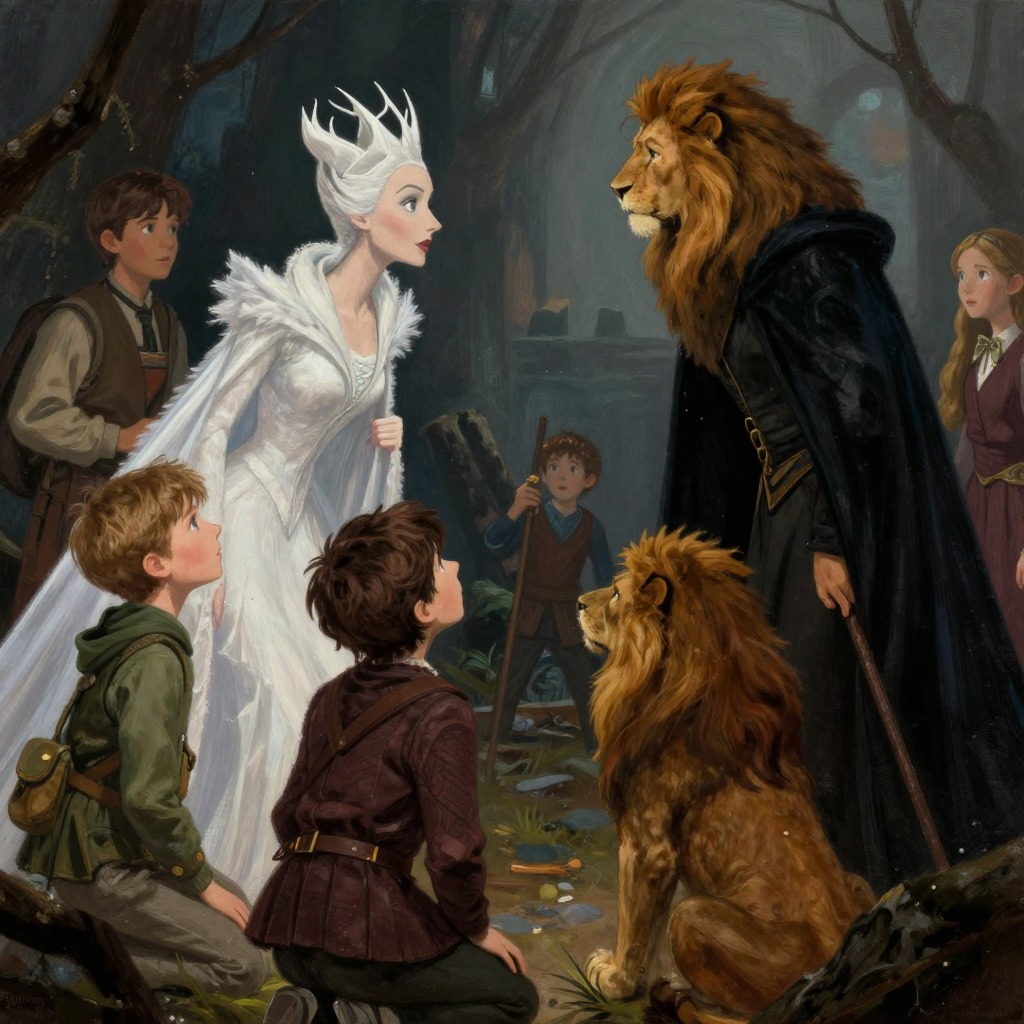
The prophecy's power is so absolute that even Aslan cannot simply override it by force. When the Witch claims Edmund as her lawful prey under the Deep Magic, Aslan does not deny her right. Instead, he makes a secret pact with her: he will die in Edmund's place. This substitution is possible because of a Deeper Magic from before the dawn of Time, which the Witch does not know: when a willing victim who has committed no treachery is killed in a traitor's stead, the Stone Table cracks and Death itself works backwards. Aslan's resurrection and the breaking of the Table fulfill this deeper law, while the original prophecy remains intact.
Fulfillment and Coronation
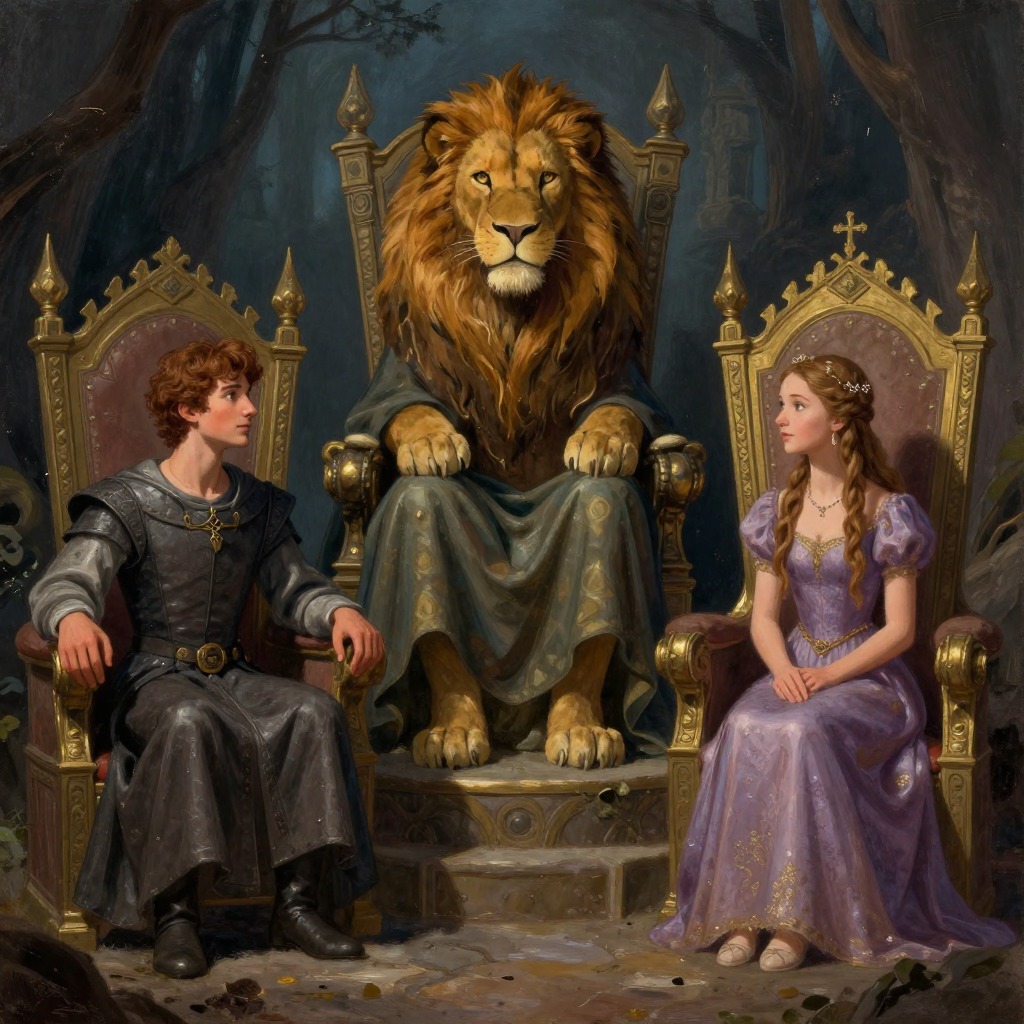
After the final battle, Aslan crowns the four children at Cair Paravel: Peter as High King, Susan as Queen, Edmund as King, and Lucy as Queen. They sit on the four thrones amid deafening shouts of "Long Live King Peter! Long Live Queen Susan! Long Live King Edmund! Long Live Queen Lucy!" With this act, the prophecy is fulfilled: the evil time of the White Witch is over, and Narnia enters a golden age of peace and prosperity under the rule of the four human monarchs.
Thematic Significance
The Prophecy of the Four Thrones establishes the stakes of the entire narrative, transforming the children's adventure into a cosmic struggle for the liberation of a world. It introduces the concept of Deep Magic as an immutable law that governs Narnia, a law that even the Witch must respect. The prophecy also underscores the theme of human destiny: ordinary children from our world are chosen to fulfill an ancient prophecy and become kings and queens in another realm. The fact that the prophecy requires all four thrones to be filled emphasizes the importance of unity and cooperation among the siblings, and the Witch's attempt to prevent its fulfillment by killing one child highlights the fragility of that unity. Ultimately, the prophecy is not just a plot device but a statement about the nature of power, justice, and the inevitability of good triumphing over evil when the conditions of the deeper moral order are met.