Persian's Pistols
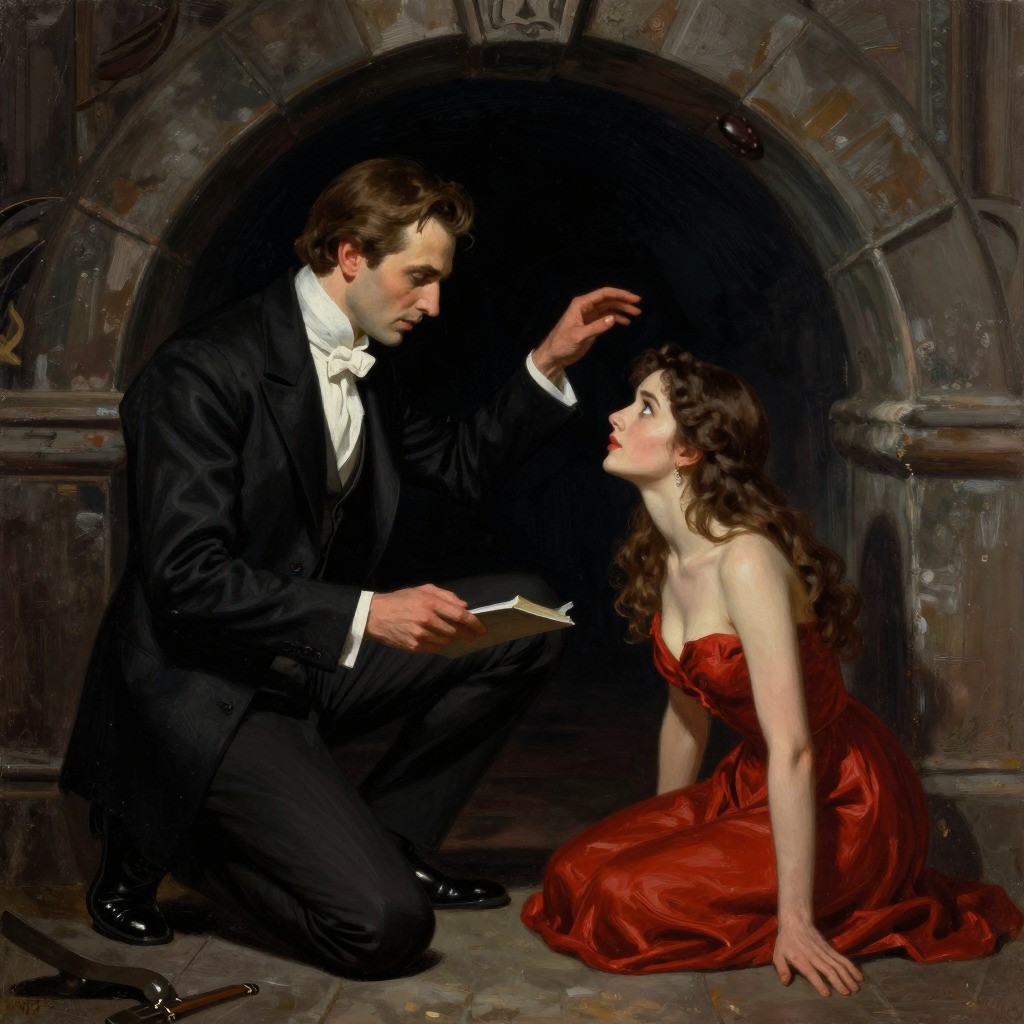
The Persian's Pistols are a pair of long, reliable firearms that the Persian has owned for a considerable time and which he calls upon at the moment of greatest crisis in the novel. When Christine Daae is abducted from the stage of the Paris Opera House, the Persian, who has been watching over the situation, sends his servant Darius to retrieve the pistols from his flat. They are delivered in a richly carved case, and the Persian immediately examines their priming, declaring that they can be relied upon. He hands one of the pistols to Raoul de Chagny, thereby arming the young viscount for the perilous journey they are about to undertake into the cellars of the Opera, a journey that will bring them face to face with the mysterious Erik.
The Pistols as Instruments of a Planned Confrontation
The pistols are introduced at a specific and charged moment. After the Persian has intercepted Raoul in the corridor and convinced him that Christine is still within the Opera, held by Erik, he leads the viscount to Christine's dressing-room. There, Darius, the Persian's servant, delivers the case containing the pistols, having been careful that no one sees him enter or leave. The Persian's immediate action is to check the priming of the weapons, a gesture that signals his experience and his seriousness. When Raoul asks if they are to fight a duel, the Persian's reply is ominous: "It will certainly be a duel which we shall have to fight," he says, "and what a duel!" This framing transforms the pistols from mere objects into the instruments of a high-stakes, life-or-death confrontation. The Persian's confidence in the pistols is not that they will be used to shoot Erik, but that they are part of a larger, more subtle strategy for survival.
The Pistols and the Defense Against the Punjab Lasso
The true purpose of the pistols is revealed through the Persian's knowledge of Erik's methods. As they descend into the cellars, the Persian instructs Raoul to hold his hand at the level of his eyes, with his arm bent, as though he were about to fire. He explains that this posture is a defense against the Punjab lasso, Erik's preferred weapon of strangulation. The pistols themselves, the Persian later clarifies, can be put in the pocket; the crucial thing is the position of the hand. This revelation shows that the pistols are not primarily offensive weapons but are part of a defensive ritual designed to counter Erik's specific and deadly skill. The Persian's long acquaintance with Erik, and his knowledge of the "trap-door lover's" tricks, means that the pistols serve as a psychological and practical safeguard, a way to keep the lasso from finding its mark around their necks. The pistols, therefore, are less about firing and more about the posture they necessitate, a posture that offers a chance of survival against a foe who is more likely to strangle than to be shot.
The Pistols as Symbols of the Persian's Role
The pistols also serve to define the Persian's character and his relationship to the events unfolding. He is a man of foresight and preparation, who has anticipated the need for such weapons and has them delivered at the critical moment. His decision to arm Raoul, a young man he barely knows, demonstrates his commitment to the rescue mission and his willingness to share the danger. The pistols are a tangible link between the Persian's past, where he has encountered Erik before, and the present crisis. They are the tools of a man who understands the nature of the adversary they face, and who knows that conventional means of combat may be useless. In this way, the pistols are not just physical objects but symbols of the Persian's unique knowledge and his role as a guide and protector for Raoul. They represent the only kind of preparation that can be made against a force like Erik, a preparation that is as much about understanding and strategy as it is about firepower.