Colin's room
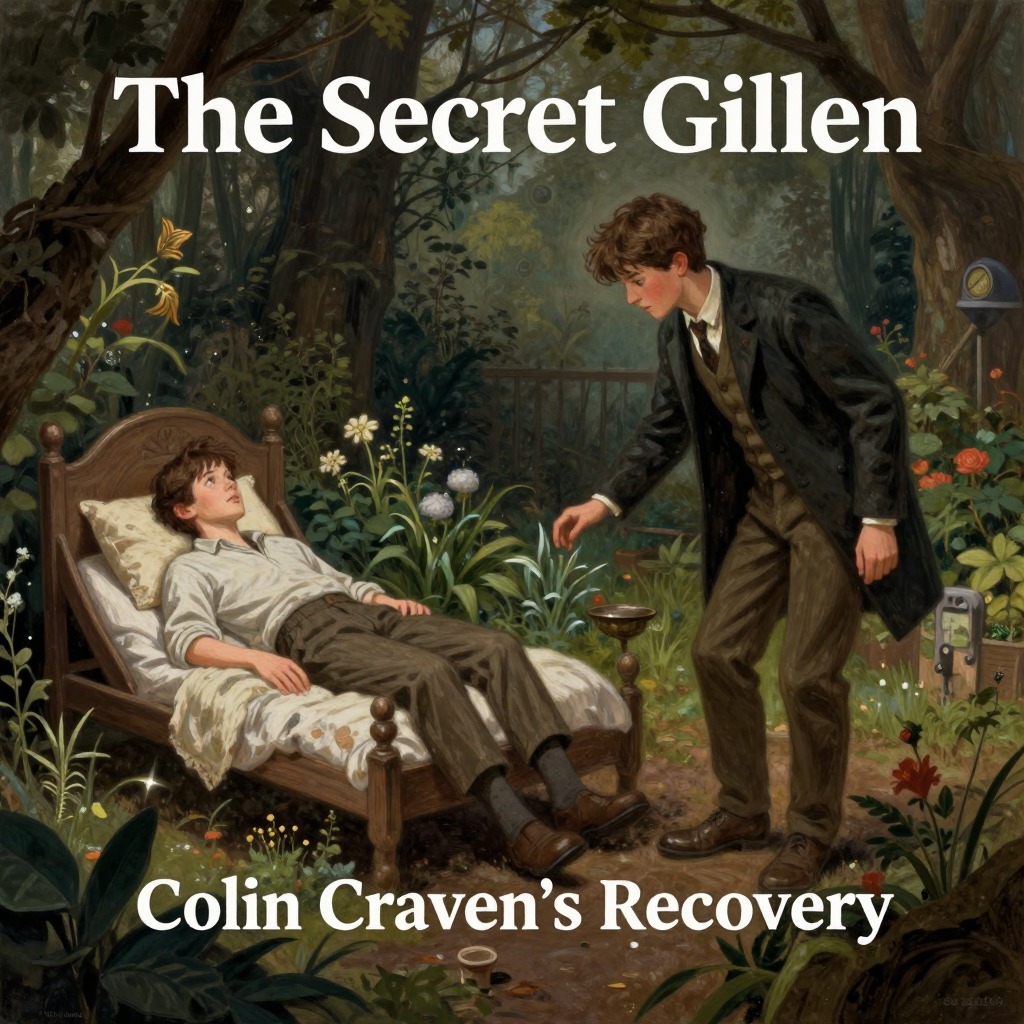
Colin's room is the secluded, richly furnished bedchamber in Misselthwaite Manor where the invalid Colin Craven has spent nearly his entire life, lying on a carved four-posted bed hung with brocade, isolated from the world and consumed by fears of his own death and deformity. It is the site of his first encounter with Mary Lennox, the gradual breakdown of his hysterical isolation, and the symbolic transformation from a prison of illness into a space where health and connection begin to take hold.
Identity and Setting
Colin's room is a large, ancient chamber with a high ceiling and shadowy corners, furnished with handsome, old pieces. The centerpiece is a carved four-posted bed hung with brocade, where Colin lies when Mary first discovers him. A low fire glows faintly on the hearth, and a night light burns by the bedside. The room is decorated with rich colors in the rugs and hangings, and there are pictures and books on the walls, making it look "glowing and comfortable" even on gray, rainy days. A rose-colored silk curtain hangs over the mantelpiece, concealing a portrait of Colin's mother, Lilias Craven. The room is located in a part of the house Mary had not explored before, accessible through a tapestry-covered door in a short corridor. It is connected to an outer corridor where a nurse or Martha Sowerby often waits.
The First Encounter
Mary Lennox first enters Colin's room in the middle of the night, drawn by the sound of fretful crying she had heard on previous occasions. She finds Colin lying on his bed, crying not from pain but from tiredness and crossness. He has a sharp, delicate face the color of ivory, with eyes too large for it and heavy locks of hair tumbling over his forehead. When he sees Mary, he asks if she is a ghost, and she asks the same of him. He identifies himself as Colin Craven, revealing that he is the son of Archibald Craven and that no one had told Mary of his existence because "they daren't." He explains that he is kept hidden because he is always ill, believes he may become a hunchback, and is convinced he will die. His father, he says, hates to look at him. Mary sits on a big footstool and talks to him for hours, telling him about India, the robin, and gardens. Before leaving, she sings a Hindustani song and strokes his hand until he falls asleep.
A Space of Transformation
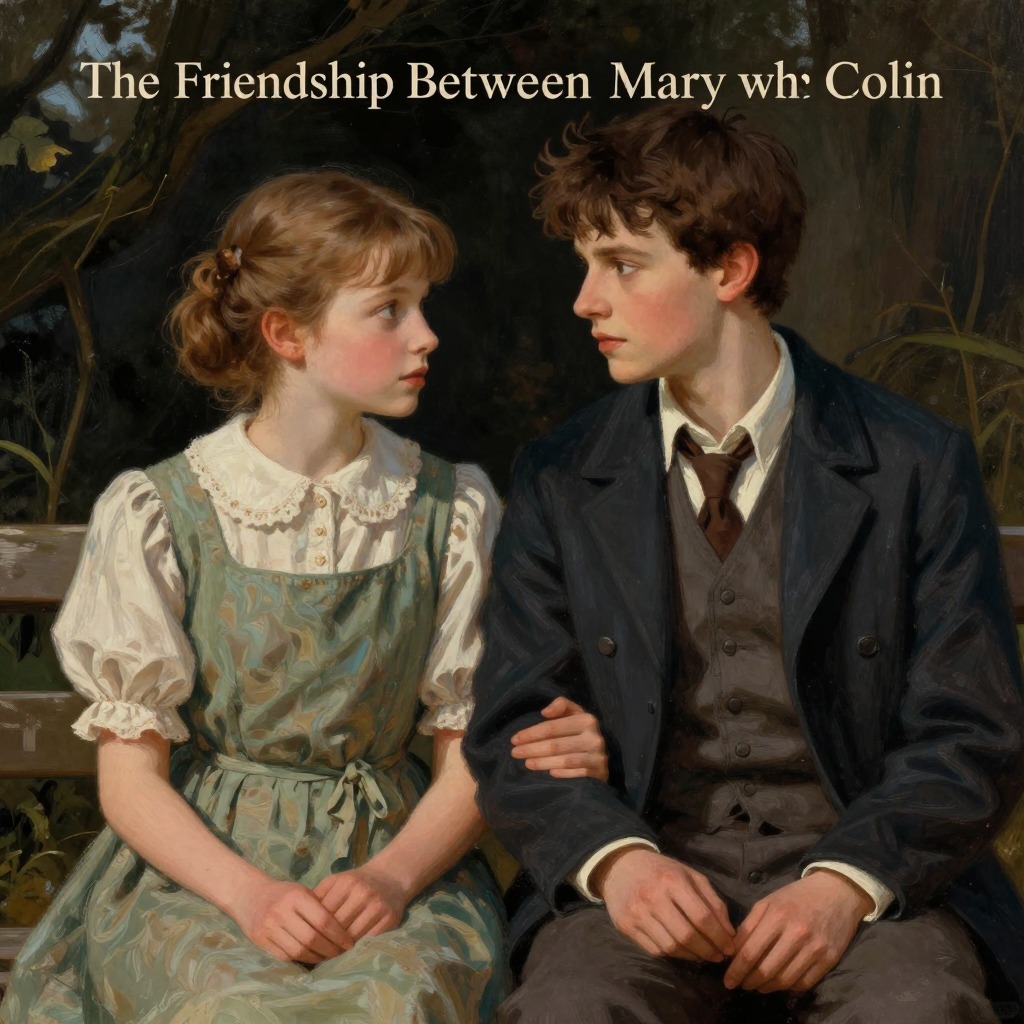
After their first meeting, Colin's room becomes the setting for a remarkable transformation. Mary visits him daily, and they talk about Dickon Sowerby, the moor, and the secret garden. Colin, who had previously been a tyrannical invalid prone to hysterical tantrums, begins to change. He sits up on his sofa, eats with appetite, and laughs with Mary. The room, once a place of solitary misery, fills with conversation and shared joy. Dr. Craven and Mrs. Medlock are astonished by the change. Colin asserts his authority, ordering that Mary be allowed to visit and that his meals be brought. The room also hosts visits from Dickon and his animals—the fox Captain, the rook Soot, the squirrels Nut and Shell, and a new-born lamb—turning the invalid's chamber into a "menagerie." The portrait of Lilias Craven, previously covered by a curtain, is eventually left uncovered, as Colin no longer feels anger at seeing her laughing face.
The Tantrum and Its Aftermath
A pivotal scene occurs when Colin, angry that Mary has spent the day with Dickon instead of visiting him, throws a tantrum. He screams, cries, and beats his pillow, convinced he has felt a lump on his back. Mary, summoned by the nurse, rushes in and shouts at him to stop, accusing him of having only "hysterics." She demands to see his back and, after examining it, declares there is no lump. This confrontation, which takes place entirely within his room, marks a turning point. Colin, for the first time, is directly contradicted and begins to doubt his own fears. After the tantrum subsides, he asks Mary if she thinks he could live to grow up, and she tells him about the secret garden. That night, she describes the garden to him in a low voice, and he falls asleep peacefully.
Narrative Role and Significance
Colin's room functions as a microcosm of his psychological state: dark, isolated, and filled with fear. It is the physical manifestation of the "hundred rooms" of Misselthwaite Manor that are shut up and locked. Mary's entry into this room parallels her entry into the secret garden—both are hidden, neglected spaces that she brings back to life. The room's transformation from a place of hysterical crying to one of laughter, companionship, and hope mirrors Colin's own recovery. It is also the space where the central secrets of the novel—Colin's existence and the garden—are first shared, making it a crucial threshold between the old world of illness and secrecy and the new world of health and openness.