
Honor vs. Political Necessity
The Three MusketeersThe tension between personal honor and the demands of politics, as characters navigate a world of intrigue and betrayal.
increasing Bearing strength in each event
 decreasing
Bearing strength in each eventdecreasingd'Artagnan's Refusal of the Cardinal
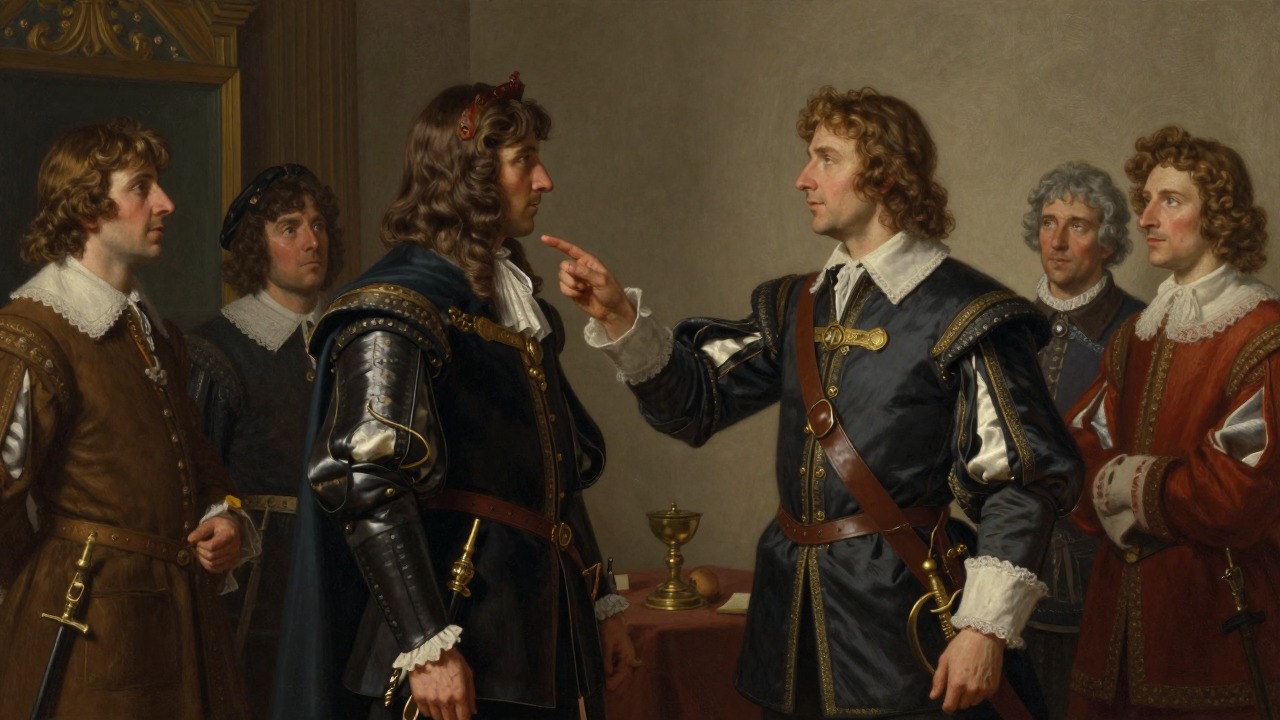
A Choice of Loyalty
The Offer
Cardinal Richelieu offers d'Artagnan a commission in his Guards, with promises of advancement. D'Artagnan refuses, choosing to remain loyal to the king and to his friends.
The Reason
D'Artagnan knows that accepting the cardinal's offer would betray his friends and his principles. He values his honor more than personal gain.
The Consequence
The cardinal respects d'Artagnan's decision, but it also makes him an enemy. D'Artagnan's choice reflects the theme of honor over political expediency.
Athos's Code of Honor
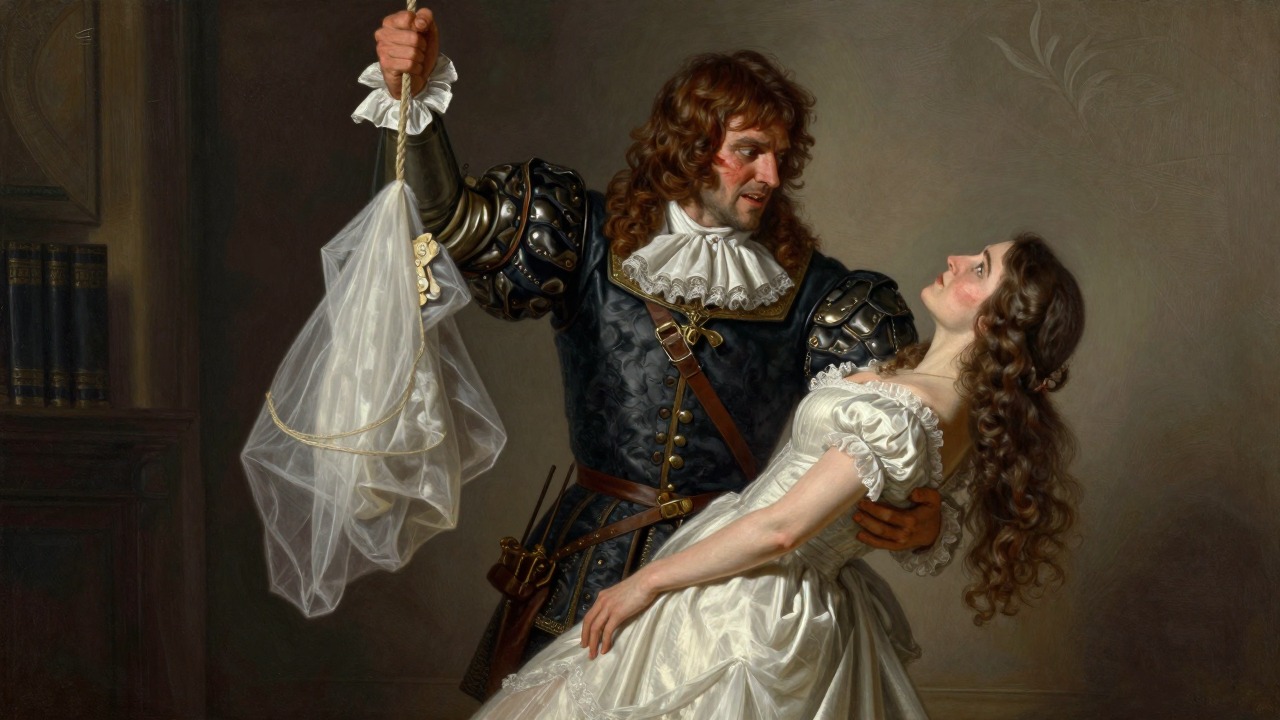
A Noble's Principles
The Past
Athos's past is defined by a single act: he hanged his wife when he discovered she was branded. This act, though brutal, was in accordance with his code of honor as a nobleman.
The Present
Athos lives by a strict code of honor. He is generous, brave, and loyal. He refuses to take money from a fallen enemy and insists on fair play.
The Conflict
Athos's honor sometimes conflicts with political necessity. He is willing to defy the cardinal to protect his friends. His integrity is unwavering, even in the face of danger.
The Cardinal's Pragmatism
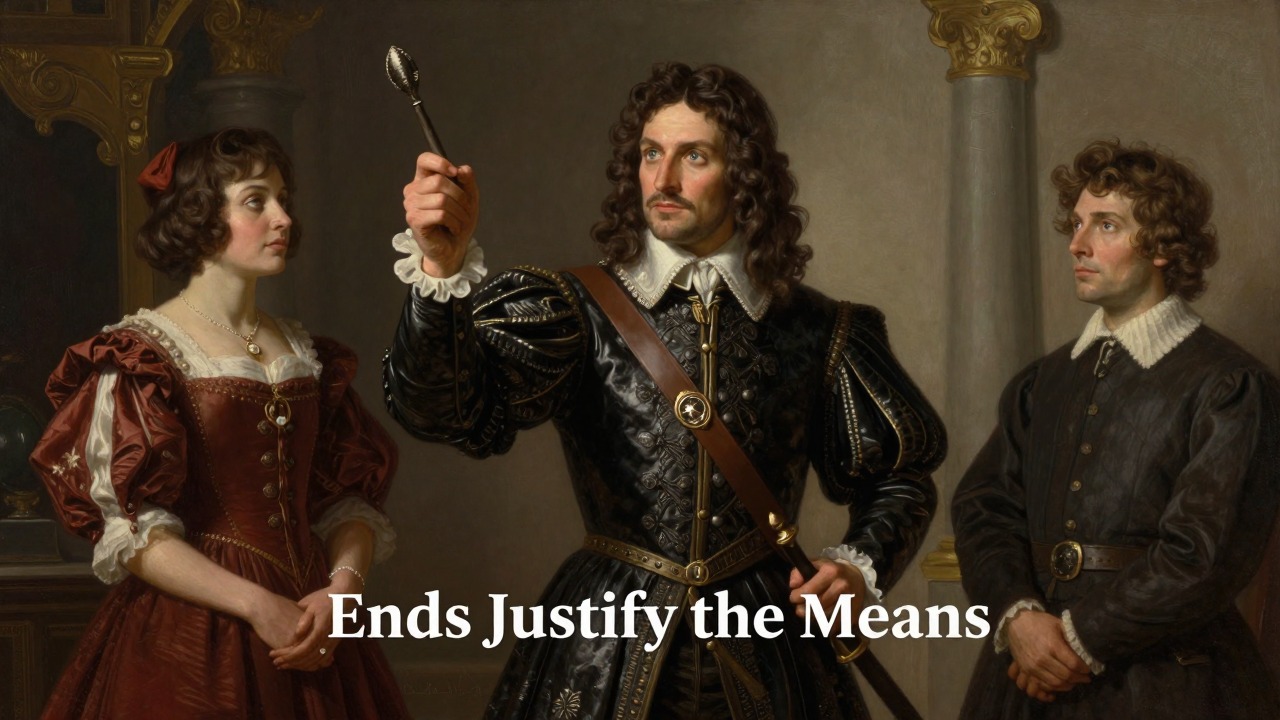
The Ends Justify the Means
The Minister's View
Cardinal Richelieu believes that the good of the state justifies any action, including assassination and deceit. He uses Milady as a tool, but he is also willing to discard her when she becomes a liability.
The Conflict with Honor
The cardinal's pragmatism clashes with the Musketeers' code of honor. They see him as a tyrant, while he sees them as obstacles to his plans.
A Necessary Evil
The novel presents the cardinal as a complex figure. He is ruthless, but he is also a brilliant statesman. His actions raise questions about the morality of political power.
during the siege of La Rochelle
throughout the story
throughout the story
