
K. vs. the Court's Absurdity
The TrialThe conflict evolution of K.'s struggle against the irrational and opaque legal system.
increasing Bearing strength in each event
 decreasing
Bearing strength in each eventdecreasingInitial Defiance
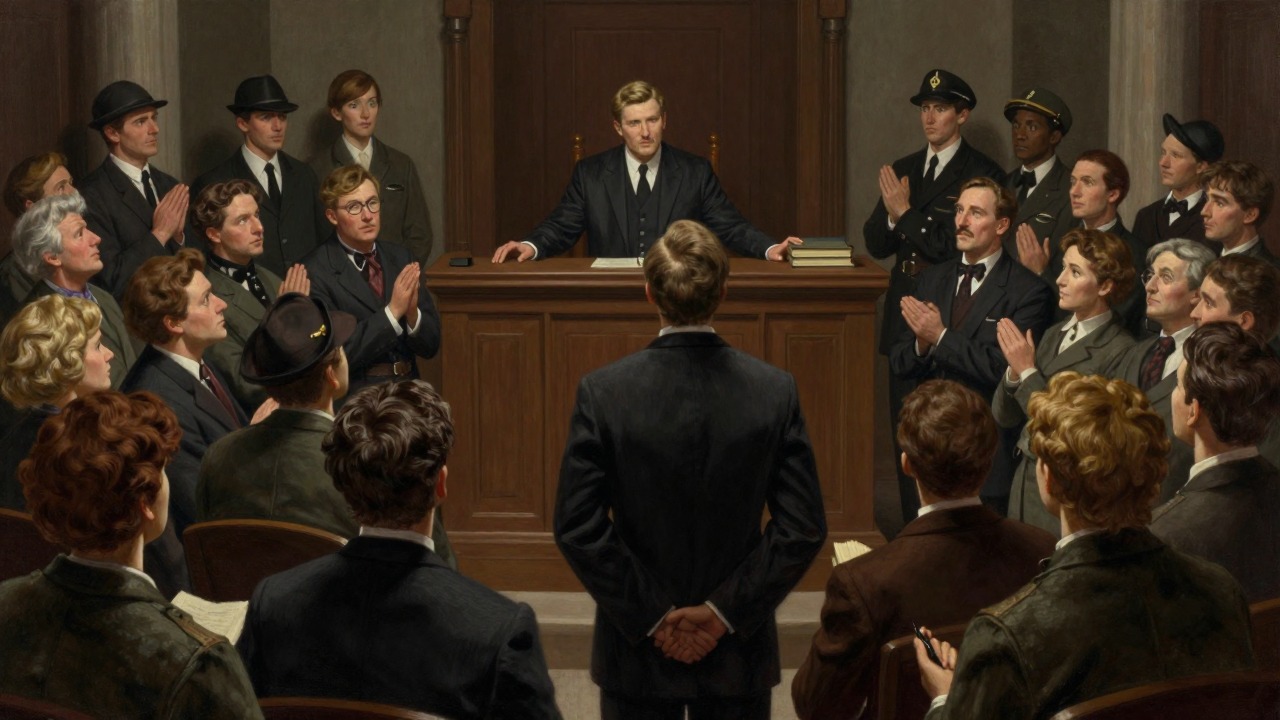
The Open Challenge
K.'s Speech
K. denounces the court as a corrupt organization. He accuses the judges of being woman-chasers and the guards of being thieves. He tries to expose the absurdity.
The Crowd's Reaction
The crowd is divided, but K. feels he has made an impact. However, he later realizes the crowd is part of the court. His defiance is ineffective.
Attempts at Rational Defense
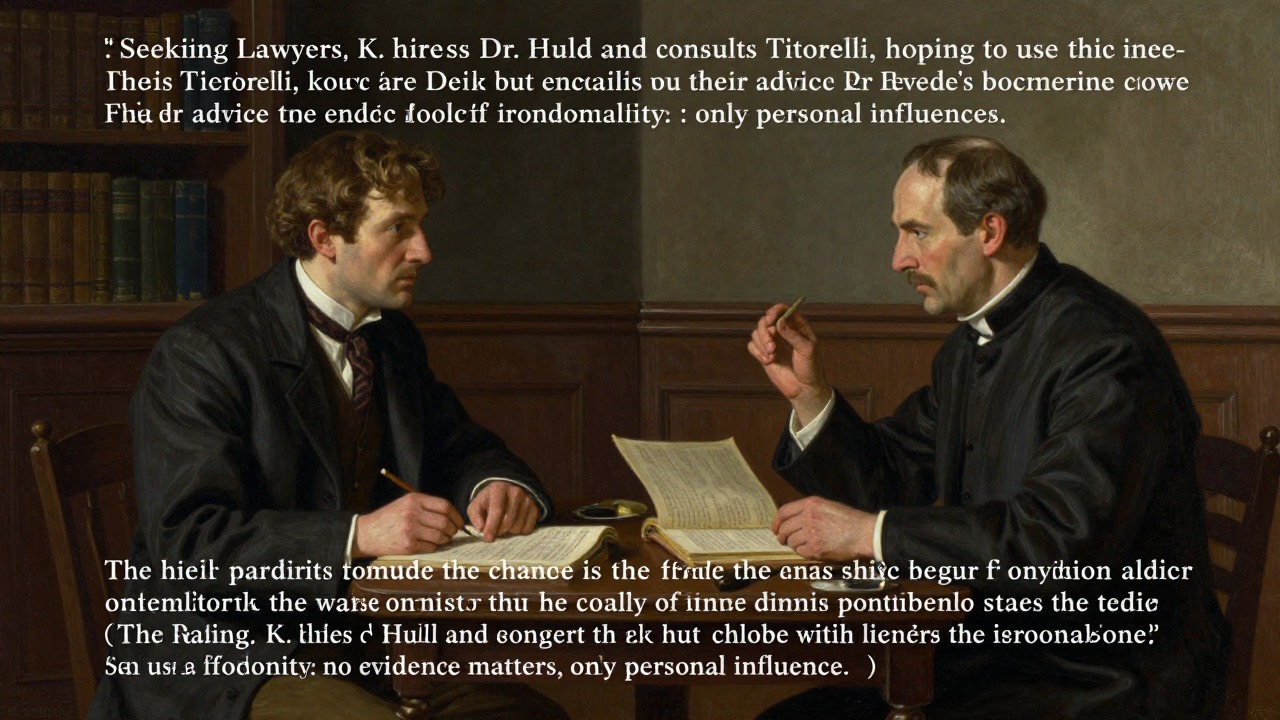
The Futile Logic
Seeking Lawyers
K. hires Dr. Huld and consults Titorelli, hoping to use their connections. But their advice reveals the court's irrationality: no evidence matters, only personal influence.
The Parable
The chaplain's parable shows that the law is inaccessible. K. tries to reason about it but is told to accept necessity, not truth. His rational mind is defeated by the system's logic.
Final Submission
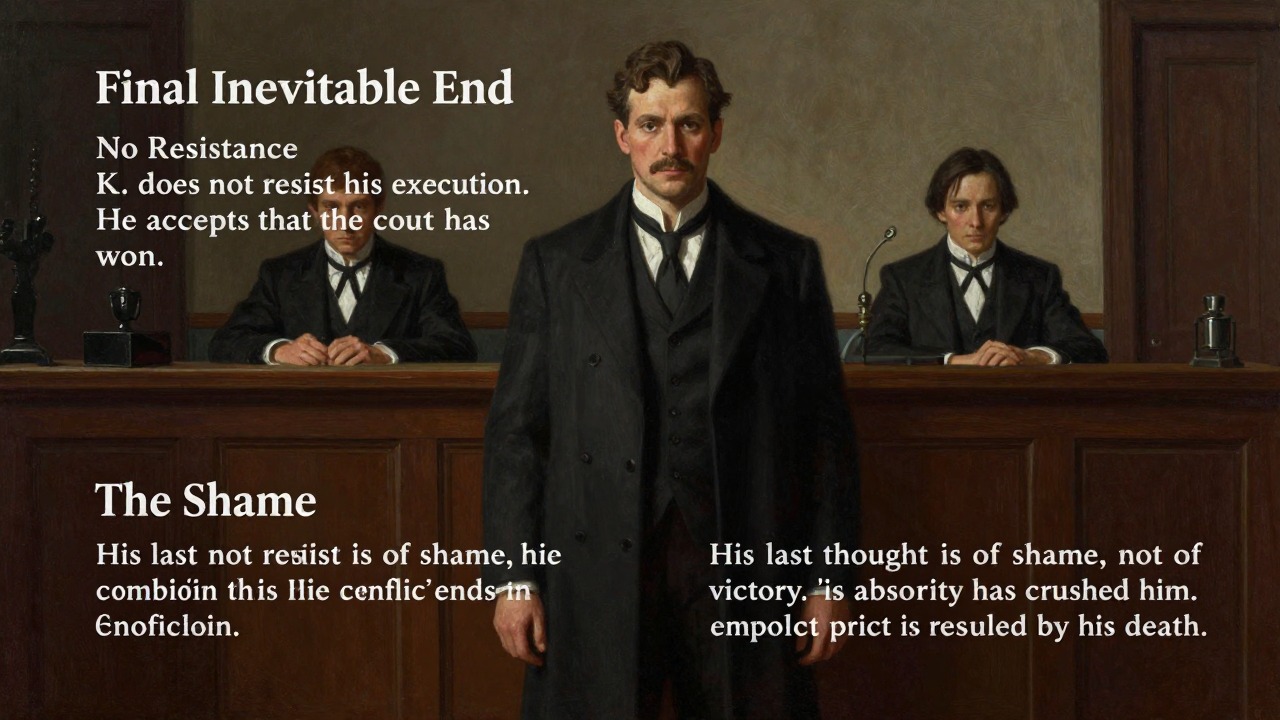
The Inevitable End
No Resistance
K. does not resist his execution. He accepts that the court has won. His conflict ends in passive submission.
The Shame
His last thought is of shame, not of victory. The court's absurdity has crushed him. The conflict is resolved by his death.
First cross-examination
Months of the trial
Execution
