The Mark of the Good Witch's Kiss
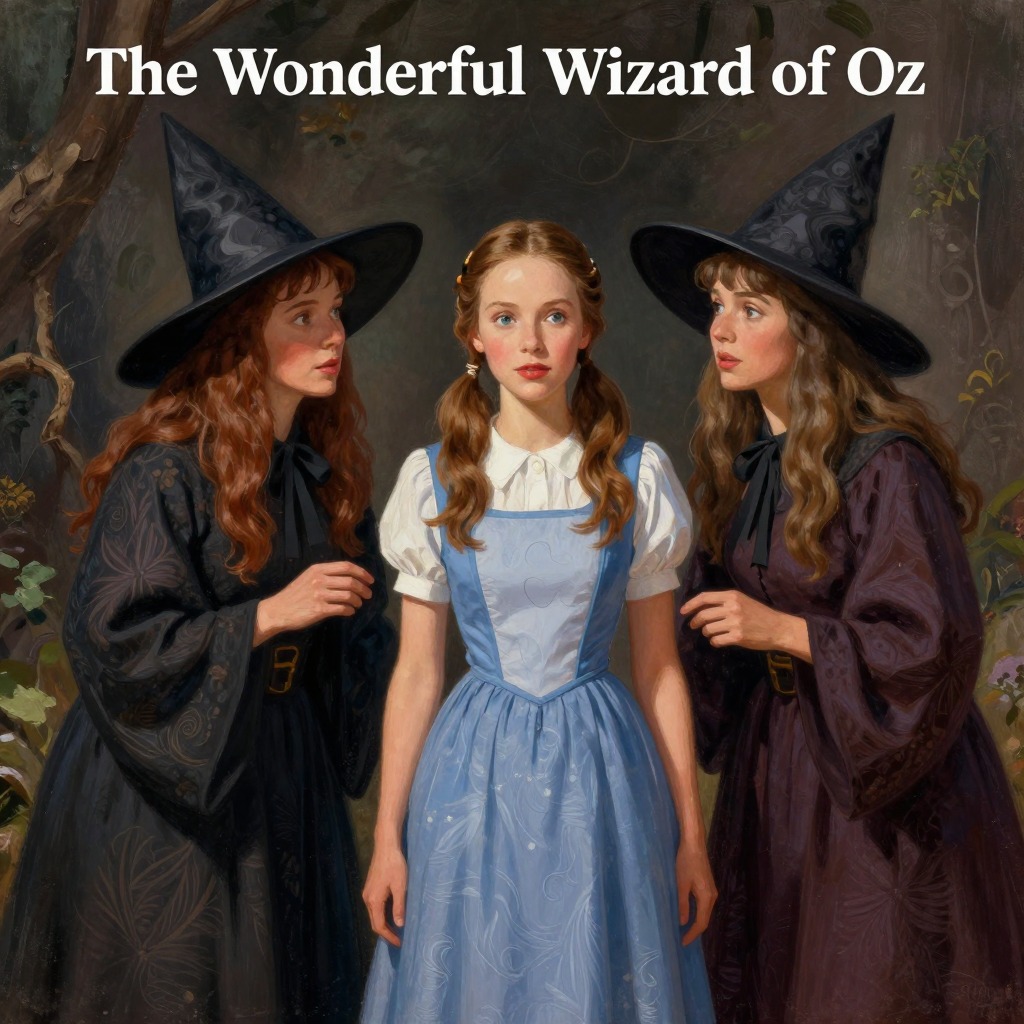
The Mark of the Good Witch's Kiss is a protective charm that the Witch of the North bestows upon Dorothy at the outset of her journey to the Emerald City. It is a visible, round, shining mark left on Dorothy's forehead where the Witch kissed her, and it serves as a tangible sign of the Good Witch's protection. The Witch of the North explains that no one will dare injure a person who has been kissed by her, establishing the mark as a form of magical immunity that will accompany Dorothy through the dangers of Oz.
Origin and Bestowal
The mark originates from the Witch of the North, a good witch who rules the land of the North in Oz. When Dorothy expresses her wish to return to Kansas, the Witch of the North consults her magic and determines that Dorothy must go to the Emerald City to seek help from the Great Oz. Unable to accompany the girl herself, the Witch instead gives Dorothy her kiss, which leaves a round, shining mark on her forehead. This mark is not merely symbolic; it carries real protective power, as the Witch assures Dorothy that no one will dare harm her while she bears it. The mark is thus a gift of goodwill and a practical safeguard for the perilous road ahead.
Protective Function and Narrative Role
The mark proves its worth most dramatically when Dorothy and her companions are captured by the Winged Monkeys, who have been commanded by the Wicked Witch of the West to destroy them. The leader of the Winged Monkeys sees the mark on Dorothy's forehead and immediately stops, ordering the others not to touch her. He explains that they dare not harm the little girl because she is protected by the Power of Good, which is greater than the Power of Evil. Instead of being torn apart or dropped onto rocks like her friends, Dorothy is carried gently to the Witch's castle and set down unharmed. The mark thus functions as a narrative device that preserves Dorothy from the worst fates that befall her companions, allowing her to continue as the story's central agent.
The Mark as a Symbol of Goodness
Beyond its protective function, the mark serves as a visual emblem of Dorothy's alignment with good magic. The Wicked Witch of the West, upon seeing the mark on Dorothy's forehead, is both surprised and worried, for she knows that neither she nor the Winged Monkeys can hurt the girl. The mark also signals to other characters that Dorothy is under the protection of a good witch, reinforcing her identity as a force for good in Oz. When Dorothy first meets the Witch of the North, the Witch identifies herself as a good witch and explains that there are only four witches in Oz, two good and two wicked. The mark thus becomes a kind of credential that marks Dorothy as a friend of the good witches and an enemy of the wicked ones.
The Mark's Connection to Dorothy's Journey
The mark is intimately tied to Dorothy's quest to return home. It is given to her as she sets out on the road to the Emerald City, and it accompanies her through every trial, from the deadly poppy field to the castle of the Wicked Witch. The mark's protection is not absolute—it does not prevent Dorothy from being captured or forced into labor—but it ensures that she is never killed or permanently harmed. In this way, the mark functions as a narrative guarantee that Dorothy will survive her adventures and ultimately achieve her goal. The mark also connects Dorothy to the larger magical system of Oz, where good and evil are clearly delineated and where the power of good magic can shield the innocent.
The Mark's Legacy and Thematic Significance
The mark is never explicitly removed or deactivated; it simply fades from the narrative after Dorothy's return to Kansas. Its thematic significance lies in its representation of the power of kindness and protection that good magic offers to the vulnerable. The Witch of the North, though not powerful enough to defeat the Wicked Witch of the East herself, can still offer Dorothy a form of protection that proves decisive. The mark thus embodies the idea that even small acts of kindness—a kiss, a blessing—can have lasting consequences in a world where good and evil are in constant struggle. It also reinforces the novel's moral framework, in which goodness is rewarded and evil is ultimately defeated.