I want mamma
The phrase "I want mamma" is the recurring cry of the child Myra Selfridge, first uttered on the iceberg after the sinking of the Titan, and it becomes a leitmotif of her separation from and reunion with her mother, while also marking the emotional bond she forms with John Rowland, her rescuer. The words appear at the most desperate moment of the shipwreck, when the child, alone with a stranger on a floating island of ice, voices the primal need that will drive the rest of the narrative. The phrase is not merely a child's complaint; it is the emotional hinge on which Rowland's transformation turns, and it echoes through the courtroom and the final reunion, binding the characters together across the Atlantic.
The Cry on the Iceberg
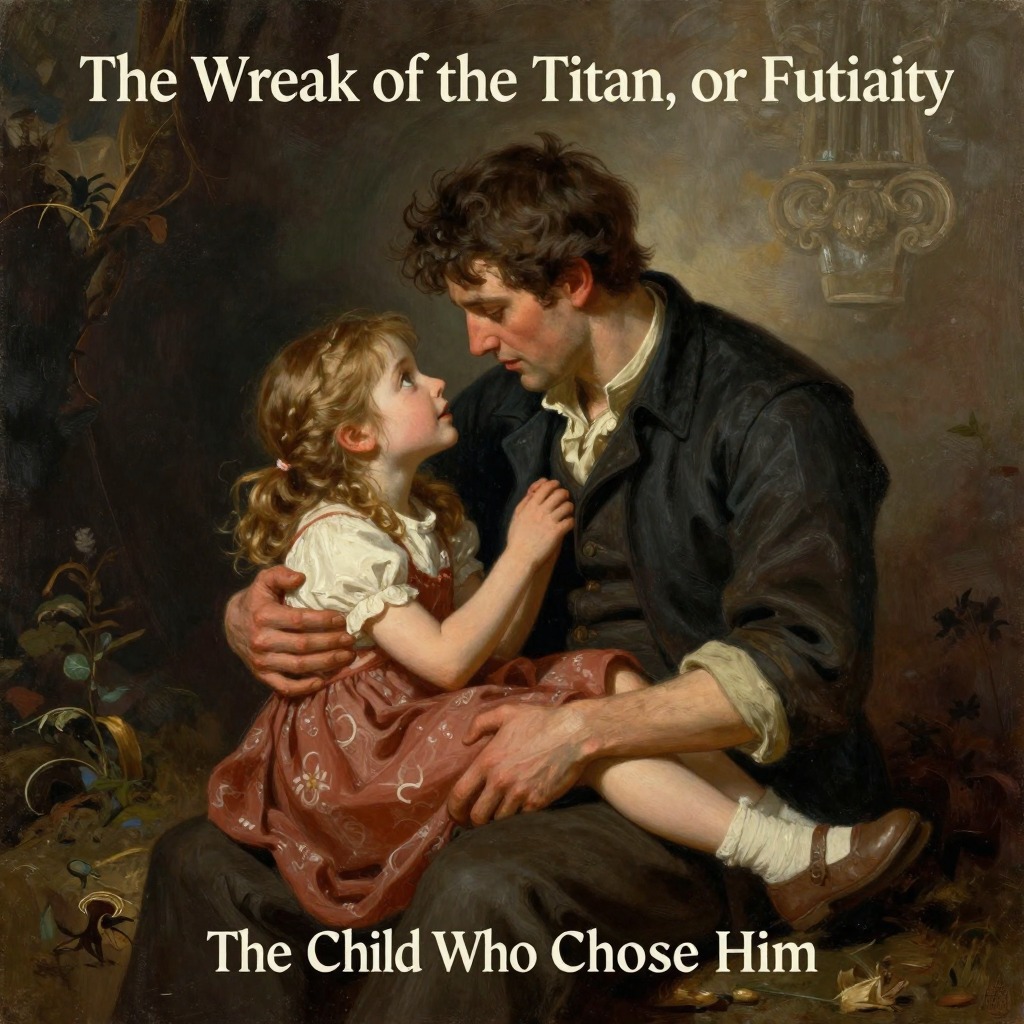
The phrase first appears in Chapter Seven, immediately after the Titan has crashed onto the iceberg and Rowland has crawled into the wrecked bridge structure with the little girl in his arms. The child, too frightened to cry during the fall, begins to wail as the reality of her situation sinks in. "I want mamma," she cries, and Rowland, weary and bitter, answers, "Hush, baby, hush; so do I --- more than Heaven, but I think our chances are about even now." This exchange is the first time the child's need is voiced, and it immediately connects her loss to Rowland's own unrequited love for her mother, Myra Selfridge. The phrase thus carries a double weight: it is the child's literal plea for her mother, and it is also Rowland's unspoken echo of his own longing for the same woman. The words hang in the cold air of the iceberg, and Rowland's response reveals that his own heart is as starved as the child's, though he hides it behind a bitter joke about their equal chances.
The cry recurs throughout the ordeal on the ice. When Rowland fights the polar bear, the child is the reason he does not hesitate to face almost certain death, and after the fight, as he wraps her in his coat and tends her wounds, she continues to cry for her mother. The phrase becomes a refrain of the three days of delirium that follow, as Rowland, feverish and half-delirious, feeds her bear-meat and dresses her wounds, all the while hearing her feeble wail. The child's need is the anchor that keeps him alive; even in his worst moments, he responds to her cry, rekindling the fire and cooking the meat. The phrase thus marks the beginning of the rescuer-survivor relationship between Rowland and the child, a bond that will outlast the iceberg and shape the rest of his life.
The Echo in the Courtroom
The phrase returns in the courtroom scene in Chapter Fifteen, where Myra Selfridge, the mother, testifies against Rowland, accusing him of kidnapping and mutilating her child. As she tells her story, the child, seated in her lap, catches sight of Rowland and begins to call out his nickname, "Dammy," which the mother tries to suppress. The mother's testimony is a litany of misunderstanding: she believes Rowland tried to murder the child at the taffrail, that he stole her from her bed, and that he tortured her, pointing to the wounds on the child's back as evidence. But the child's own voice, calling for Rowland, contradicts the mother's narrative. The phrase "I want mamma" is not spoken in the courtroom, but the child's cries for "Dammy" serve the same function, revealing where her true attachment lies. The magistrate, reading the morning paper, learns the truth of Rowland's heroism and discharges him, telling the mother that the man "has merely saved your child's life." The child's cry for Rowland, rather than for her mother, is the unspoken evidence that the mother's accusations are false.
The phrase also echoes in the final chapter, when Rowland, now a government clerk, receives a letter from Mrs. Selfridge. She writes that Myra "will not let me rest. She asks for you continually and cries at times." The child's persistent demand for Rowland, her "Dammy," is the reason the mother reaches out, and it is the reason Rowland goes to see her. The phrase "I want mamma" has been transformed: the child who once cried for her mother now cries for the man who saved her. The reunion is not between mother and child alone, but between the child and her rescuer, and the mother's letter is the bridge that brings them together.
The Transformation of the Cry
The phrase "I want mamma" is not static; it changes meaning as the story progresses. On the iceberg, it is a cry of loss and fear, a child's instinctive call for the one person who can comfort her. In the courtroom, it is replaced by the child's cries for "Dammy," showing that her emotional center has shifted. In the final letter, it is the mother who reports the child's longing for Rowland, and the phrase becomes a testament to the bond that has formed between them. The cry that began as a plea for a mother ends as a plea for a rescuer, and in that transformation, the novel traces the arc of Rowland's redemption. The child's need for her mother is never fully satisfied, but it is redirected, and Rowland, who once lost the mother, gains the child. The phrase thus encapsulates the novel's central theme: that love, even when it fails, can be reborn in another form.
The phrase also serves as a marker of Rowland's own emotional journey. When he answers the child's cry with "so do I," he acknowledges his own longing for Myra Selfridge, the woman who rejected him. The child's cry gives voice to his own unspoken desire, and in caring for her, he begins to heal the wound of his failed love. The phrase "I want mamma" is thus not only the child's cry but also Rowland's, and its recurrence throughout the novel ties together the themes of loss, love, and redemption.