The honest unbelief
The honest unbelief is the phrase John Rowland uses to describe his principled refusal to feign religious faith, a stance that defines his atheism, drives his conflict with Myra Selfridge, and ultimately gives way to a desperate prayer on the iceberg, marking the central religious and existential tension of the novella.
Origin and Definition
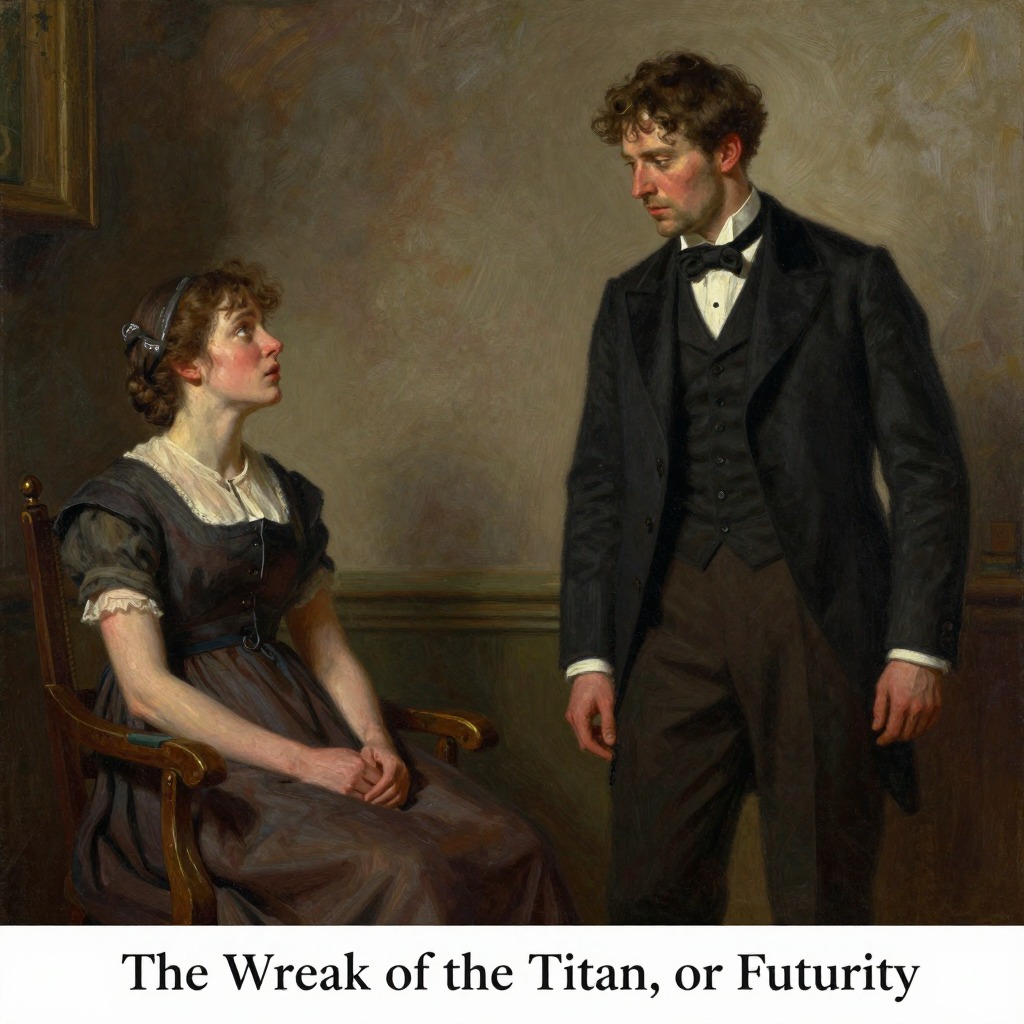
The phrase emerges during Rowland's confrontation with Myra Gaunt (later Myra Selfridge) in their past relationship. When she tried to convert him, Rowland declared that, much as he valued her good opinion, he would not be a hypocrite to gain it, and that he would be honest with himself and others, and express his honest unbelief. He rejected the idea that one could be honest without God's help, a notion she found incomprehensible. This declaration came after he had already offended her by denying the existence of God to her face, a professing Christian. The honest unbelief thus represents Rowland's refusal to perform religious conviction for social or romantic advantage, even at the cost of losing the woman he loved.
Philosophical Foundations
Rowland's atheism is not casual but rests on a systematic philosophical framework. He affirms to himself the integrity of cause and effect, which he considers enough to explain the universe and himself. He invokes the survival of the fittest and the law of the correlation of energy, questioning where in the scheme of ultimate balance his wasted wealth of love will be gathered, weighed, and credited. He denies the existence of a merciful, kind, loving, just God, arguing that the qualities of mercy, goodness, and justice play no part in the governing scheme of the world. He dismisses prayer as a physiological experiment, asking whether those who feel spiritual uplift after praying would feel equally tranquil if they repeated the multiplication table or boxed the compass. He also attacks organized religion, claiming that the core of all religions is not belief in God but the cowardly human fear of the unknown, which impels the savage mother to throw her babe to a crocodile and the civilized man to endow churches, keeping in existence a class of soothsayers, medicine-men, priests, and clergymen living on the hopes and fears they excite.
The Prayer on the Iceberg
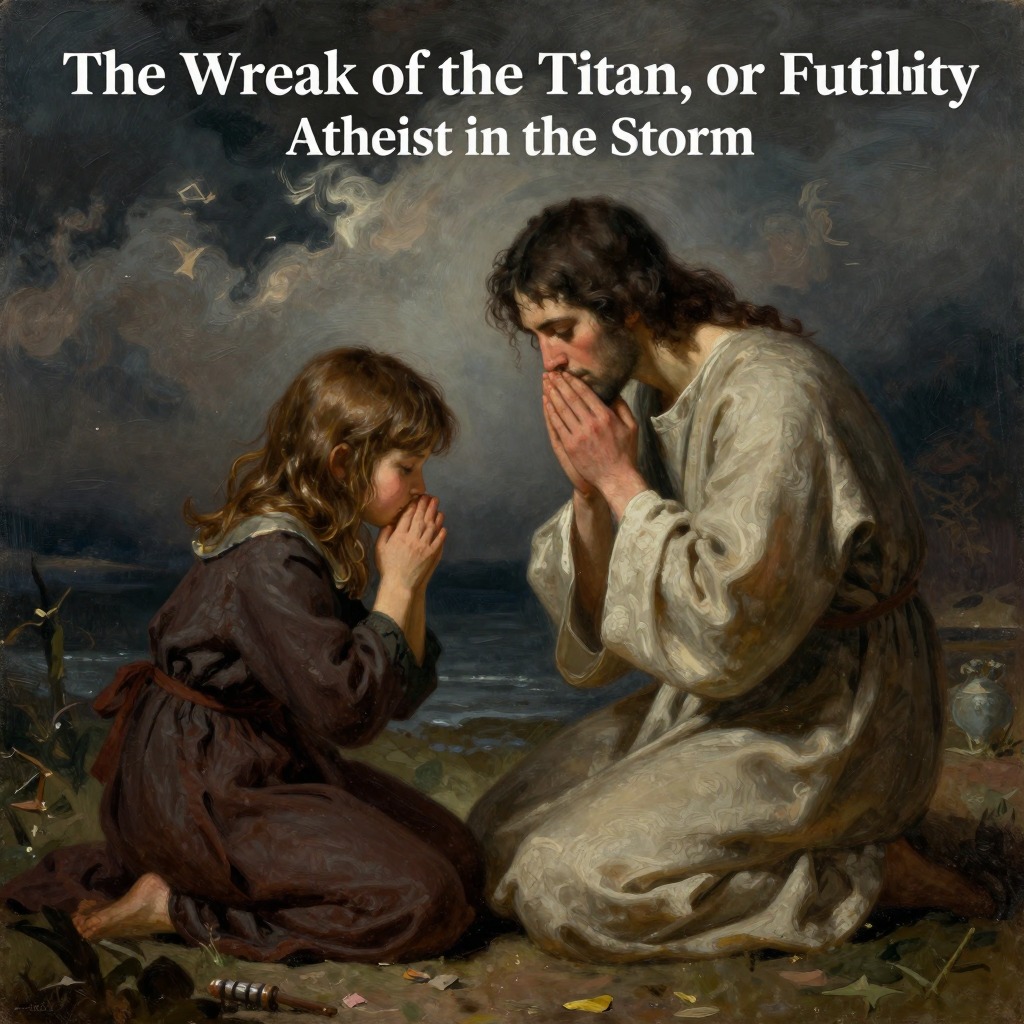
Despite his lifelong atheism, Rowland reaches a breaking point on the iceberg. Alone with the sleeping child Myra, a dead polar bear, and the vast, empty horizon, he walks softly to the boat and looks at the little one for a moment. Then, raising his head, he whispers: "For you, Myra." Sinking to his knees, the atheist lifts his eyes to the heavens and, with his feeble voice and the fervor born of helplessness, prays to the God that he denied. He begs for the life of the waif in his care, for the safety of the mother so needful to the little one, and for courage and strength to do his part and bring them together. Beyond the appeal for help in the service of others, not one word or expressed thought of his prayer includes himself as a beneficiary. As he rises to his feet, the flying-jib of a bark appears around the corner of ice, and a moment later the whole moonlit fabric comes into view, not half a mile away. Rowland later mutters to himself that the bark was there half a mile back in this wind before he thought of praying, and asks whether that prayer was answered and whether the mother is safe. The honest unbelief is thus not abandoned but momentarily suspended in an act of pure, selfless supplication for another's sake.
Consequences and Thematic Significance
The honest unbelief has profound consequences for Rowland's life. It cost him Myra Gaunt's affection and contributed to his social disgrace and descent into alcoholism. Yet it also defines his integrity: he refuses the captain's bribe of one hundred pounds for silence about the collision with the Royal Age, declaring that he will speak of this wholesale murder at the first opportunity. His atheism is part of his broader refusal to be bought or intimidated, a stance that impresses even his enemies. After his rescue and recovery, Rowland achieves sobriety and a government position, remarking that his future is his own and that he has merely suffered from a mistaken estimate of the importance of women and whisky. The honest unbelief, however, remains unresolved: the narrative does not show him embracing faith, but it does show him acting with a selflessness that religious characters in the book fail to match. The phrase thus encapsulates the novella's central religious paradox: the atheist who denies God nevertheless prays, and the believers who profess God fail to show the same courage or compassion.