Titan's full-speed rule
The Titan's full-speed rule was the operational doctrine of the steamship company that owned the Titan, a policy that commanded the vessel to steam at full speed in fog, storm, and sunshine, on the Northern Lane Route, winter and summer. The rule was not a secret or a captain's discretion; it was announced by the company as applying specifically to the Titan, and it was thoroughly believed in by some captains, though not yet openly followed by others. The rule was grounded in the company's confidence in the ship's absolute superiority to other craft, a confidence that bordered on technological hubris.
Rationale and Justification
The company advanced four specific reasons for the full-speed rule, each based on the Titan's immense size and strength. First, if another craft should strike the Titan, the force of the impact would be distributed over a larger area if the Titan had full headway, and the brunt of the damage would be borne by the other vessel. Second, if the Titan was the aggressor, she would certainly destroy the other craft, even at half-speed, and perhaps damage her own bows; while at full speed, she would cut the other ship in two with no more damage to herself than a paintbrush could remedy. In either case, as the lesser of two evils, it was best that the smaller hull should suffer. A third reason was that, at full speed, the ship could be more easily steered out of danger. A fourth, and particularly telling, reason was that in case of an end-on collision with an iceberg—the only thing afloat that she could not conquer—her bows would be crushed in but a few feet further at full than at half speed, and at the most three compartments would be flooded, which would not matter with six more to spare. This reasoning assumed that the ship's watertight compartments, which could be closed in half a minute and would automatically close in the presence of water, would keep her afloat even with nine compartments flooded. The Titan was considered practically unsinkable.
The Ship's Design and the Rule's Context
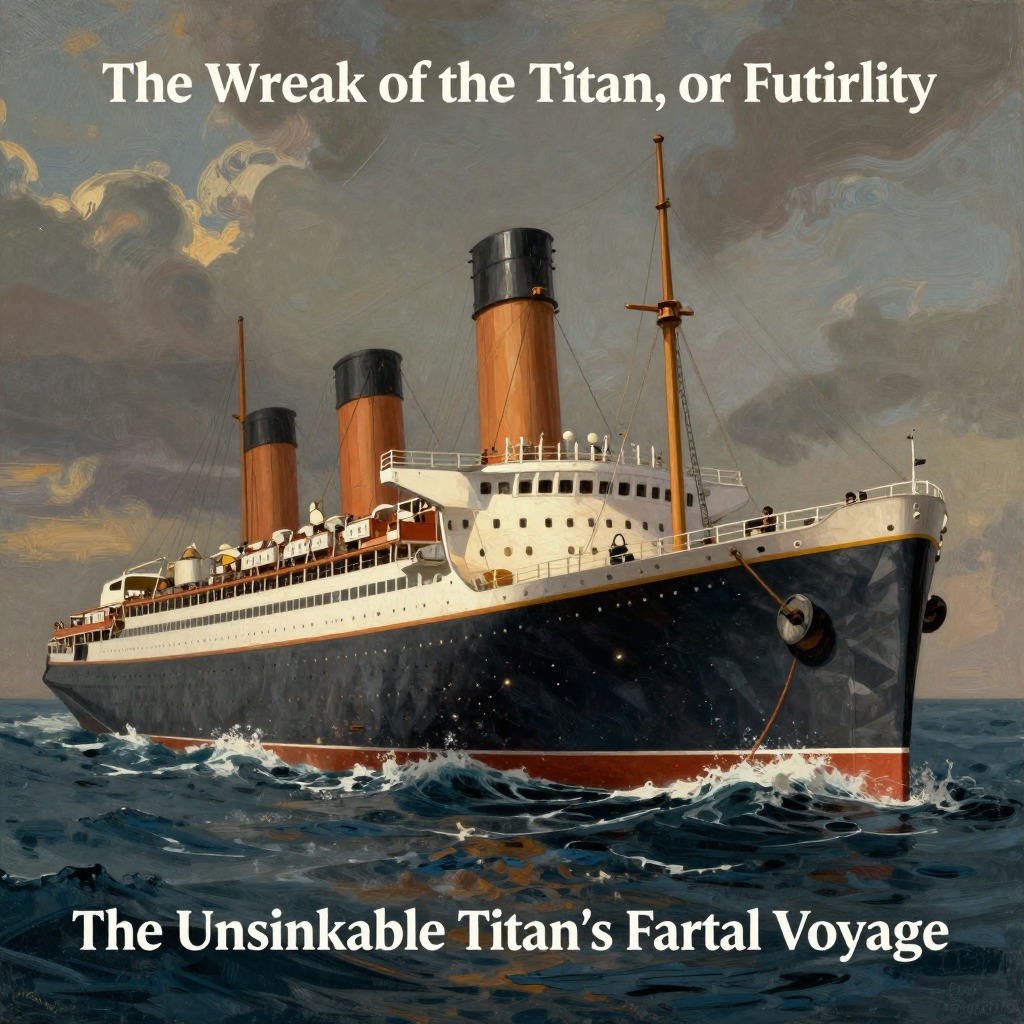
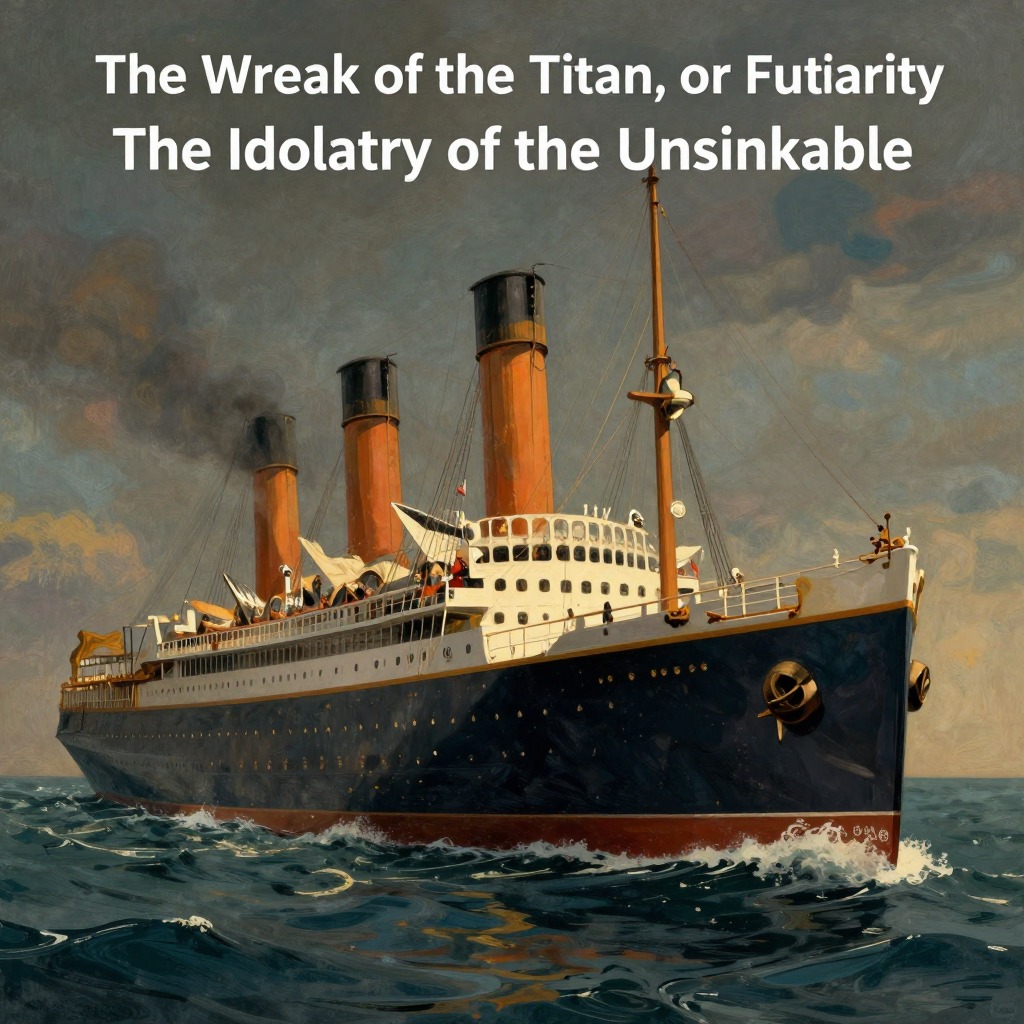
The Titan was the largest craft afloat and the greatest of the works of men, eight hundred feet long, of seventy thousand tons displacement, seventy-five thousand horse-power, and capable of twenty-five knots an hour. She was built of steel throughout, for passenger traffic only, and carried no combustible cargo. Her designers had given her the sharp dead-rise of a steam yacht, which improved her behavior in a seaway. She was a floating city, containing within her steel walls all that tends to minimize the dangers and discomforts of the Atlantic voyage. The full-speed rule was the logical extension of this engineering confidence: the ship was built to be invincible, and the rule was the operational expression of that invincibility. The company expected that the Titan would land her passengers three thousand miles away with the promptitude and regularity of a railway train, and an unofficial rumor among the two thousand passengers who had embarked at New York was that an effort would be made to lower the time between Sandy Hook and Daunt's Rock to the five-day limit.
The Rule in Action: Collision and Catastrophe
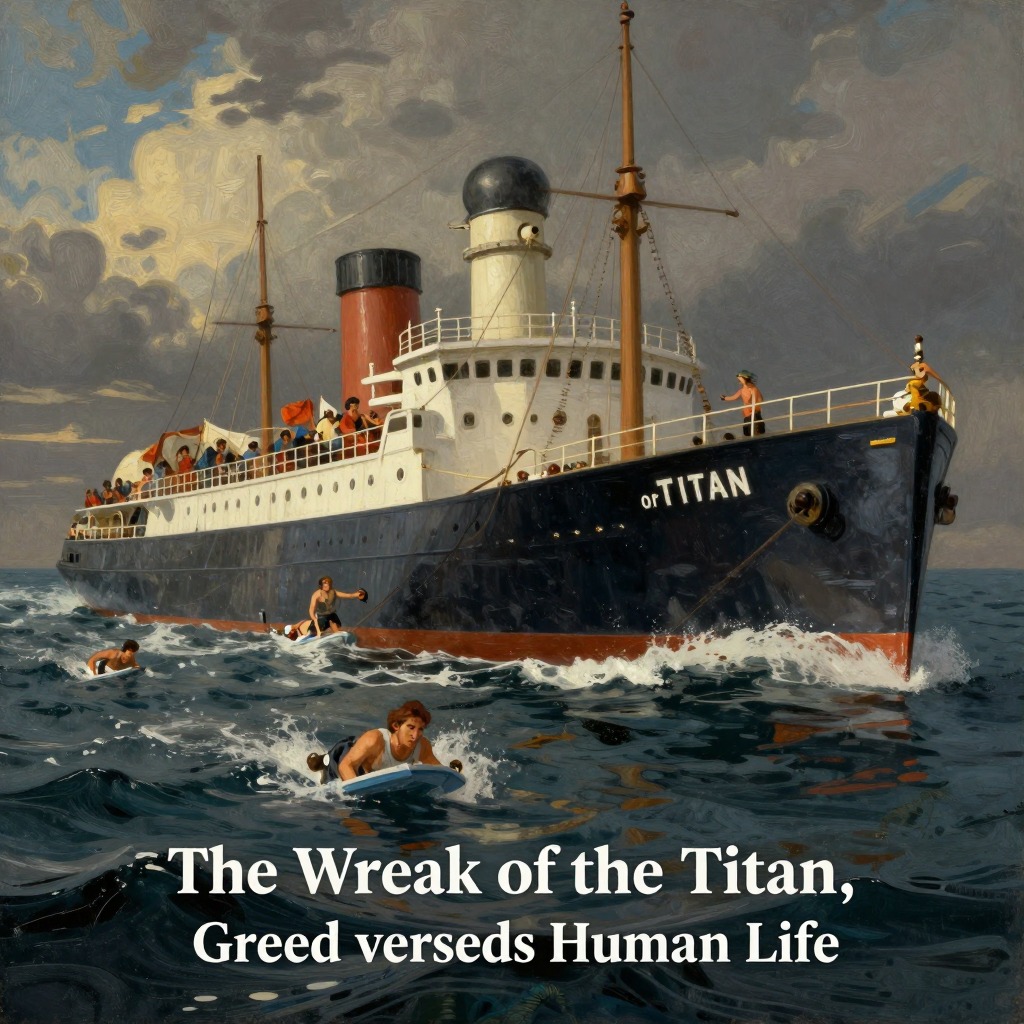
The rule was put into practice on the night of the wreck. The Titan had plunged into a fog-bank in the afternoon, and by midnight a vicious half-gale was blowing from the northeast. The head sea dealt the ship successive blows, and a cloud of thick spray reached the crow's-nest and battered the pilot-house windows. Yet, into the gray, ever-receding wall ahead, with two deck officers and three lookouts straining sight and hearing to the utmost, the great racer was charging with undiminished speed. When the lookout in the crow's-nest sighted an iceberg directly ahead, it was too late. The first officer sprang to the engine-room telegraph and turned the lever, but in five seconds the bow of the Titan began to lift, and the ship hurled herself onto the ice. The impact was not against a perpendicular wall but a low beach, and the Titan rose out of the sea, higher and higher, until the propellers in the stern were half exposed, then heeled, overbalanced, and crashed down on her side. The holding-down bolts of twelve boilers and three triple-expansion engines snapped, and the giant masses of steel and iron punctured the sides of the ship, filling the engine and boiler-rooms with scalding steam. The Titan moved slowly backward and launched herself into the sea, where she floated low on her side, a dying monster. The holocaust was complete; the invincible Titan, with nearly all of her people, was beneath the surface of the sea.
Legal and Moral Consequences
The full-speed rule became a central issue in the legal proceedings that followed. John Rowland, the sailor who had been drugged and placed on lookout, argued that the cause of the wreck was full speed in a fog, and that all hands on lookout could not have seen the berg. He pointed out that the underwriters knew the speed and took the risk, and that they should pay. The rule was also the subject of Rowland's bitter condemnation. In his delirium on the iceberg, he cursed the "money-grabbing wretches" who ran their boats in the Northern Lane at full speed through fog, and he railed against their watertight compartments and their logging of the lookouts. The rule was not merely a technical policy; it was a moral choice that prioritized corporate profit and schedule over human life. The company's decision to steam at full speed in fog was a direct violation of standard maritime practice, and it was this rule, more than any individual error, that caused the disaster. The rule's legacy was one of destruction, and it served as a damning indictment of the industrial and corporate ethos that placed speed and profit above all else.