
What Are the Hardest Languages to Learn?
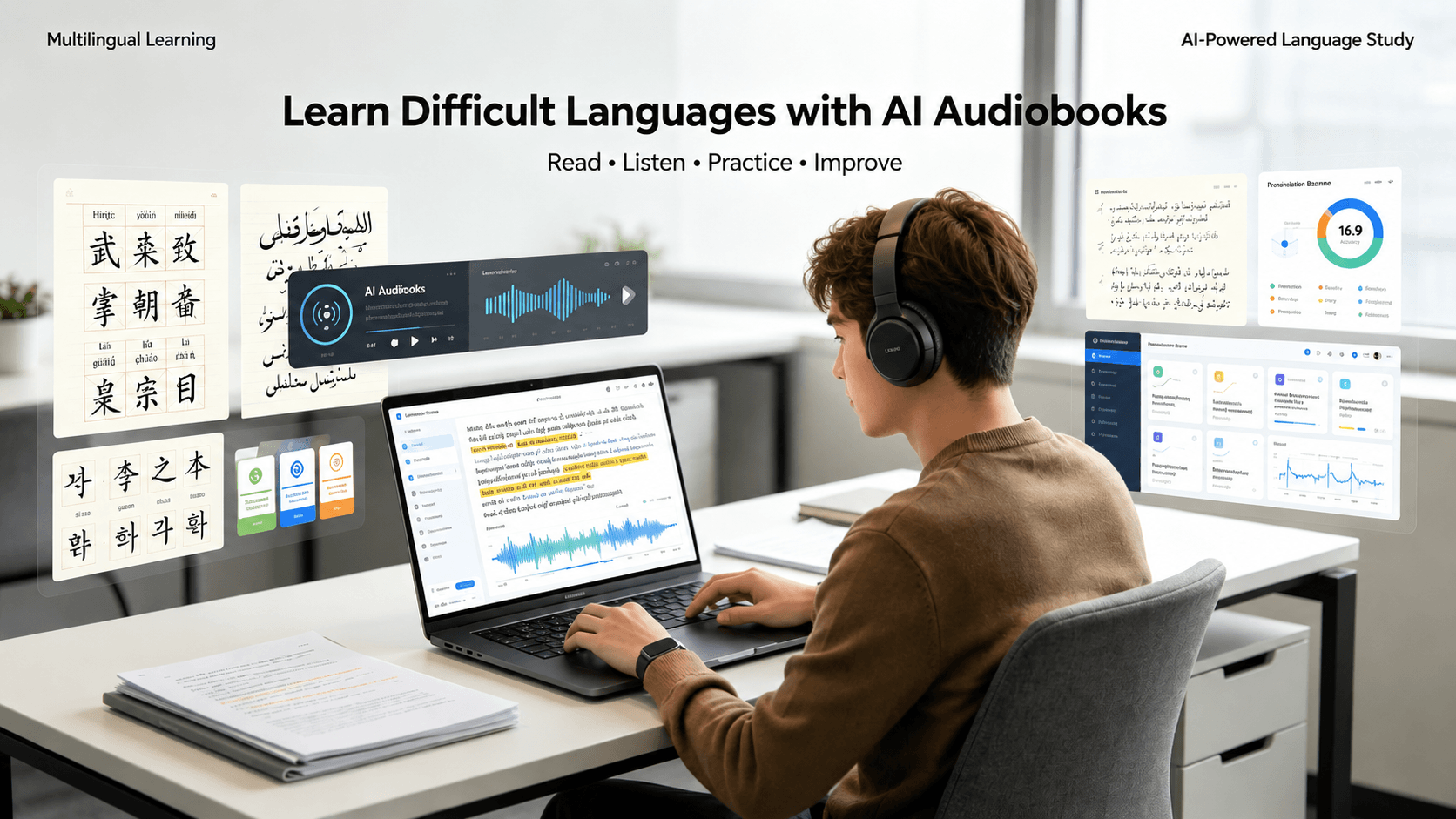
Chinese, Arabic, Japanese, and Korean are often called some of the hardest languages to learn. But what is the hardest language to learn? It is hard to give one answer. It depends on the language you speak first, your learning goals, and how you study.For many English speakers, these four languages are among the hardest languages to learn for English speakers. The U.S. Department of State puts them in its “super hard” group. Their writing systems are different, their sounds may feel strange, and their grammar and sentence order are not like English.But hard does not mean impossible. Many learners have trouble when they move too quickly from simple textbook lessons to fast, natural speech. They may also have a useful PDF or article, but no audio to listen to.Readify can make this transition easier. Its AI narration turns PDFs, webpages, ebooks, and other written material into natural-sounding audio - without forcing the same product keywords into every paragraph.Learners can read and listen at the same time. They can slow down the audio and play difficult sentences again. Have a challenging article or study PDF ready? Try Readify for free and listen while you follow the text.
What Are the Hardest Languages to Learn?
Before choosing a language, many people want to know which ones are likely to require the most time and effort.The answer is different for each person. A language may be difficult because it has a new writing system, unfamiliar pronunciation, complex grammar, or a very different sentence structure.
Chinese
When people ask, “What’s the hardest language to learn?” Chinese is usually one of the first answers they think of.Instead of an alphabet, Chinese uses characters. Learners need to remember the shape, sound, and meaning of every character. Mandarin also has tones. When the tone changes, a similar sound may have a completely different meaning.Also difficult are real conversations. A sentence may look easy in a textbook, but it can sound confusing when a native speaker says it quickly. For more practice, learners can use free Mandarin pronunciation, character, vocabulary, and grammar resources.With Readify, learners can look at Chinese characters and listen to them at the same time. If the narration feels too fast, they can reduce the speed and replay the passage.
Arabic
Arabic is written from right to left, which may feel strange for English speakers at first. A letter can also change its shape depending on where it is placed in a word.Hard for beginners are some Arabic sounds because they do not exist in English. Arabic also has different forms. Modern Standard Arabic is mostly used in formal writing, while local dialects are more common in everyday conversations. For extra reading and listening practice, learners can visit the Al Jazeera Learning Arabic website.With Readify, learners can listen to Arabic text while following the words. If one part is difficult, they can change the playback speed and listen to it again.
Japanese
Japanese has three writing systems: hiragana, katakana, and kanji. Learners need to study all three. Kanji is especially difficult because one character can have more than one reading.Japanese grammar is different from English too. Important information may come at the end of a sentence, and there are several levels of polite speech. The Japan Foundation’s Minato Japanese e-learning platform has courses and self-study resources for structured practice.Readify can turn Japanese articles, stories, and notes into an AI audiobook. Reading and listening together can make pronunciation and sentence order easier to follow.
Korean
Korean uses Hangul. The rules of Hangul are quite clear, but learners still need time to read it easily. If the narration feels too fast, they can reduce the speed and replay the passage.Word endings may also change because of tense, politeness, and the situation.Spoken Korean can also sound very fast. Beginners may not know where one word ends and another begins. The Online King Sejong Institute offers structured Korean courses for extra study.Readify allows learners to slow down Korean audio and repeat sentences. This can help them notice the language’s sounds and rhythm.

Other Difficult Languages
Depending on your first language, Russian, Finnish, Hungarian, Polish, Thai, and Vietnamese may also be difficult languages to learn. They can be hard because of their writing, pronunciation, grammar, or vocabulary.Your own language background matters as well. A language that is difficult for an English speaker might be easier for someone whose first language has similar grammar or writing.In other words, difficulty is personal: it depends on what a learner already knows.
What Is the Hardest Language to Learn for English Speakers?
A language often feels harder when it has little in common with English. Chinese has characters and tones. Arabic uses a different writing direction and unfamiliar sounds. Japanese has three writing systems. Korean uses a different sentence order and grammar.That combination of differences makes these languages especially demanding for many English speakers. Even so, clear audio, regular reading, and steady practice can make them more manageable over time.
Why Are These Languages Difficult?
The languages learners find most demanding often introduce several unfamiliar features at once.
New Writing and Pronunciation
Learners may need to study new letters, characters, spelling rules, tones, and sounds. Only seeing a word may not tell them how it should sound.An audio reading tool lets learners see and hear a word at the same time.This can make the link between writing and pronunciation clearer. People comparing tools may also want to review Speechify, NaturalReader, and ElevenReader.
Complex Sentences
Long sentences can feel tiring. Learners have to think about new words, grammar, word order, and meaning at the same time. Reading and listening together can give them another way to understand the sentence.
Fast Native Speech
Native speakers connect words, drop sounds, and change their tone. To a beginner, a whole sentence may sound like one long word.Readify has playback speed control. Learners can begin slowly and increase the speed when they feel ready.
Written Materials Without Audio
Many useful materials do not include recordings, such as:
- PDF textbooks
- Online articles
- Research papers
- Work documents
- Word files
- Ebooks
- Study notes
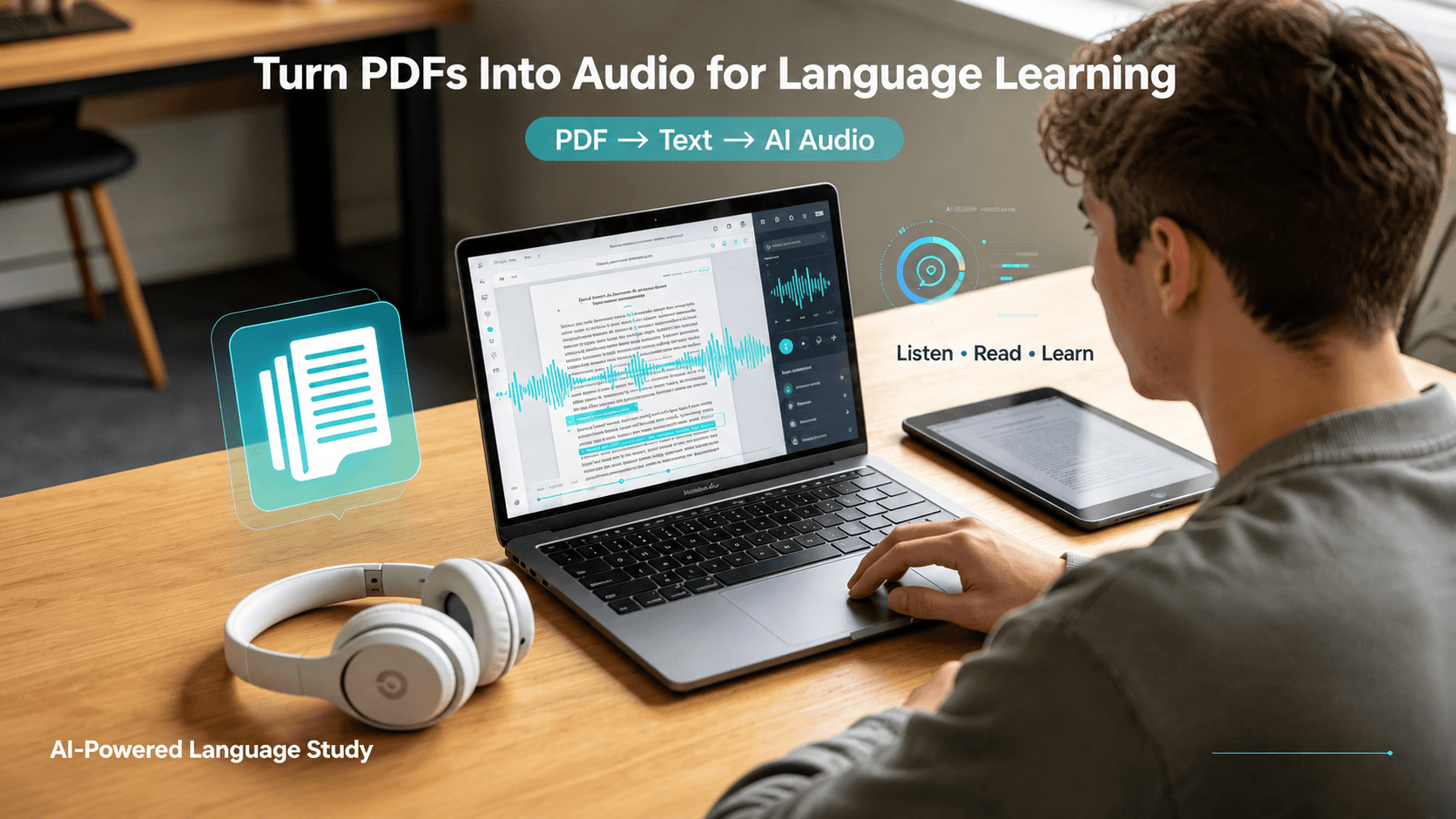
Project Gutenberg also provides public-domain ebooks in different languages. With Readify, the same workflow can turn a PDF, ebook, webpage, or set of notes into listening practice.
How Readify Makes Difficult Text Easier
Textbook exercises are useful, but they are often short. Readify lets learners use real articles, PDFs, ebooks, and their own notes for reading and listening practice.
Turn Text into an AI Audiobook
Readify can add AI narration to articles, PDFs, webpages, ebooks, and documents. Learners do not have to find materials that already include audio.For example, a student could turn an article from NHK News Web Easy into audio. Another learner might listen to a Chinese story or a work document. This gives learners a simple way to create listening material from content they already want or need to read.
Read and Listen Together
Learners can:
- See how a word is written
- Hear its pronunciation
- Notice pauses and sentence stress
- Follow sentence structure
- Remember new words
- Understand longer paragraphs
This approach can support learners of Chinese, Arabic, Japanese, Korean, and many other languages.
Change the Playback Speed
Beginners may need slower audio, while experienced learners may prefer normal speed. Readify lets users choose a suitable speed and replay one sentence several times.
Get Help with Difficult Paragraphs
Readify’s AI support can explain a long sentence, an unfamiliar expression, or the main idea of a paragraph. It does not replace a teacher or a full course. It is simply extra help when a learner gets stuck.
Listen Across Different Formats
Readify brings PDFs, ebooks, Word documents, and online articles into one listening experience, so learners do not need a separate tool for each format.The browser option also makes it easy to listen while studying at home, working, commuting, or traveling.
Who Can Use Readify?
Independent learners can turn their own books and notes into listening practice. International students can listen to textbooks and class materials. Immigrants and international workers may use it for documents and local information.It may also help people who feel tired after reading for a long time. Busy professionals can listen during a commute, a walk, or a short break. People who want to improve reading and listening together can use the same text to practice both skills.
How to Use Readify to Learn a Difficult Language
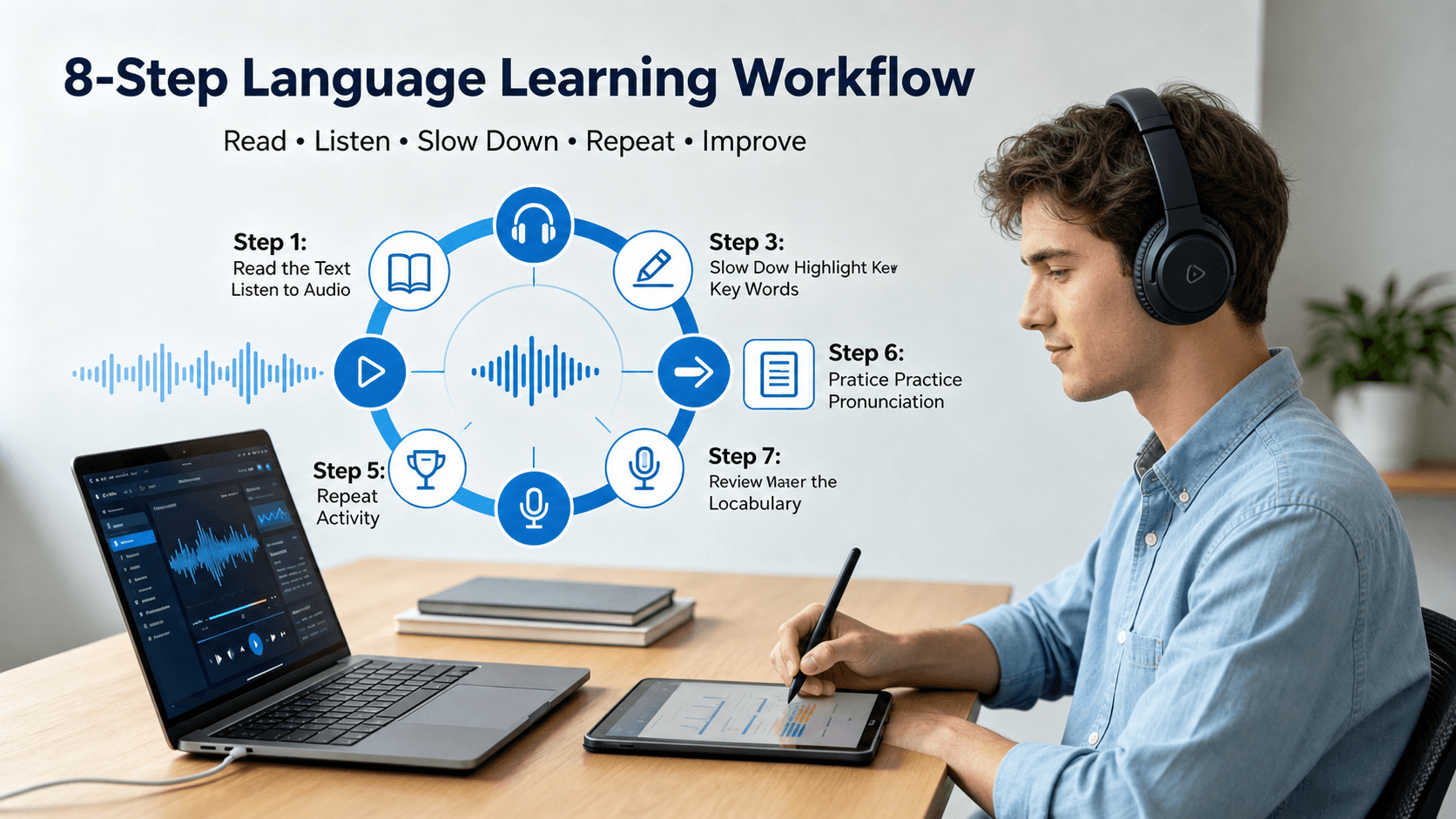
Step 1: Choose a Short Text
Choose an article, story, PDF, or ebook. It should be a little difficult, but you should still understand most of it.
Step 2: Read It Quickly
First, look at the title, headings, and opening sentences. Try to find the main idea, and do not stop whenever you see a new word.
Step 3: Open It in Readify
Upload or open your PDF, webpage, ebook, Word file, or other material in Readify. The format changes, but the study routine stays the same: read, listen, slow down, and repeat.
Step 4: Read and Listen Together
Follow the words while listening to the audio. Pay attention to pronunciation, pauses, and how each sentence ends.
Step 5: Slow Down Difficult Parts
If one part is difficult, lower the playback speed. Listen to the sentence a few more times.
Step 6: Repeat the Sentence
After hearing the audio, say the sentence yourself. Try to copy its pronunciation and rhythm.
Step 7: Use AI Support
If a paragraph is confusing, use Readify’s AI support to help explain it.
Step 8: Listen Without Reading
Once you understand the text, listen again without looking at it. This checks whether you can understand it through listening alone.
Are the Hardest Languages Impossible to Learn?
No language is impossible, although some need more time. Progress may feel slow when the writing, sounds, and grammar are all new.Many learners understand written words but struggle with real speech. Readify can add audio to their study materials, allowing them to read and listen together, reduce the playback speed, and repeat difficult sentences.Readify cannot replace teachers, lessons, or real conversations. It can simply make daily practice easier.
Conclusion
Chinese, Arabic, Japanese, and Korean are some of the hardest languages to learn, especially for English speakers. Difficult as they are, many people still learn them successfully.There is no clear answer to what is the hardest language to learn. Your first language, free time, learning goals, and study method can all change the answer.Readify turns PDFs, webpages, ebooks, and other written material into audio in one consistent experience. Instead of switching among format-specific tools, learners can focus on listening, comprehension, and repetition.You can begin with a text you already have: listen carefully, slow down difficult passages, and improve one section at a time. Try Readify for free to turn your next reading assignment into listening practice.
Frequently Asked Questions
What Is the Hardest Language to Learn?
There is no single answer. Chinese, Arabic, Japanese, and Korean are often seen as some of the hardest because their writing, pronunciation, grammar, and sentence structure are different.
What’s the Hardest Language to Learn for English Speakers?
Chinese, Arabic, Japanese, and Korean are common answers. Each language has its own problems, such as characters, tones, unfamiliar sounds, or grammar that is different from English.
What Are the Hardest Languages to Learn?
It depends on your first language. Chinese, Arabic, Japanese, Korean, Russian, Finnish, and Hungarian are often listed as some of the most difficult languages to learn.
Can AI Audiobooks Help with Difficult Languages?
Yes. AI audiobooks connect written words with pronunciation. Readify lets users read and listen together, slow down the audio, and repeat sentences.
Can Readify Add Audio to a PDF?
Yes. Readify can convert the written content in a PDF into spoken audio, so users can listen while following the page.
Can I Slow Down the Audio?
Yes. Users can change the playback speed and repeat difficult parts.
Can Readify Read Different Types of Text Aloud?
Yes. Readify can read PDFs, webpages, ebooks, Word documents, and other written content aloud.
