Fred
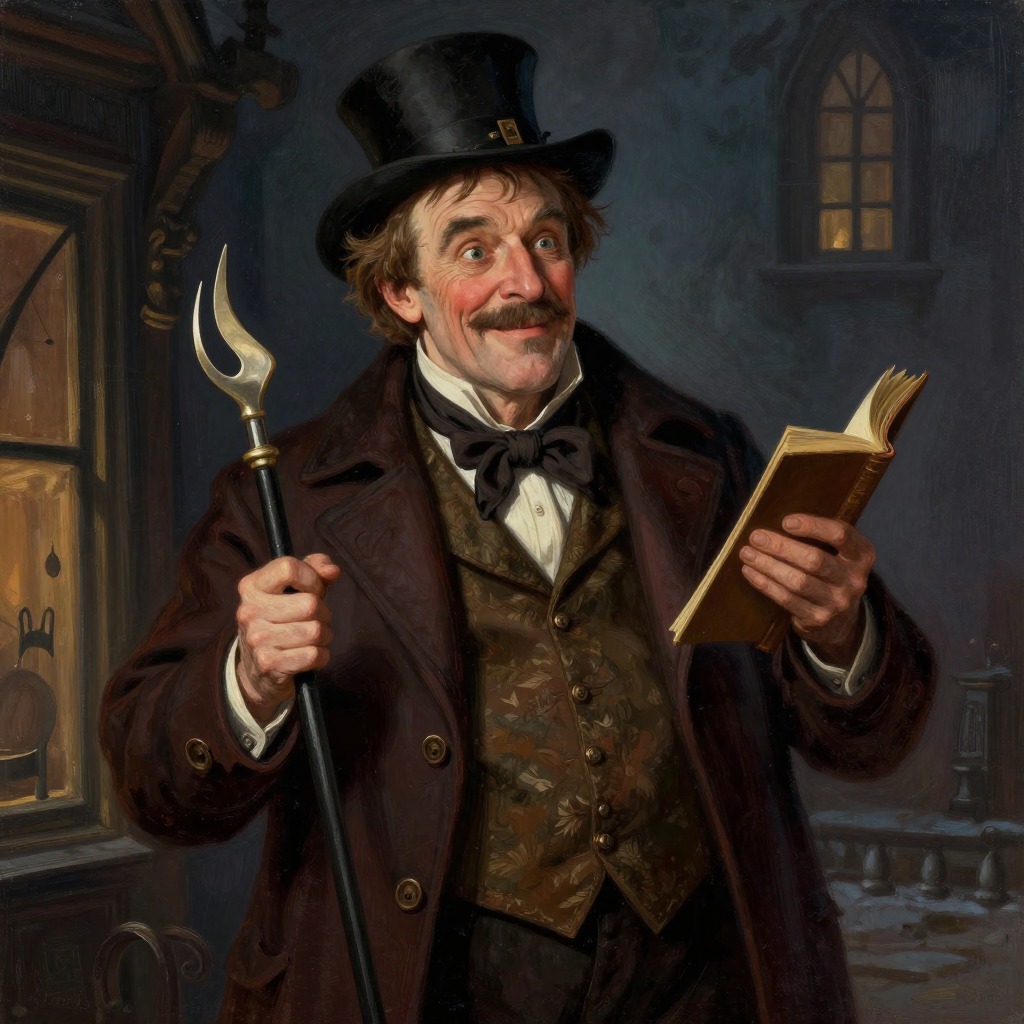
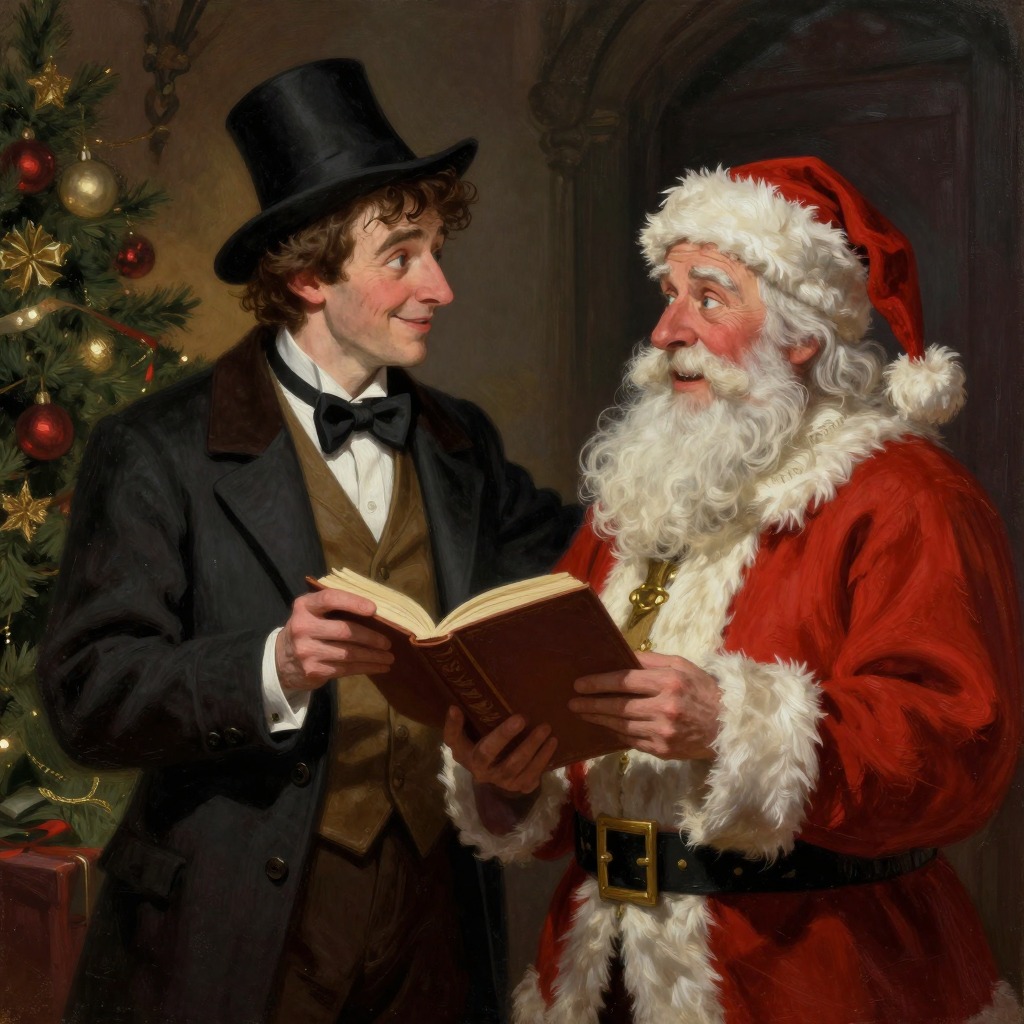
Fred, Scrooge's nephew, is the story's embodiment of Christmas cheer, family loyalty, and persistent goodwill. He is the only character who consistently reaches out to Scrooge without expectation of return, and his unwavering kindness—expressed through annual invitations, a refusal to take offense, and a generous laugh—provides a crucial counterpoint to Scrooge's miserliness and a model of the human connection Scrooge must learn to embrace.
Identity and Background
Fred is the son of Scrooge's beloved sister Fan, who died a woman and had, as the Ghost of Christmas Past notes, one child: Fred himself. Scrooge confirms this with a brief, uneasy "Yes" when the Spirit presses him. The bond between Scrooge and his sister was deep—she rescued him from a lonely boarding school, calling him "dear, dear brother" and bringing him home for good—and that history makes Fred's persistent overtures to his uncle both poignant and freighted with the memory of a lost family warmth. Fred is married to a pretty, dimpled woman whom Scrooge's niece by marriage is described as having "the sunniest pair of eyes you ever saw in any little creature's head." The couple keeps a cheerful house, and Fred is clearly a sociable man with a wide circle of friends, including Topper, a bachelor who flirts with one of Fred's sisters-in-law.
Life and Plot Trajectory
Fred appears in the story at three key moments: his Christmas Eve visit to the counting-house, the Christmas party at his home, and his welcoming of Scrooge on Christmas Day. On Christmas Eve, he bursts into Scrooge's office with a cheerful "A merry Christmas, uncle! God save you!" and is immediately met with Scrooge's famous retort, "Bah! Humbug!" Undeterred, Fred argues for the value of Christmas as "a good time; a kind, forgiving, charitable, pleasant time" and invites Scrooge to dine with him the next day. Scrooge refuses with characteristic rudeness, saying he would see Fred in that extremity first, but Fred leaves without an angry word, stopping at the outer door to bestow the greetings of the season on Bob Cratchit, who returns them cordially. Later, the Ghost of Christmas Present takes Scrooge to Fred's party, where Fred is in high spirits, laughing heartily at the memory of Scrooge calling Christmas a humbug and leading a game of "Yes and No" in which the answer turns out to be "your uncle Scro-o-o-o-oge." He proposes a toast to Uncle Scrooge, saying, "A merry Christmas and a happy New Year to the old man, whatever he is! He wouldn't take it from me, but may he have it nevertheless." On Christmas morning, after his transformation, Scrooge goes to Fred's house, knocks, and is welcomed with open arms. Fred cries, "Why, bless my soul!" and shakes his hand so vigorously it is a mercy he didn't shake his arm off. Scrooge is at home in five minutes, and the party is described as a "wonderful party, wonderful games, wonderful unanimity, won-der-ful happiness!"
Key Actions and Objectives
Fred's central action is his annual, unreciprocated invitation to Scrooge. He explains his motive to his guests: "I mean to give him the same chance every year, whether he likes it or not, for I pity him. He may rail at Christmas till he dies, but he can't help thinking better of it—I defy him—if he finds me going there in good temper, year after year, and saying, 'Uncle Scrooge, how are you?'" This is not a passive hope but an active, deliberate campaign of goodwill. He also shows kindness to Bob Cratchit, meeting him in the street after Tiny Tim's death, inquiring about his distress, and giving him his card with an offer of help. Bob reports that Fred said, "I am heartily sorry for it, Mr. Cratchit, and heartily sorry for your good wife," and that Fred's kindness was "quite delightful." Fred's laugh is described as "irresistibly contagious," and his good humor is a force that draws people together.
Relationships and Conflict
The central relationship is Fred's with Scrooge, which is defined by a one-sided conflict. Scrooge dismisses Fred's Christmas cheer as "humbug," mocks his poverty, and refuses his invitations. Fred, however, never retaliates. He tells his wife, "I am sorry for him; I couldn't be angry with him if I tried. Who suffers by his ill whims? Himself always." This is not naivety but a principled refusal to let Scrooge's bitterness dictate the terms of their relationship. Fred's relationship with his wife is warm and playful; she calls him a "ridiculous fellow" and they laugh together easily. His relationship with his friends is equally genial: he orchestrates games, leads toasts, and encourages merriment. The only hint of conflict is the mild tension between Scrooge's miserliness and Fred's open-handedness, but Fred resolves this by simply persisting in his generosity.
Change and Ending
Fred himself does not change; he is a static character in the sense that his goodness is constant from beginning to end. The change is in Scrooge, who finally accepts Fred's invitation. The ending shows Fred's house as the site of Scrooge's full social reintegration: he is welcomed, he participates in the games, and he is part of the "wonderful unanimity." Fred's role is thus to be the steady, unchanging beacon of family love that Scrooge must finally choose to approach. The story implies that Fred's patient, year-after-year strategy has succeeded: Scrooge, by the end, is a regular at Fred's table.
Narrative Role and Evaluation
Fred functions as a foil to Scrooge and as a representative of the Christmas spirit that the story champions. He is a flat character in Forster's sense—built around a single idea of cheerful, forgiving goodwill—but he is not a caricature. His arguments for Christmas are the story's own moral center: he speaks of Christmas as a time when "men and women seem by one consent to open their shut-up hearts freely, and to think of people below them as if they really were fellow-passengers to the grave." He is also a narrative device: his party provides the setting for Scrooge's softening, and his toast to Scrooge allows the reader to see Scrooge's growing receptivity. Fred's laugh, described as "irresistibly contagious," is a symbol of the joy that Scrooge has been missing. In the end, Fred is the human embodiment of the lesson Scrooge must learn: that happiness comes from connection, not from isolation.