Master Herbal
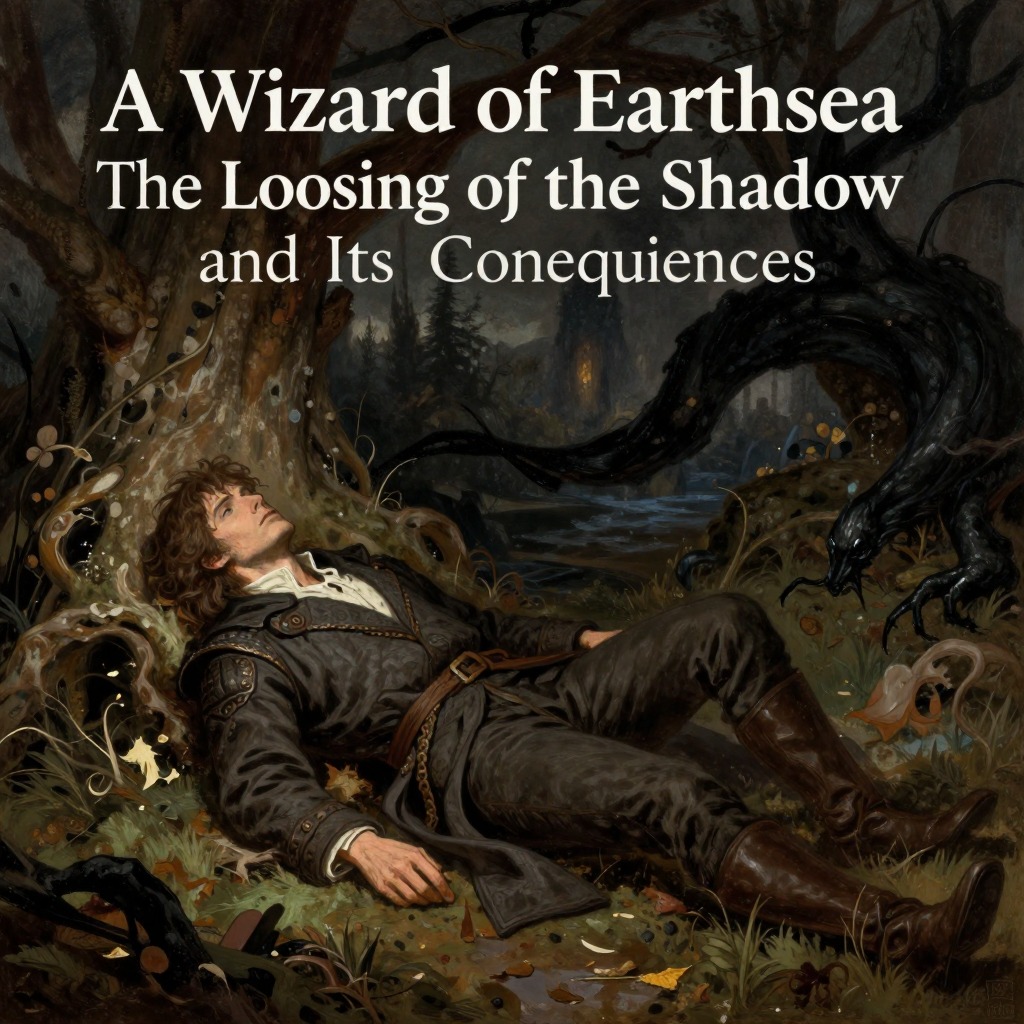
The Master Herbal is one of the Nine Masters of Roke, the school's chief healer and a figure of quiet, patient authority. He is first encountered in the narrative when he tends to Ged after the catastrophic summoning on Roke Knoll, where Ged's prideful spell tore open the fabric of the world and loosed a nameless shadow. The Master Herbal's role in the aftermath is central to Ged's survival and gradual return to himself, and his teachings—particularly the lesson that a healer must sometimes let the dying spirit go—become a touchstone for Ged's later understanding of power and responsibility.
Identity and Role Among the Masters
The Master Herbal is one of the Nine Masters of Roke, the group of senior wizards who govern the school and teach its high arts. He is distinguished by his domain: the healing of body and mind through herb lore, charms, and the deep knowledge of living things. Unlike the Master Summoner, who deals with the forces of light and dark, or the Master Changer, who teaches the perilous arts of transformation, the Master Herbal works with the tangible, fragile substance of life. He is present in the healing-chamber when Ged is carried there after the shadow's attack, and he tends the deep, ragged wounds on Ged's face, throat, and shoulder—wounds that will not stanch and that well black blood even under his charms and the cobweb-wrapped perriot leaves he lays upon them. His craft is patient and empirical; he does not rely solely on spells but on the properties of herbs and the slow work of the body's own recovery.
Healing Ged After the Shadow
In the weeks following the disaster on Roke Knoll, the Master Herbal is Ged's constant attendant. Ged lies blind, deaf, and mute, burning with a fever that no spell can cool, and the Master Herbal works with the patient crafts of his art. It is he who, on a clear day of autumn, opens the shutters of the room where Ged has lain in darkness since that night, letting in the daylight for the first time. Ged, seeing the sun, hides his scarred face in his hands and weeps. The Master Herbal keeps Ged in the healing-chambers through the winter, trying to lead his body and mind gradually back to strength. When Ged can finally speak, it is only with a stammering tongue, and the Master Herbal does not release him until early spring. Even then, he sends Ged first to offer his fealty to the new Archmage, Gensher, a sign that the Master Herbal considers the physical healing complete but the spiritual and moral recovery still in Ged's own hands.
The Lesson of the Dying Spirit
The Master Herbal's most profound influence on Ged comes not during his own convalescence but later, when Ged faces a similar crisis as a healer himself. In the latter months of his own long sickness, the Master Herbal taught Ged much of the healer's lore, and the first lesson and the last of all that lore was this: "Heal the wound and cure the illness, but let the dying spirit go." This principle is put to the test when Ged, now a young wizard in Low Torning, is called to save the dying child Ioeth, the son of his friend Pechvarry. Ged remembers the Master Herbal's teaching and draws back for a moment, knowing the child is beyond help. But Pechvarry's trust and the mother's despair drive Ged to attempt the impossible: he sends his spirit out after the child's, crossing the boundary into the dry land of the dead. There he encounters the shadow that hunts him, and only the otak's instinctive touch brings him back. The Master Herbal's lesson—that the healer must know when to let go—is a hard one, and Ged's failure to heed it fully leads him into the shadow's reach once more.
Narrative Significance and Thematic Weight
The Master Herbal represents the Roke tradition of wisdom that is not about power but about balance and restraint. His teaching that a healer must sometimes let the dying spirit go echoes the larger theme of Equilibrium that runs through the book: the recognition that not all wounds can be healed, not all evils undone, and that the wizard's art must serve need, not desire. He is also a figure of compassion in a story marked by pride, rivalry, and the pursuit of power. When Vetch, Ged's friend, is forbidden to visit Ged during his illness, it is the Master Herbal who enforces that isolation, but it is also he who, by his patient craft, brings Ged back to the world of the living. His role is quiet but essential: he is the one who mends what is broken, even when the breaking was caused by the patient's own folly.