Bill
Bill the Lizard is a minor but recurring figure in Alice's Adventures in Wonderland, a servant and juror whose repeated physical and social humiliations illustrate the arbitrary, often cruel logic that governs Wonderland. He appears in three distinct episodes—as a laborer sent down a chimney, as a witness in the trial of the Knave of Hearts, and as a juror whose dignity is stripped away by Alice's careless growth—and in each he is the victim of forces far beyond his control. His name, "Bill," is the only personal identifier given to any of the animal servants, yet he is treated as interchangeable and expendable, a pattern that makes him a representative figure of the powerless in a world where authority is absolute and reason is absent.
Identity and Introduction
Bill is introduced in Chapter IV, "The Rabbit Sends in a Little Bill," as a lizard who works for the White Rabbit. When Alice, having grown to an enormous size inside the White Rabbit's house, blocks the door and window, the Rabbit summons Bill to go down the chimney and dislodge her. The other animals refer to him familiarly—"Bill's to go down—Here, Bill! the master says you're to go down the chimney!"—and Alice herself, hearing the plan, thinks, "So Bill's got to come down the chimney, has he? ... I wouldn't be in Bill's place for a good deal." When Bill scrambles into the chimney, Alice kicks him sharply upward, and he is launched into the air like a "sky-rocket," landing with a crash. The other animals crowd around him, offering brandy and asking what happened, but Bill can only squeak, "something comes at me like a Jack-in-the-box, and up I goes like a sky-rocket!" This first appearance establishes him as a figure of comic suffering, a creature whose job is to absorb punishment on behalf of others.
Role in the Trial
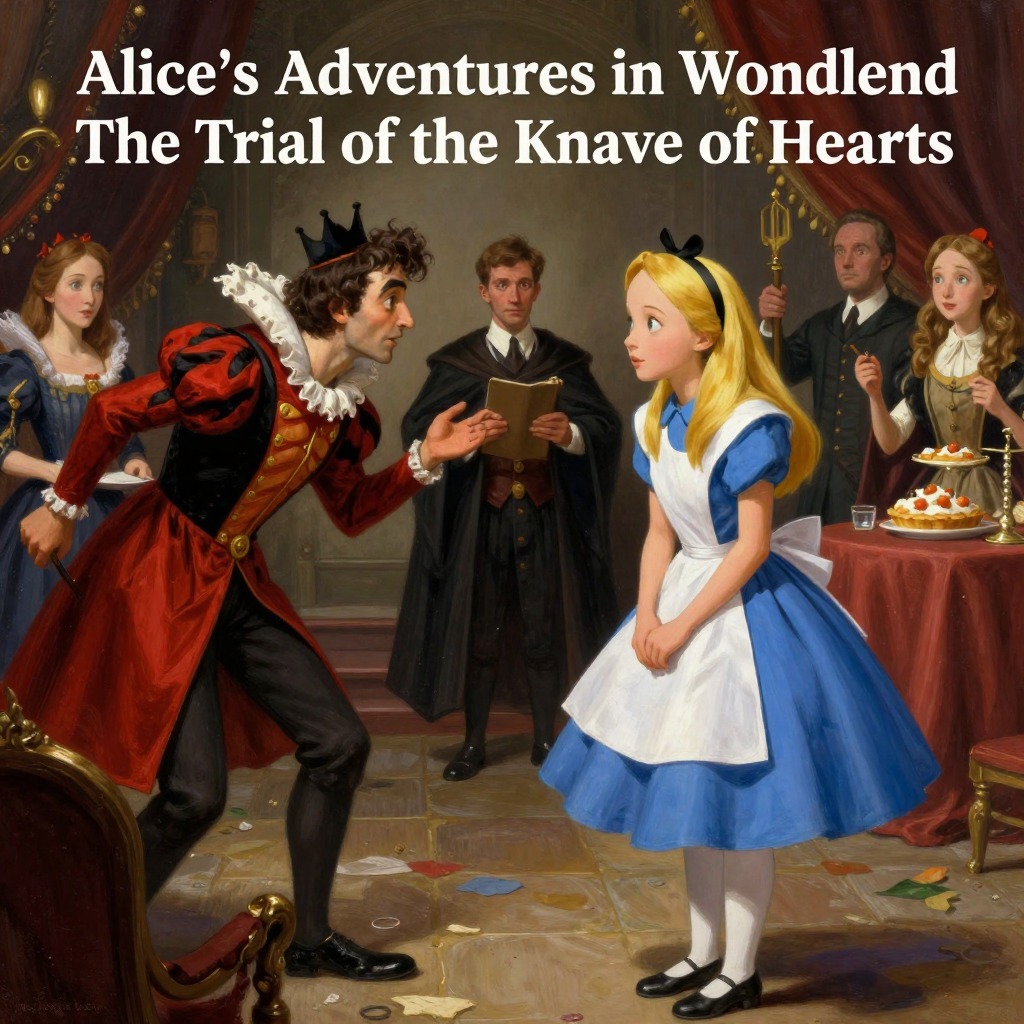
Bill reappears in Chapter XI, "Who Stole the Tarts?," as a juror in the trial of the Knave of Hearts. He is identified as "Bill, the Lizard" when Alice notices that one of the jurors has a pencil that squeaks. Unable to tolerate the noise, she goes behind him, takes the pencil, and he is left "hunting all about for it" before being "obliged to write with one finger for the rest of the day; and this was of very little use, as it left no mark on the slate." Later, when the Queen of Hearts throws an inkstand at him in a fit of rage, the ink trickles down his face, and he "hastily began again, using the ink, that was trickling down his face, as long as it lasted." These moments transform Bill from a mere servant into a symbol of the trial's absurdity: the jurors are so incompetent that they cannot even write properly, and the judicial process is a farce in which the most vulnerable participants are physically assaulted without consequence.
Physical Humiliation and Reversal
In the final chapter, "Alice's Evidence," Bill suffers his most undignified moment. Alice, having grown very large, jumps up so hastily that she tips over the jury-box, spilling all the jurymen onto the heads of the crowd below. When she hurriedly picks them up and puts them back, she places the Lizard in head downwards, "and the poor little thing was waving its tail about in a melancholy way, being quite unable to move." She soon corrects the mistake, but the image of Bill upside down, tail waving helplessly, is the culmination of a pattern: in every appearance, he is physically inverted, ejected, or rendered immobile. His body becomes a site upon which the chaos of Wonderland is enacted, and his inability to resist or even protest marks him as the ultimate victim of a world where power is exercised without logic or mercy.
Thematic Significance
Bill's function in the narrative is to embody the consequences of arbitrary authority and the helplessness of those who occupy the lowest rungs of Wonderland's hierarchy. Unlike Alice, who questions, argues, and eventually defies the Queen, Bill never speaks in his own defense; he is acted upon, never acting. His repeated physical humiliations—kicked, pencil-stolen, ink-stained, turned upside down—are comic in tone but dark in implication, suggesting that in Wonderland, suffering is distributed not according to guilt or merit but according to power. He is a character defined entirely by his vulnerability, and his presence in the trial scene underscores the injustice of a legal system in which the jurors themselves are subject to assault and the accused is presumed guilty before any evidence is heard. Through Bill, Carroll quietly exposes the cruelty that underlies the whimsy of Wonderland, making him a small but essential figure in the book's critique of authority and reason.